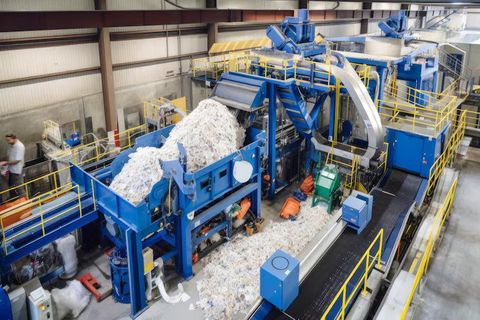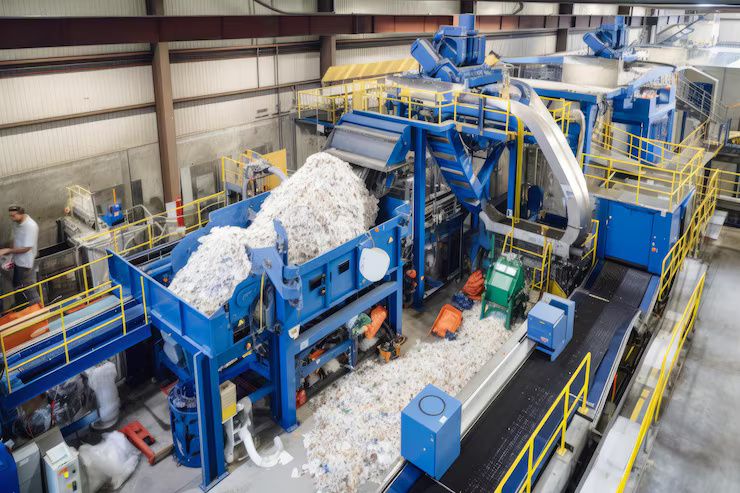
Industrial shredder machines are mechanical systems designed to reduce large or difficult materials into smaller pieces. They are used in recycling plants, manufacturing facilities, waste-processing operations, and material recovery systems. Depending on their design, shredders can process plastics, metals, rubber, wood, packaging materials, and mixed waste.
Understanding industrial shredder machines involves looking at their working principles, machine types, safety features, material requirements, and environmental considerations. This guide explains the basics of plastic shredders, metal shredders, waste shredders, and the factors that influence their use in industrial processing.
Context
An industrial shredder machine uses rotating shafts, cutters, blades, or other mechanical components to break material into smaller pieces. Unlike simple cutting equipment, many industrial shredders are designed to handle irregular, bulky, dense, or mixed materials.
The basic process usually involves feeding material into a chamber where rotating components apply tearing, cutting, shearing, or compression forces. The processed material then exits through an outlet. Some systems include screens that help control the approximate size of the discharged material.
Industrial shredder machines are available in several configurations. Common designs include single-shaft, twin-shaft, four-shaft, and specialized granulation or crushing systems.
| Shredder type | Common materials | Typical processing purpose |
|---|---|---|
| Single-shaft | Plastics, wood, rubber | Controlled size reduction |
| Twin-shaft | Mixed waste, bulky materials | Primary shredding |
| Four-shaft | Plastics, electronics, industrial materials | More controlled reduction |
| Metal shredder | Ferrous and non-ferrous materials | Metal size reduction |
| Waste shredder | Municipal and industrial waste | Waste volume reduction |
| Plastic shredder | Films, containers, pipes, molded parts | Plastic processing |
Plastic shredders are commonly used for materials such as polyethylene, polypropylene, PET, and other suitable polymers. Metal shredders require substantially different mechanical arrangements because metals can have high strength and density. Waste shredders must also account for variations in material composition.
Importance
Industrial shredding can support several stages of material handling. Reducing the size of waste or production residues can make subsequent sorting, separation, transportation, or recycling processes easier to manage.
For plastic processing, shredders may prepare material for washing, separation, extrusion, or further size reduction. In metal processing, shredding can help prepare scrap for sorting and separation into different material streams.
Waste-processing facilities can use shredders to reduce bulky materials before additional treatment. The exact role depends on the facility, material composition, and downstream processing system.
Important factors include:
- Material type and density
- Expected feed size
- Required output size
- Moisture content
- Contamination levels
- Throughput requirements
- Blade and shaft configuration
- Motor and drive arrangement
- Dust and noise controls
- Operator safety systems
Safety is particularly important because industrial shredders contain moving parts and powerful mechanical drives. In the United States, OSHA's machine-guarding requirements address hazards involving points of operation, rotating parts, ingoing nip points, and flying particles.
Recent Updates
Recent developments in industrial shredding have focused on automation, energy management, monitoring, material identification, and improved process control. Modern systems can incorporate sensors and programmable controls to monitor operating conditions and respond to changes in material flow.
Automation can help monitor parameters such as motor load, shaft rotation, temperature, vibration, and machine status. These measurements can help operators identify unusual operating conditions before they develop into larger equipment problems.
Another development is greater integration between shredders and downstream separation equipment. A processing line may combine shredding with magnetic separation, eddy-current separation, screening, washing, conveying, or other material-handling stages.
For plastic waste, material identification and separation are increasingly important because different polymer types have different processing characteristics. The Central Pollution Control Board's recent guidance discusses plastic-waste characterization and the need for appropriate assessment and processing approaches.
Industrial systems are also being designed around circular-material concepts. The European Union's Waste Framework Directive establishes a waste hierarchy and provides a broader legal framework for waste prevention, recycling, recovery, and disposal.
Laws or Policies
The rules applicable to an industrial shredder depend on the country, type of material, facility, and processing activity. A machine itself may be subject to workplace safety requirements, while the material being processed may be regulated under environmental or waste-management legislation.
In the United States, the Resource Conservation and Recovery Act provides the federal framework for hazardous and non-hazardous solid-waste management. EPA notes that states may have primary responsibility for implementing authorized hazardous-waste programs.
OSHA's machine-guarding requirements are also relevant to workplaces using industrial machinery. Guards are intended to protect workers from hazards associated with moving machine components and points of operation.
In the European Union, the Waste Framework Directive establishes fundamental waste-management concepts and a hierarchy that prioritizes prevention, reuse, recycling, recovery, and disposal. Hazardous waste has additional control, documentation, and monitoring requirements.
In India, the Solid Waste Management Rules provide a framework for waste handling and source segregation, while the Plastic Waste Management Rules establish requirements concerning plastic waste. Government materials also identify the Hazardous and Other Wastes framework for activities involving regulated hazardous and other wastes.
India's plastic-waste framework has also been amended over time. CPCB documentation notes amendments concerning plastic packaging, extended producer responsibility, and assessment of plastic waste generation.
Facilities should therefore check the applicable national, state, provincial, or local requirements before processing regulated materials.
Tools and Resources
Several resources can help users understand industrial shredder machines and their operating environment.
Useful resources include:
- OSHA machine-guarding guidance for workplace safety information.
- EPA RCRA resources for United States waste-management regulations.
- European Commission waste-management resources for EU policies and waste hierarchy information.
- CPCB resources for Indian plastic-waste rules, guidance, and documentation.
- MoEFCC publications for Indian solid-waste and environmental regulations.
For technical planning, useful documents can include material specifications, machine manuals, maintenance schedules, safety checklists, throughput records, and equipment inspection forms.
A basic evaluation worksheet can record:
| Evaluation area | Information to record |
|---|---|
| Material | Plastic, metal, wood, mixed waste, etc. |
| Feed size | Maximum dimensions |
| Output size | Required particle range |
| Moisture | Approximate moisture level |
| Contamination | Foreign materials present |
| Operating hours | Expected daily or weekly use |
| Safety | Guards, emergency stops, isolation procedures |
| Downstream process | Sorting, washing, separation, or recycling |
FAQs
What is an industrial shredder machine?
An industrial shredder machine is mechanical equipment used to reduce large or bulky materials into smaller pieces. Different designs are available for plastics, metals, rubber, wood, and mixed waste.
What materials can industrial shredders process?
Depending on the machine design, industrial shredders can process plastics, metal scrap, rubber, wood, packaging materials, and selected waste streams. Material compatibility should always be checked against the machine's technical specifications.
What is the difference between a plastic shredder and a metal shredder?
Plastic shredders are generally configured for polymer materials with different cutting and feeding characteristics. Metal shredders require stronger mechanical components and configurations capable of handling dense and rigid metal feedstock.
Are industrial shredders safe to operate?
Industrial shredders can involve serious mechanical hazards. Appropriate guarding, emergency controls, isolation procedures, training, inspection, and maintenance are important. OSHA specifically identifies machine guarding as a protection against hazards from moving parts and points of operation.
Why is material preparation important before shredding?
Material preparation can help prevent unsuitable objects, excessive contamination, or unexpected material characteristics from entering the machine. Proper preparation can also support more consistent processing and downstream separation.
Conclusion
Industrial shredder machines are important components in many plastic, metal, and waste-processing systems. Their configuration depends on material characteristics, desired particle size, processing capacity, safety requirements, and the processes that follow shredding.
Understanding the machine type and material requirements helps facilities plan appropriate processing workflows. Environmental regulations and workplace safety requirements should also be reviewed because requirements vary according to location and material type.
For plastic waste, attention to polymer type, contamination, and downstream recovery processes is particularly important. For metal and mixed waste, material density, composition, and separation requirements can significantly influence the appropriate shredding approach.