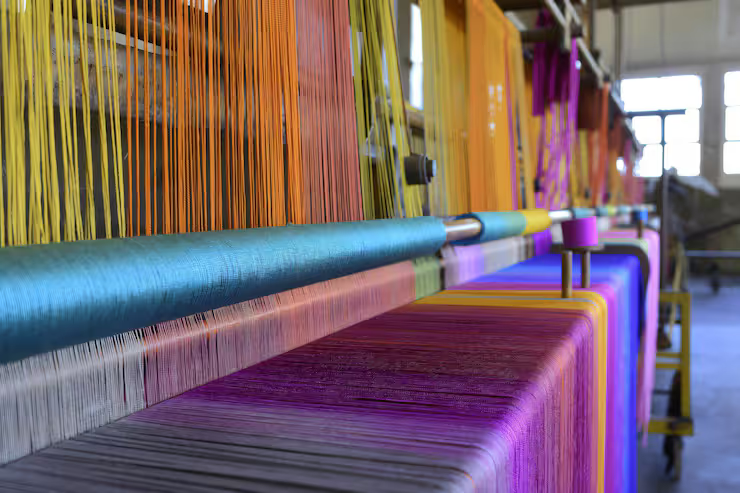
Jacquard looms are specialized weaving machines designed to control individual warp threads or groups of threads to create complex woven patterns. Unlike simpler looms that repeat relatively straightforward structures, Jacquard systems can produce highly detailed motifs, lettering, geometric patterns, and intricate textile designs.
The technology originated from the Jacquard mechanism developed in France in the early nineteenth century. Early systems used punched cards to control which warp threads were raised during weaving.
Modern Jacquard looms use electronic controls, computerized pattern files, sensors, and digital design systems rather than mechanical punched-card systems.
How a Jacquard Loom Works
A woven fabric is created by interlacing warp and weft threads. The warp threads run lengthwise, while the weft thread travels across the fabric.
A Jacquard mechanism determines which warp threads should rise for each insertion of the weft. By controlling individual threads, the machine can create intricate structures and patterns.
A modern production workflow generally involves:
Creating or importing a digital textile design
Converting the design into machine-readable instructions
Preparing warp and weft yarns
Loading the loom
Setting weaving parameters
Controlling warp-thread movement
Inserting the weft
Monitoring fabric formation
Inspecting the finished textile
Types of Jacquard Systems
Modern Jacquard technology can be found in several configurations:
Electronic Jacquard looms
Computerized Jacquard looms
High-speed industrial Jacquard looms
Narrow-fabric Jacquard systems
Double-beam Jacquard systems
Terry Jacquard looms
Specialized carpet and furnishing looms
| Feature | Conventional Loom | Jacquard Loom |
|---|---|---|
| Pattern complexity | Limited to structure | Highly detailed |
| Warp control | Groups of threads | Individual or selected threads |
| Digital integration | Limited | High |
| Pattern flexibility | Moderate | High |
| Typical applications | Basic woven fabrics | Decorative and technical textiles |
| Automation | Varies | Generally high in modern systems |
Why Jacquard Looms Matter Today
Jacquard weaving remains important because manufacturers need to produce increasingly complex textile structures without relying entirely on manual pattern formation.
The technology is used across fashion, home furnishings, automotive interiors, technical textiles, carpets, upholstery, and specialized industrial fabrics.
Fashion and Apparel
Jacquard weaving can create patterns directly within the fabric structure rather than applying decoration after the fabric has been produced.
Applications include:
Patterned apparel fabrics
Decorative garments
Traditional textiles
Tapestry fabrics
Fashion accessories
Scarves and shawls
Woven labels
Home and Interior Textiles
Jacquard technology is widely associated with decorative furnishing fabrics.
Examples include:
Upholstery fabrics
Curtains
Bed coverings
Decorative cushions
Wall textiles
Table textiles
Tapestries
The ability to control individual warp threads can create patterns with considerable visual and structural variation.
Technical Textiles
Jacquard systems can also be adapted for specialized textile structures. Depending on machine configuration and yarn selection, they can create fabrics with particular strength, thickness, texture, or functional characteristics.
This makes Jacquard weaving relevant to automotive interiors, industrial fabrics, protective textiles, and other advanced textile applications.
Digital Design Integration
One of the biggest changes from historical Jacquard weaving is the integration of digital textile design.
Modern designers can create patterns digitally and transfer them into electronic loom-control systems. This makes pattern modification and repeat development more efficient than traditional mechanical pattern preparation.
Recent Jacquard Loom Developments
The textile sector continued moving toward automation, digital production, sustainability, and integrated manufacturing during 2025 and 2026.
Smart Textile Manufacturing
Modern weaving factories increasingly combine electronic Jacquard systems with sensors, production monitoring, computerized pattern management, and automated controls.
These technologies can help operators monitor parameters such as:
Loom speed
Warp tension
Weft insertion
Machine stoppages
Production output
Pattern synchronization
Mechanical conditions
Connected manufacturing systems can also allow production information to be analyzed digitally.
Sustainability and Resource Efficiency
Textile manufacturers are increasingly examining energy consumption, material utilization, waste generation, and production efficiency.
The European Union's Ecodesign for Sustainable Products Regulation entered into force on July 18, 2024 and establishes a framework for improving the environmental sustainability and circularity of products placed on the EU market. The framework includes digital product information through mechanisms such as Digital Product Passports.
Although the regulation does not specifically regulate Jacquard looms, its broader implications for textiles can influence material traceability and manufacturing practices.
India's Textile Manufacturing Development
India continues to strengthen its textile-manufacturing infrastructure through programs such as PM MITRA. The Ministry of Textiles describes PM MITRA parks as integrated textile and apparel manufacturing ecosystems intended to provide modern infrastructure and support the full textile value chain.
Modern weaving equipment, including computerized Jacquard systems, can form part of these advanced textile production environments.
Digital Textile Design
Computer-aided textile design continues to reduce the gap between creative design and industrial production.
Designers can develop complex motifs digitally, simulate pattern repeats, prepare production files, and transfer the resulting information to electronic weaving equipment.
This creates a more integrated workflow between textile CAD software, digital weaving, and industrial Jacquard machinery.
Laws, Standards and Policies in India
India provides an important example because textile manufacturers can be affected by machinery safety standards, environmental rules, labor regulations, textile-quality requirements, and government manufacturing programs.
Machinery Safety
The Bureau of Indian Standards maintains standards relating to machinery safety and electrical equipment. Industrial Jacquard looms contain moving mechanical components, electrical systems, motors, electronic controls, and potentially pneumatic equipment.
Relevant safety considerations can include:
Emergency stopping mechanisms
Electrical protection
Machine guarding
Moving-part protection
Operator instructions
Safe maintenance procedures
Proper grounding
Risk assessment
BIS provides a Know Your Standard platform where users can search Indian Standards by keyword or standard number.
Textile Quality and Labeling
Textile products supplied in India or exported to other markets may be subject to requirements concerning fiber composition, labeling, product specifications, and quality.
The exact requirements depend on the finished textile and destination market. Manufacturers should therefore identify the standards applicable to their specific fabric rather than assuming that one rule applies to all Jacquard textiles.
Environmental Requirements
Textile manufacturing can involve electricity consumption, wastewater, dyes, finishing chemicals, yarn waste, and other environmental considerations.
Facilities should evaluate applicable requirements from the relevant environmental authorities according to their manufacturing processes.
PM MITRA
The PM MITRA program is designed to establish integrated textile and apparel parks with modern infrastructure and facilities. The Ministry of Textiles identifies integrated value-chain development as one of the program's objectives.
Such integrated manufacturing ecosystems can support modernization of weaving and textile-production equipment.
Tools and Resources for Jacquard Weaving
Jacquard weaving combines mechanical equipment with digital design and production planning.
Useful Tools
Textile CAD software: Used to create woven patterns and repeats.
Jacquard design software: Converts artwork into loom-compatible instructions.
Yarn calculators: Help estimate yarn requirements.
Warp and weft calculators: Assist with yarn-density planning.
Fabric construction calculators: Help determine ends per inch and picks per inch.
Color-management tools: Help coordinate yarn colors with digital designs.
Loom monitoring systems: Track machine performance and production events.
Digital pattern libraries: Provide references for motifs and textile structures.
Fabric inspection systems: Detect weaving defects.
BIS Know Your Standard: Helps identify applicable Indian Standards.
Textile testing laboratories: Evaluate selected physical and performance properties of woven fabrics.
Specifications Worth Comparing
When researching industrial Jacquard looms, important specifications include:
Number of controlled warp threads
Maximum weaving width
Loom speed
Weft insertion technology
Number of colors
Pattern memory
Electronic control system
Warp tension control
Machine monitoring
Fabric construction range
Compatible yarn types
Energy consumption
Maintenance requirements
Maximum speed should not be considered independently because yarn characteristics, fabric construction, pattern complexity, machine width, and production conditions can affect actual operating performance.
Frequently Asked Questions
What is a Jacquard loom?
A Jacquard loom is a weaving machine that can individually control selected warp threads to create complex woven patterns. Modern systems generally use electronic controls and digital pattern files.
What fabrics can be produced on Jacquard looms?
Jacquard looms can produce many woven textile structures, including apparel fabrics, upholstery, curtains, tapestries, carpets, decorative textiles, and selected technical fabrics. The appropriate loom configuration depends on the yarn and fabric structure.
Are Jacquard looms computerized?
Modern industrial Jacquard looms are commonly computerized. Electronic controls can manage warp-thread selection, pattern instructions, machine parameters, monitoring, and other production functions.
What is the difference between a Jacquard loom and a conventional loom?
A conventional loom may control groups of warp threads according to a simpler repeating structure. A Jacquard system provides much more detailed control over individual or selected warp threads, allowing more complex patterns.
What factors affect Jacquard fabric quality?
Fabric quality can be influenced by yarn characteristics, warp tension, weft insertion, thread density, loom settings, pattern complexity, machine calibration, weaving speed, and finishing processes.
Conclusion
Jacquard looms have transformed the way complex woven patterns are produced by allowing detailed control over individual warp threads. The technology has progressed from mechanical punched-card systems to sophisticated electronic equipment integrated with digital textile design.
Modern Jacquard weaving supports applications across fashion, home furnishings, automotive interiors, carpets, decorative fabrics, and specialized technical textiles.
Developments in 2025 and 2026 have emphasized digital manufacturing, automation, resource efficiency, and textile traceability. India's PM MITRA program also demonstrates the country's continuing focus on integrated and modern textile-production ecosystems.
For manufacturers researching Jacquard weaving machines, the most important considerations include weaving width, warp-thread control, loom speed, yarn compatibility, digital design integration, tension management, monitoring capabilities, energy requirements, and applicable safety standards.
The continuing development of electronic controls and digital textile design means Jacquard weaving is no longer simply a traditional decorative technique. It is an important component of modern textile manufacturing, connecting creative pattern development with highly controlled industrial production.