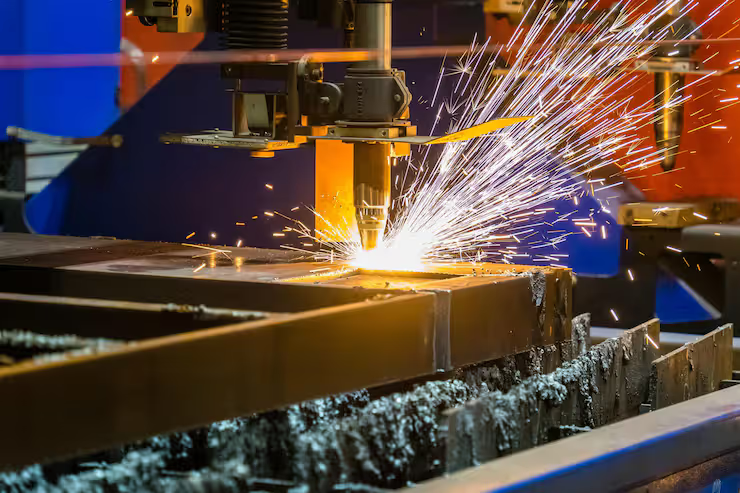
Laser cutting machines have become one of the most important tools in modern manufacturing and fabrication. They are widely used to cut, engrave, and shape different materials with remarkable precision. From automotive components and industrial machinery to furniture, electronics, fashion, and signage, laser cutting technology supports countless industries that require accurate and consistent production.
As industries continue to adopt automation and digital manufacturing, laser cutting machines are becoming more efficient, smarter, and easier to integrate into production workflows. They help reduce material waste, improve cutting quality, and allow businesses to produce complex designs that would be difficult with traditional cutting methods.
This guide explains what laser cutting machines are, how they work, where they are used, the different machine types available, and the latest developments shaping laser cutting technology in 2026.
Understanding Laser Cutting Machines
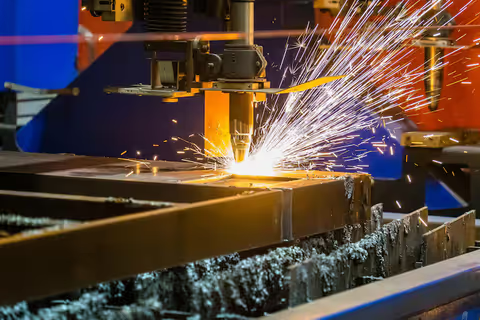
A laser cutting machine is a computer-controlled machine that uses a focused laser beam to cut or engrave materials. The laser produces a highly concentrated source of heat that melts, burns, or vaporizes material along a precise cutting path. The machine follows digital design files created using CAD or similar software, allowing highly detailed and repeatable cuts.
Unlike mechanical cutting methods that rely on physical blades or tools, laser cutting uses light energy. Because there is little or no direct contact between the cutting tool and the material, the process can achieve clean edges with minimal wear on equipment.
Laser cutting is suitable for both simple and highly detailed designs, making it valuable for prototypes, custom products, and large-scale manufacturing.
How Laser Cutting Machines Work
The working process begins with a digital design created using computer-aided design software. The design is converted into machine instructions that guide the movement of the laser head across the material.
The laser beam is generated inside the machine and directed through mirrors or fiber optics toward a focusing lens. The lens concentrates the beam into a very small point with extremely high energy density. This focused beam heats the material instantly, allowing it to melt or vaporize.
At the same time, an assist gas such as oxygen, nitrogen, or compressed air helps remove molten material from the cut line and improves edge quality depending on the application.
The entire process is controlled by CNC technology, ensuring accurate positioning, cutting speed, and repeatability.
Main Types of Laser Cutting Machines
Different laser technologies are designed for different materials and applications. Understanding these types helps explain why certain machines are preferred in specific industries.
Fiber Laser Cutting Machines
Fiber laser cutting machines use optical fibers to generate and deliver the laser beam. They are commonly used for cutting metals because they provide excellent cutting speed, energy efficiency, and precision.
These machines are widely used for stainless steel, aluminum, copper, brass, and carbon steel fabrication. They require relatively low maintenance and are increasingly popular in industrial manufacturing.
CO2 Laser Cutting Machines
CO2 laser cutting machines use a gas mixture to generate the laser beam. They are suitable for cutting and engraving non-metallic materials such as acrylic, wood, leather, paper, fabric, plastic, rubber, and glass for engraving purposes.
They remain popular in creative industries, furniture manufacturing, packaging, and sign-making because they produce smooth edges on many organic materials.
Crystal Laser Cutting Machines
Crystal lasers use specialized crystals to generate laser energy. They can cut both metals and non-metals, but they generally have shorter operational lifespans than fiber lasers. They are used in selected industrial applications where specific wavelength characteristics are required.
Materials That Can Be Cut with Laser Machines
Laser cutting machines support a wide range of materials depending on laser type and machine configuration.
Metal materials include stainless steel, carbon steel, aluminum, brass, copper, titanium, and galvanized steel.
Non-metal materials include acrylic sheets, plywood, MDF, bamboo, leather, textiles, cardboard, foam, rubber, plastic, and certain composite materials.
Some specialized machines can also engrave glass, stone, ceramic surfaces, and coated materials without cutting completely through them.
Material thickness depends on machine power, beam quality, and material properties rather than a single fixed capability.
Industries That Use Laser Cutting Machines
Laser cutting technology supports manufacturing across many sectors because of its flexibility and precision.
Manufacturing and Fabrication
Industrial fabrication companies use laser cutting for sheet metal parts, machine components, enclosures, brackets, structural parts, and customized industrial equipment.
Automotive Industry
Automotive manufacturers use laser cutting to create body panels, chassis components, exhaust systems, battery enclosures, and precision metal parts used in electric vehicles and conventional vehicles.
Aerospace Industry
Aircraft manufacturing requires lightweight, high-precision components made from advanced alloys. Laser cutting provides accurate cuts while maintaining tight tolerances.
Electronics Industry
Electronic manufacturers use laser cutting for precision components, circuit board templates, metal housings, connectors, and miniature parts.
Furniture and Interior Design
Laser cutting allows decorative panels, customized furniture designs, partitions, lighting fixtures, and architectural elements with intricate patterns.
Fashion and Textile Industry
Laser technology is widely used for fabric cutting, leather products, footwear components, embroidery patterns, and personalized accessories.
Signage and Advertising
Laser machines create acrylic signs, engraved displays, branding elements, lettering, promotional materials, and decorative installations.
Benefits of Laser Cutting Machines
Laser cutting machines provide several practical advantages compared to many traditional cutting methods.
The first major benefit is precision. Laser beams create accurate cuts with smooth edges and minimal dimensional variation, making them suitable for detailed designs.
Another advantage is versatility. A single machine can often process multiple material types depending on its configuration.
Laser cutting also reduces material waste because software optimizes cutting layouts and nesting patterns before production begins.
Automation improves consistency by producing identical parts repeatedly without significant variation.
Because there is limited physical contact during cutting, tool wear is reduced compared to blade-based cutting systems.
Modern machines also integrate easily with production software, robotics, and automated material handling systems.
Laser Cutting Compared with Traditional Cutting Methods
Traditional cutting methods such as mechanical sawing, punching, or plasma cutting remain useful in many situations, but laser cutting offers different strengths.
Laser Cutting | Traditional Cutting |
| High precision and detailed shapes. | Precision varies depending on tool type. |
| Minimal physical contact with material. | Uses physical cutting tools. |
| Smooth cutting edges in many materials. | May require additional finishing. |
| Suitable for complex digital designs. | Better suited for simpler cutting patterns in some applications. |
| Easy integration with CNC automation. | Automation depends on equipment configuration. |
The best method depends on production volume, material type, thickness, and manufacturing requirements.
Key Components of a Laser Cutting Machine
A laser cutting machine consists of several integrated systems that work together.
The laser source generates the laser beam.
The optical delivery system directs the beam toward the cutting head.
The focusing lens concentrates laser energy onto the material surface.
The CNC controller manages movement, speed, and cutting paths based on digital instructions.
The cutting bed supports the material during processing.
The assist gas system improves cut quality and removes molten material.
Cooling systems help maintain stable operating temperatures for critical machine components.
Modern industrial machines also include sensors, monitoring systems, and automatic calibration features.
Applications Beyond Cutting
Laser cutting machines are not limited to cutting operations. Many systems perform engraving, marking, perforating, and surface texturing.
Manufacturers engrave serial numbers, logos, QR codes, identification labels, decorative artwork, and product information directly onto materials.
Laser engraving is commonly used for personalized products, industrial traceability, branding, awards, gifts, and packaging components.
Factors That Influence Cutting Quality
Several technical factors affect the final cutting result.
Laser power determines how effectively different materials and thicknesses can be processed.
Cutting speed influences edge smoothness and heat exposure.
Focus position affects beam concentration and precision.
Assist gas selection changes oxidation levels and finish quality.
Material surface condition, cleanliness, coatings, and thickness also impact cutting performance.
Proper machine calibration ensures consistent results across repeated production runs.
Safety Practices for Laser Cutting Machines
Laser cutting involves high-energy beams, heat, moving components, and electrical systems, so safety remains an essential part of operation.
Operators should wear appropriate protective equipment when required for specific machine configurations.
Machines should be operated with protective enclosures and safety interlocks functioning correctly.
Proper ventilation helps remove smoke, fumes, and particles generated during cutting.
Regular maintenance keeps lenses, mirrors, filters, cooling systems, and motion components working efficiently.
Only compatible materials should be processed because some materials may produce hazardous fumes when exposed to laser energy.
Following manufacturer operating guidelines helps reduce operational risks and maintain machine performance.
Maintenance and Long-Term Performance
Routine maintenance improves reliability and cutting consistency.
Cleaning optical components prevents contamination from reducing beam quality.
Checking alignment ensures accurate laser positioning.
Cooling systems should be inspected regularly to maintain stable temperatures.
Lubricating motion systems helps maintain smooth machine movement.
Dust collection systems and filters should be cleaned or replaced according to maintenance schedules.
Software updates may introduce improved machine performance, diagnostics, and compatibility with newer manufacturing workflows.
Preventive maintenance reduces unexpected downtime and supports consistent production quality.
Recent Trends in Laser Cutting Technology in 2026
Laser cutting technology continues to evolve with improvements in automation, software intelligence, and manufacturing integration.
Artificial intelligence is increasingly used to optimize cutting paths, detect material positioning, and monitor machine performance in real time.
Vision systems help machines identify material orientation automatically before cutting begins.
Smart sensors monitor temperature, vibration, and beam quality, allowing predictive maintenance before equipment failures occur.
Fiber laser technology continues improving cutting efficiency while reducing energy consumption in industrial environments.
Cloud-connected manufacturing systems allow production monitoring, machine diagnostics, and workflow management across multiple facilities.
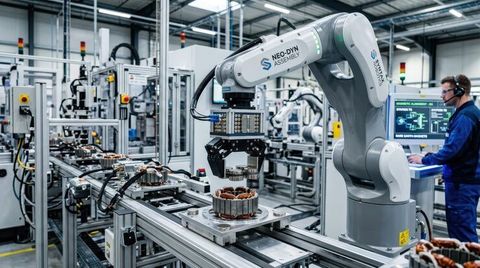
Automation is expanding through robotic loading and unloading systems that reduce manual handling during continuous production.
Sustainability has also become an important trend, with manufacturers focusing on energy-efficient laser sources and software that minimizes material waste through improved nesting algorithms.
Choosing the Right Laser Cutting Machine
Selecting a laser cutting machine depends on the intended application rather than choosing a single universal solution.
Material type is one of the most important considerations because metal and non-metal processing often require different laser technologies.
Production volume influences whether manual loading, semi-automatic systems, or fully automated production lines are appropriate.
Required cutting precision depends on industry standards and product complexity.
Workspace size determines the maximum material dimensions the machine can process.
Software compatibility is important for integrating CAD, CAM, and CNC workflows into existing manufacturing processes.
Future production needs should also be considered when evaluating machine capabilities and expansion potential.
Common Misconceptions About Laser Cutting Machines
Many people believe laser cutting is only suitable for large factories, but machines are available for educational institutions, workshops, design studios, and small manufacturing facilities as well.
Another misconception is that laser cutting works equally well on every material. In reality, material compatibility depends on laser wavelength, machine configuration, thickness, and safety considerations.
Some assume laser cutting always produces perfect edges without adjustment. In practice, achieving optimal quality requires proper settings, calibration, focus, and material preparation.
Understanding these differences helps users choose appropriate workflows and realistic expectations.
The Future of Laser Cutting Technology
The future of laser cutting is closely connected with smart manufacturing and Industry 4.0. Machines are becoming more intelligent through AI-assisted optimization, automated quality inspection, and predictive maintenance capabilities.
Improved laser sources continue increasing cutting speed while maintaining precision and reducing energy consumption. Robotics and automated material handling are making laser cutting part of fully connected production lines where machines communicate with inventory, scheduling, and quality systems.
As manufacturing becomes increasingly digital, laser cutting machines are expected to play an even larger role in customized production, rapid prototyping, electric vehicle manufacturing, aerospace engineering, renewable energy equipment, and advanced industrial fabrication.
Frequently Asked Questions
What is a laser cutting machine used for?
A laser cutting machine is used to cut, engrave, mark, and shape materials such as metal, wood, acrylic, fabric, leather, and plastic with high precision using a focused laser beam.
What materials can laser cutting machines process?
Depending on the machine type, laser cutting machines can process metals like stainless steel and aluminum, as well as non-metal materials including wood, acrylic, leather, paper, fabric, rubber, and certain plastics.
What is the difference between fiber laser and CO2 laser machines?
Fiber lasers are generally used for cutting metals efficiently, while CO2 lasers are widely used for cutting and engraving non-metal materials such as wood, acrylic, leather, and textiles.
Is laser cutting suitable for complex designs?
Yes. Laser cutting machines follow digital design files, making them capable of producing detailed patterns, intricate shapes, and consistent repeatable designs.
Why is CNC technology important in laser cutting?
CNC technology controls the movement of the laser head using digital instructions, ensuring precise positioning, repeatability, and automated production with minimal manual intervention.
Conclusion
Laser cutting machines have transformed modern manufacturing by combining precision, automation, and flexibility into a single technology. They support industries ranging from heavy industrial fabrication and automotive production to furniture design, electronics, fashion, and personalized manufacturing. Their ability to process diverse materials while maintaining consistent quality makes them one of the most valuable tools in digital production environments.
As technology advances through artificial intelligence, smart sensors, robotics, and cloud-connected manufacturing, laser cutting machines are becoming more efficient and easier to integrate into automated production systems. Understanding how these machines work, where they are used, and the latest trends in laser technology helps individuals and businesses make informed decisions about manufacturing processes and future-ready production methods.