Milking machines are mechanical systems designed to remove milk from dairy animals using controlled vacuum and pulsation. They can be used with cows, buffaloes, goats, and sheep, depending on the equipment design and installation. Modern systems range from portable units to automated milking installations with electronic monitoring.
Understanding milking machine information involves more than knowing how milk is collected. It includes the machine’s main components, operating process, hygiene requirements, animal considerations, automation features, and the standards that can apply to dairy equipment.
Context – Understanding Milking Machines
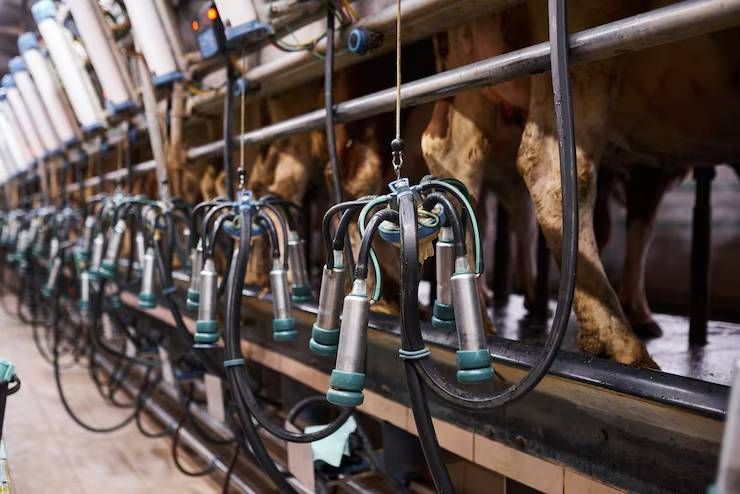
A milking machine generally uses a vacuum pump, pulsators, teat cups, milk tubes, air lines, and a collection system. The vacuum creates the pressure difference needed to draw milk from the teat, while pulsation alternates between milking and massage phases.
The basic process normally follows these stages:
- The animal and udder are prepared for milking.
- Teat cups are correctly positioned.
- A controlled vacuum is established.
- Pulsation creates alternating milking and rest phases.
- Milk moves through the milk line into a collection container or tank.
- The equipment is cleaned and sanitized after use.
The exact configuration depends on the animal species, herd size, milking arrangement, and level of automation.
| Component | Main function |
|---|---|
| Vacuum pump | Creates the required vacuum |
| Pulsator | Controls alternating pulsation |
| Teat cups | Connect the system to the teats |
| Milk tube | Carries milk toward collection |
| Air tube | Supports vacuum and pulsation functions |
| Milk receiver | Collects milk from the system |
| Cooling tank | Reduces and maintains milk temperature |
| Sensors | Monitor selected operating conditions |
ISO 5707:2007 specifies performance, information, dimensional, material, design, manufacturing, and installation requirements for applicable milking machine installations. The standard covers systems using vacuum-generated pulsation for animals including cows, water buffaloes, sheep, and goats.
Importance – Why Milking Equipment Matters
Milking equipment can influence the consistency, hygiene, handling, and organization of dairy operations. A properly configured system can provide controlled milking conditions and reduce some repetitive manual activities.
The equipment also has implications for animal welfare. Incorrect vacuum levels, unsuitable teat-cup dimensions, poor pulsation, or inadequate maintenance can create problems for the udder and teats. For this reason, equipment selection and operating procedures need to consider both milk handling and animal health.
Milking machines can be relevant to:
- Small dairy farms
- Medium and large dairy operations
- Buffalo and cow producers
- Goat and sheep dairies
- Research and agricultural institutions
- Automated dairy facilities
Hygiene is particularly important because machine components can come directly into contact with milk. FSSAI guidance for milk production in India states that milking equipment should be adequately cleanable, corrosion resistant, maintained properly, and cleaned and disinfected regularly.
Recent Updates – Automation and Monitoring
Recent developments in dairy technology have increased the use of automation, electronic controls, sensors, and data collection. Automatic milking installations can combine milking equipment with animal identification, automated teat-cup attachment, milk-flow monitoring, and other control functions.
ISO's current catalogue includes ISO 20966:2007 for automatic milking installations and ISO 23130:2020 for monitoring devices associated with bulk milk cooling tanks.
Automated Milking Systems
An automated milking system can allow an animal to enter a designated milking area, where identification technology can help the system recognize the animal. Depending on the installation, sensors may monitor milk flow or other operating information.
Common technology areas include:
- Electronic animal identification
- Milk-flow sensors
- Automatic teat-cup attachment
- Vacuum monitoring
- Automated cleaning cycles
- Milk-quality monitoring
- Digital records and alerts
Automation does not eliminate the need for human oversight. Operators still need to monitor equipment, hygiene, animal condition, cleaning procedures, and abnormal readings.
Mechanical testing is also an established part of milking equipment evaluation. ISO 6690:2007 specifies mechanical tests for milking machine installations and includes procedures for checking installations and components.
Laws or Policies – Hygiene and Equipment Requirements
Milking machine requirements vary according to the country, dairy operation, animal species, and intended use of the milk. Food-safety regulations commonly focus on hygiene, equipment cleanliness, contamination prevention, and milk handling rather than prescribing one universal machine design.
In India, FSSAI's milk and milk-product guidance provides food-safety and hygiene information for food businesses. Its guidance is based on Schedule 4 requirements and addresses good hygienic practices throughout relevant parts of the supply chain.
For milking equipment, Indian requirements include provisions concerning cleanable materials, equipment maintenance, regular cleaning and disinfection, and avoiding damage to teats and udders during normal operation. FSSAI documentation also describes cleaning procedures for machine components and regular replacement of worn rubber parts.
In the European Union, Regulation (EC) No 853/2004 requires milking equipment and milk-handling premises to be constructed to limit contamination risks. Milk-contact surfaces must be easy to clean and, where necessary, disinfected and maintained in good condition. The regulation also establishes hygiene requirements during milking and milk collection.
Because regulations can change and may differ by jurisdiction, dairy operators should consult the applicable national food-safety authority and local agricultural regulations.
Tools and Resources – Learning About Milking Systems
Several technical resources can help readers understand milking machine operation and equipment requirements.
The International Organization for Standardization provides information about ISO 5707:2007, which covers construction and performance requirements for applicable milking machine installations.
FSSAI provides a dedicated Food Safety Management System guidance document for milk and milk products, including practical information concerning hygiene and food-safety practices.
Useful resources include:
- Equipment manufacturer's technical manuals
- Dairy-farm hygiene checklists
- Milking-system maintenance records
- Vacuum and pulsation testing records
- Milk-cooling monitoring records
- National food-safety regulations
- Agricultural extension resources
A maintenance record can document cleaning dates, inspections, replacement of worn components, vacuum checks, and other routine activities. Such records can help identify recurring equipment problems.
FAQs – Milking Machine Information
What is a milking machine?
A milking machine is equipment that uses controlled vacuum and pulsation to extract milk from dairy animals. The milk is transported through tubing into a collection system.
How does an automated milking system work?
An automated system can identify an animal, position or assist with teat cups, control milking parameters, monitor milk flow, and record selected information. The exact functions depend on the system design.
Which animals can use milking machines?
Milking machines are available for different dairy species. ISO 5707 includes applicable installations for cows, water buffaloes, sheep, and goats. Equipment must be appropriate for the particular animal and milking method.
Why is cleaning important?
Milk-contact components can become contaminated if they are not properly cleaned. Regular cleaning and disinfection help reduce contamination risks and support hygienic milk handling.
What should operators monitor?
Operators may monitor vacuum performance, pulsation, milk flow, equipment cleanliness, tubing condition, teat-cup condition, cooling performance, and unusual animal or milk observations.
Conclusion – Key Information to Remember
Milking machines combine vacuum, pulsation, milk-transfer components, and collection systems to support controlled dairy milking. Modern automated systems can add identification, sensors, monitoring, and digital records to the basic mechanical process.
Good hygiene and appropriate equipment operation remain important regardless of the level of automation. International standards such as ISO 5707 and national food-safety requirements provide useful reference points for understanding equipment design, testing, cleanliness, and milk handling.
For anyone learning about milking machine systems, the main areas to understand are the machine components, milking process, cleaning procedures, animal considerations, automation features, and applicable regulations.