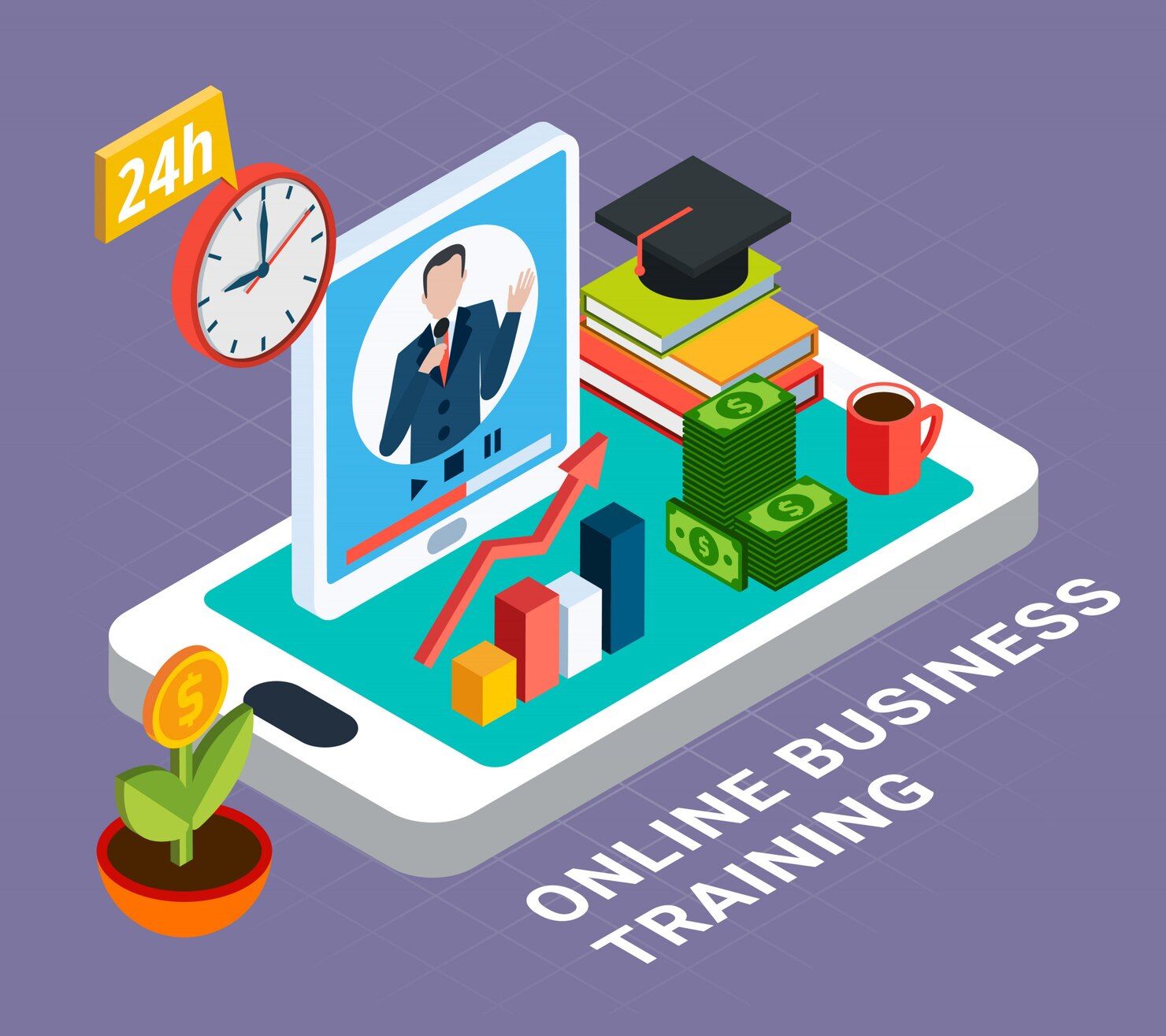
Online business courses have become one of the most accessible ways to learn practical business knowledge from anywhere. Whether someone wants to understand entrepreneurship, marketing, finance, management, or digital business, online learning has made these topics available to people with different educational backgrounds and experience levels.
The growth of remote work, digital entrepreneurship, and technology-driven industries has increased the demand for business education that is flexible and easy to follow. Instead of relying only on traditional classrooms, many learners now choose online courses because they can study at their own pace while balancing work, education, or personal responsibilities.
This guide explains what online business courses are, why they are important, what subjects they usually cover, recent developments in online learning, and how learners can choose a course that matches their goals.
What Are Online Business Courses?
Online business courses are educational programs delivered through digital learning platforms. They teach business concepts using videos, reading materials, quizzes, assignments, discussions, and practical exercises. These courses are designed for beginners, professionals, students, freelancers, and business owners who want to develop new skills.
Unlike traditional classroom education, online courses allow learners to access lessons whenever it is convenient. Some courses follow a fixed schedule, while others are self-paced and let learners complete modules over weeks or months.
Business education online covers a wide range of topics, including entrepreneurship, accounting, leadership, project management, business communication, sales, digital marketing, operations, and business strategy. The variety of subjects makes online learning suitable for many different career paths.
Why Online Business Courses Matter Today
Business skills are no longer useful only for company executives or entrepreneurs. Professionals across industries benefit from understanding how organizations operate, manage resources, communicate with customers, and make decisions.
Online business courses help learners understand the basics of planning, problem-solving, teamwork, and financial thinking. These skills are increasingly valuable in both traditional workplaces and digital businesses.
The flexibility of online learning also makes education more accessible. People living in different regions or working full-time can continue learning without relocating or attending physical classes. This broader access has contributed to the popularity of online business education around the world.
Another reason these courses matter is the changing nature of work. As businesses adopt digital tools, employees and entrepreneurs need updated knowledge about technology, online marketing, customer experience, and data-driven decision-making.
Who Can Benefit from Online Business Courses?
Online business education is suitable for people at different stages of their learning journey. Students often use introductory courses to build foundational business knowledge before entering higher education or the workforce.
Working professionals use business courses to improve management, communication, and leadership skills. Freelancers learn about pricing strategies, client relationships, branding, and project organization.
Small business owners and entrepreneurs often study topics such as business planning, marketing, financial management, and customer acquisition to improve their operations. Career changers also benefit by gaining business knowledge before moving into new industries.
Because many courses begin with basic concepts, prior business education is not always necessary.
Popular Subjects Covered in Online Business Courses
Business education includes many specialized areas that address different career interests. Marketing courses explain customer behavior, branding, advertising strategies, and digital marketing fundamentals. Finance courses introduce budgeting, financial statements, cash flow, and investment basics.
Entrepreneurship courses focus on identifying business opportunities, validating ideas, creating business models, and managing business growth. Management courses explore leadership, organizational behavior, decision-making, and team collaboration.
Business communication courses teach presentation skills, negotiation, professional writing, and workplace communication. Project management courses explain planning, scheduling, risk management, and resource coordination.
Operations and supply chain courses discuss inventory management, logistics, production planning, and quality improvement. These subjects help learners understand how businesses function from multiple perspectives.
Key Skills You Can Learn
A quality online business course focuses on practical understanding rather than memorizing concepts. Learners gradually develop business thinking and decision-making abilities.
| Business Skill | How It Helps |
|---|---|
| Business planning | Helps organize goals, strategies, and long-term direction. |
| Financial literacy | Improves understanding of budgets, expenses, and profitability. |
| Marketing fundamentals | Explains how businesses reach and communicate with customers. |
| Leadership | Builds confidence in managing people and projects. |
| Strategic thinking | Supports better decision-making through analysis and planning. |
| Communication | Strengthens collaboration and professional interactions. |
| Problem solving | Encourages structured approaches to business challenges. |
These skills remain valuable across industries because they apply to many professional situations.
Different Learning Formats Available
Online business courses are available in several formats depending on learning preferences and time availability.
Self-paced courses allow learners to complete lessons independently without deadlines. This format works well for people balancing work or studies.
Instructor-led courses follow scheduled classes and assignments. Learners interact with instructors and classmates through live sessions or discussion forums.
Short business workshops focus on specific skills, while comprehensive programs cover broader business subjects over several weeks or months. Microlearning courses divide lessons into shorter sessions that are easier to complete during busy schedules.
Many learners combine different formats depending on their goals and available time.
How to Choose the Right Online Business Course
Choosing an online business course begins with identifying personal learning objectives. Someone interested in starting a business may prioritize entrepreneurship and marketing, while a professional seeking career growth may focus on leadership or project management.
Course content should match the learner's current knowledge level. Beginner courses explain concepts gradually, while intermediate and advanced courses assume existing business understanding.
The course structure also matters. A well-organized curriculum progresses logically from foundational ideas to practical applications, making learning easier to follow.
Learners may also consider the amount of hands-on practice, assignments, case studies, and opportunities to apply concepts in real situations. Practical learning often improves long-term understanding.
Recent Trends in Online Business Learning in 2025–2026
Online business education has continued evolving during 2025 and 2026. Artificial intelligence has become part of many learning experiences, helping personalize study recommendations, generate practice questions, and provide interactive feedback during exercises.
Business courses increasingly include topics related to AI in marketing, AI productivity tools, automation, prompt engineering, and digital transformation. As organizations adopt new technologies, learners are seeking courses that combine traditional business knowledge with digital skills.
Interactive learning has also expanded through simulations, collaborative projects, and real-world business scenarios. Instead of only watching lectures, learners now participate in activities that encourage critical thinking and decision-making.
Mobile learning continues growing as educational platforms improve learning experiences on smartphones and tablets, allowing learners to study during travel or short breaks.
There is also greater emphasis on lifelong learning, encouraging professionals to update skills continuously rather than relying on one-time education.
The Role of Digital Skills in Modern Business Courses
Modern businesses rely heavily on digital tools, making technology knowledge an important part of business education. Many online courses introduce learners to customer relationship management systems, data analysis tools, collaboration platforms, cloud-based productivity software, and digital communication methods.
Digital marketing has become one of the most popular subjects because businesses increasingly connect with customers through websites, search engines, email, social media, and online advertising.
Understanding digital workflows helps learners adapt to technology-driven workplaces while improving productivity and collaboration across teams.
How Online Business Courses Support Career Development
Learning business skills can support professional growth in different ways. Employees often gain confidence when participating in meetings, managing projects, or communicating ideas clearly.
Managers benefit from understanding leadership, performance management, and organizational planning. Entrepreneurs improve their knowledge of customer research, budgeting, operations, and business strategy.
Business education also helps individuals understand industry trends and changing workplace expectations. Continuous learning demonstrates adaptability, which is increasingly valuable in evolving industries.
Rather than replacing experience, online business courses complement practical work by providing frameworks and concepts that help learners approach business challenges more effectively.
Common Challenges Learners Face
Although online learning offers flexibility, it also requires consistency and self-discipline. Without a classroom schedule, learners sometimes postpone lessons or lose motivation.
Information overload is another challenge because business education covers many topics. Trying to learn everything at once can become overwhelming. Focusing on one subject area before moving to another often leads to better understanding.
Practical application can also be difficult if learners only watch videos without practicing concepts. Completing assignments, analyzing case studies, and applying lessons to personal projects improves learning outcomes.
Time management remains important because regular study sessions are generally more effective than long periods of occasional learning.
Building an Effective Learning Routine
A structured learning routine helps learners stay consistent throughout an online course. Setting realistic weekly learning goals creates steady progress without becoming overwhelming.
Reviewing notes after each lesson reinforces important concepts. Applying business ideas to everyday examples also improves understanding because learners connect theory with practical situations.
Creating a distraction-free study environment helps maintain focus during lessons. Taking breaks between study sessions can improve concentration and reduce fatigue during longer learning periods.
Tracking completed modules and revisiting challenging topics also supports long-term retention of business concepts.
Future of Online Business Education
The future of online business courses is expected to become more interactive, personalized, and skill-focused. Artificial intelligence, virtual collaboration tools, and adaptive learning technologies are changing how business education is delivered.
Courses are increasingly emphasizing practical problem-solving, real-world business simulations, and industry-relevant projects. Learners are also expected to develop cross-functional knowledge that combines business, technology, communication, and data analysis.
As businesses continue adapting to digital transformation, sustainability, automation, and global collaboration, business education will likely expand into emerging subjects that prepare learners for changing workplace environments.
Continuous learning is becoming an important part of professional development, making online business education a long-term learning resource rather than a one-time educational experience.
Frequently Asked Questions
What is the purpose of an online business course?
An online business course helps learners understand business concepts, develop practical skills, and build knowledge in areas such as marketing, finance, entrepreneurship, management, and communication.
Are online business courses suitable for beginners?
Yes. Many courses begin with foundational topics and gradually introduce more advanced business concepts, making them accessible to learners without previous business experience.
How long does it take to complete an online business course?
Course duration varies depending on the subject, learning format, and study pace. Some courses are completed within days, while others extend over several weeks or months.
What business skills are most valuable today?
Skills related to communication, leadership, financial literacy, digital marketing, project management, strategic thinking, and problem solving are widely applicable across many industries.
Can online business courses help professionals already working in a business role?
Yes. Professionals often use online courses to strengthen existing knowledge, learn updated business practices, improve leadership abilities, and stay current with industry trends.
Conclusion
Online business courses have transformed the way people learn business skills by making education flexible, accessible, and relevant to modern workplaces. They provide opportunities for students, professionals, entrepreneurs, and lifelong learners to understand how businesses operate and develop practical knowledge that can be applied in many industries.
As digital transformation continues shaping organizations worldwide, business education increasingly combines traditional management concepts with technology, communication, and data-driven decision-making. Choosing a course that matches personal learning goals and maintaining a consistent learning routine can help learners build valuable business knowledge over time.
Rather than focusing only on theory, modern online business education encourages practical understanding, critical thinking, and continuous skill development, making it a useful learning path in today's evolving business environment.