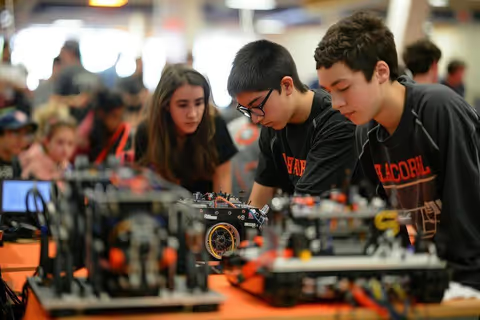
Summer break can be more than a pause from regular classes. It can provide students with time to explore interests, strengthen academic foundations, develop useful skills, read more widely, and prepare for the next stage of learning.
A good summer education plan does not need to turn every day into a school day. The goal is to create a healthy balance between learning, recreation, creativity, family time, and rest. With a simple structure, students can use the break to make meaningful progress without feeling overwhelmed.
What Is Summer Education?
Summer education refers to learning activities completed during the summer break outside the normal academic schedule. These activities can include academic revision, reading programs, educational projects, skill development, online learning, educational trips, creative activities, and preparation for future studies.
The approach can vary depending on a student's age, interests, academic needs, and available time. A younger learner may benefit from reading, creative projects, educational games, and hands-on activities, while an older student may focus on subject preparation, research, digital skills, or career exploration.
The most useful summer plans are usually flexible rather than highly restrictive.
Why Is Summer Learning Important?
Long breaks can create an opportunity to revisit subjects that may need additional attention. Regular but manageable learning can also help students maintain familiarity with important concepts before returning to school.
Summer learning can support several areas:
- Academic reinforcement: Reviewing mathematics, science, languages, or other subjects can strengthen previously learned concepts.
- Reading development: Reading regularly can improve vocabulary, comprehension, writing ability, and general knowledge.
- Skill development: Students can explore technology, communication, creative writing, coding, art, research, or other interests.
- Independent learning: A flexible summer schedule encourages students to take greater responsibility for what and how they learn.
- Confidence building: Completing manageable projects can help learners recognize their progress and develop confidence.
The purpose is not necessarily to study for long hours. Consistency and meaningful learning experiences can be more useful than an overloaded schedule.
How to Create a Practical Summer Education Plan
A summer education plan works best when it starts with a clear understanding of what the student wants to accomplish.
Begin by identifying three or four realistic goals. For example, a student might want to complete several books, improve mathematics skills, learn basic programming, and complete a creative project.
Next, divide those goals into smaller activities.
Instead of setting a broad goal such as "improve science," a student could choose specific tasks such as reviewing one topic each week, watching educational lessons, creating notes, and completing practice questions.
A simple weekly structure might include:
- Academic review on selected days
- Regular reading time
- One skill-development activity
- A creative or practical project
- Outdoor or recreational activities
- Flexible personal time
This approach creates structure without making the summer feel like another full school term.
Summer Learning Activities for Students
There are many ways to learn during the summer without relying entirely on traditional textbooks.
Reading and Writing
Reading is one of the simplest summer learning activities. Students can explore fiction, biographies, history, science, current affairs, travel writing, or subjects connected to personal interests.
Keeping a short reading journal can make the activity more interactive. Students can record important ideas, unfamiliar words, questions, and personal observations.
Writing activities can include short essays, book reviews, stories, research summaries, or personal reflections.
Educational Projects
Projects allow students to apply information instead of simply memorizing it.
A science learner might create a simple observation project about plants or weather. A history student could research a historical period and create a timeline. A geography learner might study a particular country, region, or ecosystem.
Projects can be completed individually or with family members, depending on age and circumstances.
Digital Skills
Summer can also provide time to explore useful digital skills. Students can learn basic presentation design, spreadsheet fundamentals, responsible internet research, introductory programming, digital organization, or multimedia creation.
Digital learning should be age-appropriate and balanced with offline activities.
Practical Learning
Everyday activities can become educational experiences. Cooking can introduce measurements and basic science. Gardening can demonstrate biology and environmental concepts. Planning a trip can involve geography, budgeting concepts, research, and organization.
These activities connect academic knowledge with real-world situations.
How to Maintain a Summer Study Routine
A summer routine does not need to be complicated. A few consistent habits can make learning easier.
Choose a regular learning period when the student is usually alert and focused. Short sessions may be more manageable than long study periods, especially for younger learners.
A useful routine can include:
- Review a previously learned concept.
- Learn one new idea.
- Practice or apply the idea.
- Take a break.
- Record what was learned.
Students should also leave enough time for sleep, physical activity, hobbies, social interaction, and relaxation. A balanced routine can make learning more sustainable throughout the summer.
Summer Education for Different Age Groups
Learning priorities naturally change with age.
Elementary students can focus on reading, basic mathematics, creative activities, observation, and hands-on exploration.
Middle school students can combine academic revision with projects, reading, technology skills, writing, and exploration of new subjects.
High school students may benefit from deeper subject review, independent research, academic preparation, communication skills, digital literacy, and exploration of potential areas of further study.
The right approach depends on the individual learner rather than a single standard schedule.
Common Summer Learning Mistakes
One common mistake is creating an unrealistic timetable. Filling every hour with academic tasks can reduce motivation and leave little room for rest.
Another issue is focusing only on weaknesses. While improving difficult subjects is useful, summer can also be a valuable time to explore subjects that naturally interest the student.
Passive learning can also limit the benefits of summer education. Simply watching lessons without taking notes, asking questions, practicing, or applying knowledge may not provide the same learning experience as active participation.
Finally, comparing one student's summer progress with another's can create unnecessary pressure. Learning goals should reflect individual needs, interests, and circumstances.
How Parents and Students Can Work Together
Parents can support summer education by helping establish reasonable routines and providing opportunities for exploration. However, students should gradually develop ownership of their learning.
Instead of deciding every activity, parents can ask questions such as:
- What would you like to learn this summer?
- Which subject would you like to improve?
- What project would you enjoy completing?
- Which book or topic interests you?
- What would make your summer learning more enjoyable?
These conversations can help students become more involved in planning their own educational activities.
Frequently Asked Questions
Is summer education only for academic subjects?
No. Summer education can include academic subjects as well as reading, technology, communication, creativity, practical activities, research, and personal skill development.
How much should students study during summer?
There is no single amount that works for everyone. The appropriate routine depends on age, academic needs, interests, and other summer activities. Short, consistent learning sessions can be effective when combined with adequate rest.
What are some easy summer learning activities?
Reading, writing, educational projects, nature observation, educational documentaries, practical experiments, creative work, research projects, and digital skill activities are accessible options for many students.
Can summer learning be enjoyable?
Yes. Students can choose subjects connected to their interests and use projects, games, experiments, books, and practical activities to make learning more engaging.
Should students follow the same routine every day?
Not necessarily. A basic structure can provide consistency while allowing flexibility for travel, family activities, hobbies, recreation, and other summer experiences.
Conclusion
A well-planned summer education experience is not about replacing school with another demanding schedule. It is about using the extra time available during the break to explore ideas, strengthen knowledge, develop skills, and discover new interests.
The most effective approach combines reasonable academic practice with reading, creativity, practical experiences, physical activity, social time, and rest. By setting a few realistic goals and turning them into manageable activities, students can make their summer both productive and enjoyable.
Summer can therefore become a valuable period of independent learning—one where education extends beyond the classroom and connects naturally with everyday life.