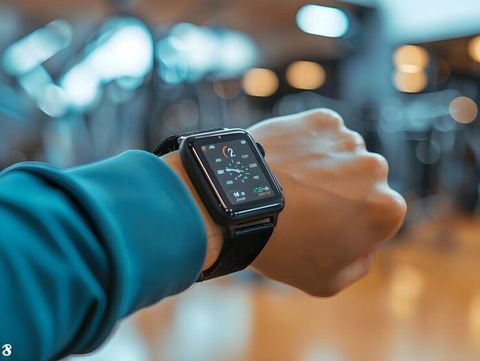
Smart wearables have developed from simple digital accessories into connected devices that can collect information, communicate with smartphones, and support everyday activities. Smartwatches, fitness trackers, smart rings, connected medical devices, and other wearable electronics combine hardware, software, sensors, wireless communication, batteries, and compact mechanical components in a small form factor.
Because these products are worn on the body, manufacturing requires more than simply assembling electronic parts. Designers and manufacturers must consider comfort, durability, power consumption, sensor accuracy, connectivity, thermal behavior, data protection, and product reliability.
Understanding the smart wearable manufacturing process can help businesses, engineers, product teams, and general readers understand how an idea becomes a functional wearable device.
What Is Smart Wearable Manufacturing?
Smart wearable manufacturing is the process of designing, producing, assembling, testing, and preparing connected electronic devices intended to be worn or carried on the body.
A typical wearable may contain several technologies working together:
- Microprocessors or system-on-chip components
- Motion, optical, temperature, or environmental sensors
- Bluetooth and other wireless communication components
- Rechargeable batteries and power-management circuits
- Displays, touch interfaces, or indicator systems
- Printed circuit boards
- Flexible or compact mechanical structures
- Firmware and embedded software
- Mobile applications or cloud-connected software
The challenge is integrating these elements into a device that remains compact, comfortable, reliable, and practical for everyday use.
Main Stages of Smart Wearable Manufacturing
Although manufacturing methods vary according to product type, most smart wearables follow a structured development and production process.
1. Product Design and Requirements
Manufacturing begins with clearly defined product requirements. The development team identifies the intended functions, physical dimensions, operating environment, connectivity requirements, battery expectations, and user interaction methods.
Industrial designers work on the physical appearance and ergonomics, while electrical and software engineers determine how the internal systems will operate.
Early design decisions are important because changing the enclosure, battery, sensors, or circuit layout later can affect the entire production process.
2. Electronic Component Selection
The next stage involves selecting components that can provide the required functionality within the available space.
Common components include processors, memory, sensors, wireless modules, charging circuits, displays, and power-management components.
Sensor selection is particularly important. A fitness tracker, for example, may require motion and optical sensors, while another wearable may depend on temperature, environmental, or specialized measurement technologies.
Component selection also considers energy consumption, operating temperature, physical size, availability, and long-term reliability.
3. PCB Design and Electronics Assembly
The printed circuit board, or PCB, provides the electrical foundation of many wearable devices. Engineers design the board to connect processors, sensors, memory, communication components, power systems, and other electronics.
Wearables often require highly compact PCB layouts because internal space is limited. Depending on the design, manufacturers may use miniature components and specialized board structures to achieve the required size.
During assembly, electronic components are mounted onto the PCB using automated manufacturing processes. The assembled boards are then inspected to identify potential soldering, placement, or connection problems.
4. Sensor Integration and Calibration
Sensors are central to many smart wearable products. However, installing a sensor is only one part of achieving useful measurements.
Sensors must be positioned correctly and integrated with the surrounding mechanical and electronic systems. The device may also require calibration to account for component variation and environmental conditions.
For example, motion sensors need appropriate orientation and software processing, while optical sensors require suitable contact and positioning relative to the user's skin.
Calibration procedures can help establish consistent performance across individual devices.
Battery and Power Management
Battery design is one of the most important considerations in wearable manufacturing.
Because wearable devices are small, they have limited space for batteries. At the same time, displays, wireless communication, sensors, processors, and background software can consume significant energy.
Manufacturers therefore design power-management systems around the expected operating pattern of the product. Low-power processors, efficient wireless communication, optimized sensor sampling, and software-based power-saving features can help extend operating time.
Battery integration also requires careful consideration of charging methods, temperature behavior, mechanical protection, and electrical safety.
Enclosure and Materials
The external enclosure protects internal components while also affecting comfort and appearance.
Depending on the application, wearable housings may use materials such as engineered plastics, metals, glass, ceramics, elastomers, or combinations of different materials.
Material selection depends on factors such as:
- Weight
- Durability
- Skin contact
- Resistance to moisture
- Impact resistance
- Heat behavior
- Manufacturing requirements
- Surface finish
The enclosure must provide adequate protection without making the wearable unnecessarily heavy or uncomfortable.
For products intended for extended use, ergonomic design is particularly important. Straps, edges, buttons, charging interfaces, and contact surfaces all influence the overall user experience.
Firmware and Software Integration
Hardware alone does not make a wearable smart. Firmware controls many of the device's functions, including sensor readings, power management, communication, and user interactions.
Wearables may also communicate with smartphone applications through wireless protocols. The application can display collected information, manage settings, synchronize data, and provide additional functionality.
Software development therefore needs to happen alongside hardware development rather than being treated as a final manufacturing step.
Testing should examine communication stability, sensor behavior, battery usage, software reliability, and interactions between hardware and firmware.
Quality Control and Testing
Quality control is essential because wearable devices are exposed to movement, handling, moisture, temperature changes, and repeated charging.
Manufacturers may perform several types of testing during production and final inspection.
Functional Testing
Functional testing verifies that essential features operate as intended. This can include sensors, displays, buttons, charging systems, wireless communication, and other electronic functions.
Durability Testing
Durability testing evaluates how a device responds to physical conditions such as repeated movement, vibration, impacts, button operation, charging cycles, and other expected forms of use.
Environmental Testing
Environmental tests may examine performance under different temperature and humidity conditions. Products designed for outdoor or active environments may require additional environmental evaluation.
Water and Moisture Resistance
If a wearable is designed to operate around water or sweat, its enclosure and seals need appropriate evaluation. The relevant protection level depends on the product's intended application and design specifications.
Battery and Charging Tests
Battery systems should be evaluated for charging behavior, temperature, electrical performance, and repeated use. Proper testing helps identify potential issues before products reach users.
Supply Chain and Production Planning
Smart wearable manufacturing depends on coordination between electronic component suppliers, PCB production, mechanical component production, software teams, assembly operations, testing facilities, and logistics.
Supply chain planning is particularly important for small electronic components because a shortage of one critical component can affect the entire production schedule.
Manufacturers may also need alternative component strategies, quality checks for incoming materials, and documented production procedures to maintain consistency.
Compliance and Data Considerations
Wearables that use wireless communication, batteries, electronic components, or specialized sensors may be subject to applicable regulatory and safety requirements in their target markets.
The exact requirements depend on the product's technology, intended use, operating region, and claims made about the device.
Data handling is another important consideration. Devices that collect personal or activity-related information should incorporate appropriate security practices, controlled access, secure communication, and responsible data management.
Common Manufacturing Challenges
Smart wearable manufacturing involves several interconnected challenges. Miniaturization can make assembly and thermal management more difficult. Adding more sensors can increase power consumption. Stronger enclosures can increase weight, while lighter materials may require additional durability evaluation.
Another challenge is balancing hardware capabilities with battery life. A device with numerous functions may require more processing and communication, which can reduce operating time.
Manufacturers must therefore consider the complete system rather than optimizing only one component.
Future Direction of Smart Wearable Manufacturing
Wearable technology continues to move toward smaller electronics, improved sensors, more efficient power systems, flexible components, and better integration with software platforms.
Manufacturing processes are also expected to place greater emphasis on automation, component traceability, miniaturized electronics, sustainable materials, and efficient production methods.
As wearable devices become more specialized, manufacturing will increasingly depend on close coordination between industrial design, electronics engineering, software development, materials science, testing, and quality management.
Frequently Asked Questions
What is smart wearable manufacturing?
Smart wearable manufacturing involves designing, producing, assembling, programming, and testing connected electronic devices intended to be worn or carried on the body.
What components are commonly used in smart wearables?
Common components include processors, sensors, batteries, power-management circuits, wireless communication modules, displays, memory, PCBs, and mechanical enclosures.
Why is battery management important in wearable devices?
Wearables have limited physical space, so manufacturers must balance battery capacity with device size, sensor activity, wireless communication, processing requirements, and user expectations.
How are smart wearables tested?
Testing can include functional, durability, environmental, battery, charging, wireless communication, sensor, and enclosure-related evaluations.
What makes wearable manufacturing different from conventional electronics manufacturing?
Wearables must combine electronics with compact mechanical structures while considering comfort, weight, skin contact, battery limitations, movement, and everyday environmental exposure.
Conclusion
Smart wearable manufacturing is a multidisciplinary process that combines electronic engineering, sensor technology, software, materials, mechanical design, assembly, and quality testing. Successful development requires careful planning from the earliest design stage through final production.
For anyone evaluating wearable technology, understanding these manufacturing stages provides useful insight into why factors such as component selection, sensor calibration, battery management, enclosure design, software integration, and testing all influence the final product. As wearable technology continues to evolve, manufacturing processes will remain central to making these compact connected devices more reliable, efficient, and practical for everyday use.