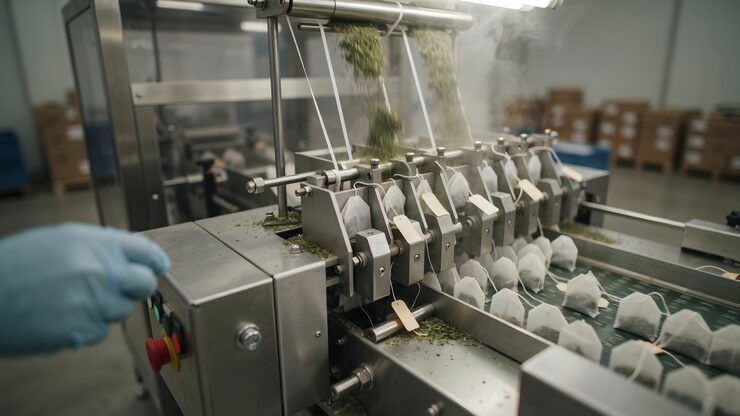
Tea bag packing machines are specialized packaging systems designed to measure tea, place it into filter material, form individual bags, and prepare them for distribution. These machines are used by tea processors, beverage manufacturers, packaging facilities, and businesses producing traditional or specialty tea products.
Tea packaging requires careful control of weight, sealing, material quality, and product hygiene. Loose tea leaves vary in size, shape, density, and moisture content, which can affect how they flow through filling equipment. Automated packaging systems help maintain consistent portions and repeatable production processes.
Modern tea bag packing machinery ranges from compact semi-automatic equipment to high-speed production lines that form, fill, seal, tag, and wrap tea bags. The appropriate configuration depends on the tea variety, bag design, packaging material, required production volume, and applicable food safety standards.
Understanding Tea Bag Packing Equipment
A tea bag packing machine typically combines several operations within one system. Depending on its design, it may measure tea leaves, form filter bags, dispense the measured quantity, seal the bags, attach strings and tags, and place the finished products into protective envelopes.
Common machine types include:
Traditional tea bag machines: Produce flat, rectangular or square tea bags.
Pyramid tea bag machines: Form three-dimensional bags that provide additional space for tea leaves and larger botanical ingredients.
Automatic tea packaging machines: Integrate filling, forming, sealing, and discharge operations.
Envelope packing machines: Place individual tea bags inside secondary protective packaging.
String-and-tag attachment systems: Connect a tea bag to a string and identification tag.
Multi-lane packaging machines: Process several bags simultaneously to increase production capacity.
Semi-automatic machines: Require operators to perform some feeding, loading, or handling tasks.
Not every machine supports every format. Some models process only specific filter materials or bag shapes, so compatibility should be checked before equipment selection.
How the Tea Bag Packing Process Works
The packaging process begins with preparing the tea and ensuring that it meets the required production specifications.
Tea feeding: Tea leaves are transferred from a hopper into the filling system. Feed mechanisms are designed to distribute material consistently while limiting blockages and product damage.
Portion measurement: A volumetric or other metering mechanism measures the intended quantity of tea for each bag. The appropriate system depends on leaf size, density, and the required filling accuracy.
Bag formation: Filter paper or another approved packaging material is shaped into a bag. Some systems form the bag directly from a continuous roll.
Filling and sealing: The measured tea enters the bag, which is closed using a compatible heat-sealing or other approved sealing method.
String and tag attachment: Where required, the machine attaches a string and paper tag to each bag.
Secondary packaging: Finished tea bags may be placed into envelopes or wrappers that provide additional protection against moisture, contamination, and aroma loss.
Inspection and packing: Operators or automated inspection systems check package integrity, weight, appearance, and other quality parameters before the products move to their next packaging stage.
Why Tea Bag Packing Machines Matter
Tea bag packaging equipment helps manufacturers produce consistent portions while managing the hygiene, accuracy, and material requirements associated with food packaging.
Production Efficiency and Consistency
Manual tea bag preparation can involve repeated measuring, filling, folding, and sealing. Automated systems coordinate these tasks and can reduce repetitive handling.
Consistent portioning also helps manufacturers maintain product specifications. However, actual performance depends on the tea's physical characteristics, machine settings, maintenance, and operator training.
Product Protection
Tea leaves can lose aroma or absorb moisture when packaging is poorly designed or sealed. Appropriate filter material and secondary packaging help preserve product characteristics during storage and transportation.
Packaging must also remain compatible with the tea and intended brewing conditions. Materials used for bags, strings, tags, adhesives, and wrappers should be suitable for their intended food-contact applications.
Applications Across the Tea Industry
Tea bag packing machines are used for different product categories, including:
Black tea
Green tea
White tea
Herbal infusions
Flavored tea blends
Botanical beverage mixtures
Specialty loose-leaf blends adapted for bag packaging
Different ingredients can have different flow properties. Large leaves, fine particles, flowers, and mixed botanical materials may require adjustments to feeding, dosing, and sealing systems.
Recent Developments in Tea Packaging Technology
During 2025 and 2026, packaging development continued to focus on automation, material efficiency, quality monitoring, and alternatives to conventional plastic components.
Development of Alternative Filter Materials
Tea packaging manufacturers have continued exploring cellulose-based filter papers, plant-derived fibers, and other materials designed to meet food-contact requirements while addressing concerns about plastic use.
Material selection remains technically important. A filter must withstand filling and sealing, remain intact during brewing, and permit suitable water flow through the bag.
Claims about compostability or biodegradability should be assessed against the exact material composition and relevant testing standards. These properties cannot be assumed simply because a package is described as plant-based.
Smart Packaging Automation
Modern packaging systems increasingly incorporate programmable controllers, touchscreen interfaces, automatic fault detection, and production monitoring.
These features can help operators identify interruptions, adjust machine settings, and record production information. Depending on the configuration, monitoring systems may also track production counts, downtime, and selected quality parameters.
The level of automation varies significantly between equipment models. A connected monitoring system does not automatically guarantee improved filling accuracy or reduced material waste; results depend on proper implementation and process control.
Improved Quality Inspection
Packaging lines may incorporate electronic weighing systems, sensors, vision inspection, and seal-integrity checks.
Such technologies help identify underfilled bags, damaged packaging, incorrect labels, and other defects. Their effectiveness depends on the inspection method, calibration, product characteristics, and quality-control procedures.
Laws, Regulations, and Food Safety Policies
Tea bag packing machines operate within a broader framework of food safety, packaging, labeling, workplace safety, and environmental requirements. The applicable rules depend on the country where tea is produced, packaged, and distributed.
Food Safety Requirements in India
In India, tea processing and packaging activities are subject to applicable provisions of the Food Safety and Standards Act, 2006, and relevant Food Safety and Standards Authority of India regulations.
Food businesses must meet applicable requirements concerning hygiene, contamination prevention, food safety management, and labeling. Licensing or registration obligations depend on the activity and the relevant regulatory criteria.
Manufacturers should confirm current requirements with FSSAI and the appropriate state or local authorities before establishing or modifying a packaging operation.
Packaging and Labeling
Packaged tea must comply with applicable labeling requirements in its destination market. Depending on the jurisdiction and product, labels may need to include information such as:
Product name
Net quantity
Ingredient information where applicable
Manufacturer or packer details
Batch identification
Relevant dates and storage information
Required declarations and regulatory identifiers
The exact requirements vary by product category and market.
Machine and Workplace Safety
Industrial packaging equipment can involve moving parts, heated sealing elements, electrical components, and pneumatic systems.
Appropriate safeguards may include protective guards, emergency stops, electrical protection, operator training, cleaning procedures, and preventive maintenance. Food-contact components should also be suitable for their intended use and compatible with the facility's cleaning requirements.
Tools and Resources for Tea Packaging Operations
Technical documentation and production records can help facilities evaluate machinery and maintain consistent output.
Manufacturer Documentation
Equipment manuals and technical specifications can provide information about:
Supported bag formats
Compatible filter materials
Filling ranges
Production speed
Power requirements
Compressed-air requirements
Changeover procedures
Cleaning and maintenance schedules
Published maximum production rates should be compared with expected operating conditions rather than treated as guaranteed output.
Production and Quality Calculators
A spreadsheet can help estimate daily output, packaging material consumption, and production efficiency.
For example, theoretical daily output can be estimated as:
Daily output = Bags per minute × Operating minutes per day
Actual output will generally be lower when downtime, material changes, cleaning, adjustments, and quality checks are included.
Food Safety Resources
Useful resources include FSSAI guidance in India, relevant national food safety authorities in other countries, food-contact packaging standards, and applicable machinery safety documentation.
A packaging facility should maintain records covering equipment inspections, calibration, cleaning, batch traceability, material specifications, and quality-control results.
Frequently Asked Questions
What is a tea bag packing machine used for?
It measures tea, forms individual bags from suitable filter material, fills and seals them, and may attach strings and tags. Some systems also place the finished bags into individual envelopes.
What is the difference between a traditional and a pyramid tea bag machine?
Traditional machines generally produce flat tea bags, while pyramid machines create three-dimensional bags. The choice depends on the tea blend, desired bag format, filter material, and packaging requirements.
Can one machine package different types of tea?
Some machines can handle multiple tea varieties, but adjustments may be necessary because leaves, fine particles, and botanical ingredients behave differently during filling. Material compatibility and the machine's specified operating range should be checked.
What affects the production capacity of a tea bag packing machine?
Capacity depends on machine design, bag size, filling quantity, tea characteristics, sealing method, changeover requirements, and the amount of downtime during operation.
What regulations apply to tea bag packaging?
Requirements vary by country and can include food safety, food-contact materials, product labeling, hygiene, workplace safety, and packaging waste regulations. Manufacturers should verify the rules applicable to their facility and destination market.
Conclusion
Tea bag packing machines combine filling, bag formation, sealing, and, where required, string attachment and secondary packaging. They support consistent tea packaging across traditional tea bags, pyramid formats, herbal infusions, and other suitable beverage products.
Recent packaging developments emphasize automation, alternative filter materials, inspection systems, and production monitoring. These technologies can improve process control when matched to the product and supported by appropriate maintenance and quality procedures.
Selecting suitable machinery requires attention to tea characteristics, filling accuracy, packaging materials, output requirements, food safety, and local regulations. A well-planned packaging operation combines compatible equipment with reliable inspection, clear documentation, and consistent hygiene practices.