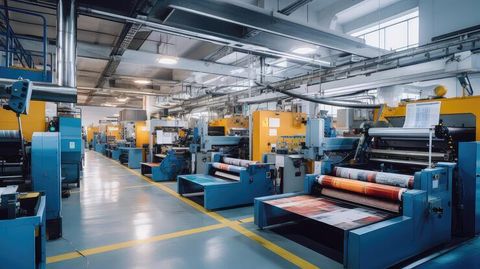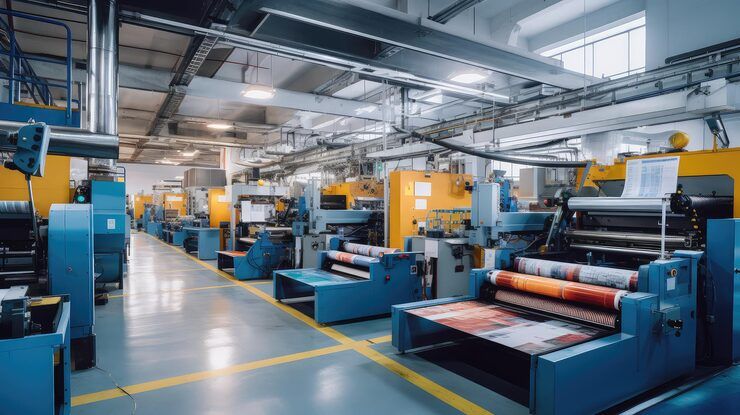
Digital printing machines are advanced printing systems that transfer digital artwork, text, graphics, or variable information directly onto paper, film, fabric, cardboard, labels, packaging materials, and other printable surfaces. Unlike traditional printing methods that often require physical plates, digital systems can process electronic files and produce printed output through inkjet or electrophotographic technologies.
The technology exists because modern printing increasingly requires shorter production runs, faster changes between designs, variable information, and efficient handling of customized content. Digital workflows can connect design software, color management, printing hardware, finishing equipment, and production monitoring into a single process.
How Digital Printing Works
A typical digital printing workflow begins with a digital document or image. The file is prepared using design or prepress software and then processed by a digital front end before reaching the printer.
The machine converts the digital information into controlled patterns of ink or toner. Depending on the technology, the image may be created using microscopic ink droplets or electrostatic toner particles.
Common digital printing technologies include:
Inkjet printing: Uses liquid ink droplets applied directly to the substrate.
Electrophotographic printing: Uses toner and electrostatic processes to create images.
UV inkjet printing: Uses ultraviolet light to cure ink rapidly after deposition.
Textile digital printing: Applies specialized inks to fabrics.
Industrial inkjet printing: Produces graphics, markings, coding, and functional patterns on industrial materials.
Major Digital Printing Machine Categories
| Machine Type | Common Materials | Typical Applications |
|---|---|---|
| Production toner printer | Paper, synthetic media | Commercial documents and publications |
| Sheetfed inkjet printer | Paper, coated stocks | Books, direct mail, graphics |
| Wide-format printer | Vinyl, textiles, boards | Signage and large graphics |
| Textile printer | Cotton, polyester, blended fabrics | Apparel and interior textiles |
| Label printer | Paper, films, synthetic media | Labels and product identification |
| Packaging printer | Folding cartons, corrugated board | Packaging graphics |
| Industrial inkjet system | Plastics, metals, ceramics, glass | Industrial marking and decoration |
The appropriate machine depends on substrate compatibility, image quality, production volume, color requirements, drying technology, and finishing requirements.
Why Digital Printing Matters Today
Digital printing has become important because organizations increasingly need flexible production and faster changes between different designs. It is used across publishing, packaging, textiles, advertising graphics, labels, commercial documents, and industrial manufacturing.
Shorter Production Runs
Digital printing can be practical when a project requires relatively small quantities or frequent design changes. Because digital files can be changed without creating new physical printing plates, different artwork can be processed within the same workflow.
This is particularly relevant for personalized documents, limited-edition publications, targeted marketing materials, and packaging variations.
Variable Data Printing
One major advantage of digital systems is the ability to change information from one printed item to another.
Variable data printing can incorporate:
Names
Numbers
Barcodes
QR codes
Product information
Regional graphics
Personalized images
Sequential identification codes
This capability is useful for labels, packaging, documents, tickets, and other applications requiring individual identification.
Packaging and Label Production
Digital packaging printing is developing rapidly as brands and manufacturers manage more product variations and shorter production cycles.
Digital technology can support multiple artwork versions without requiring a separate physical plate for every design. This can simplify workflows involving seasonal packaging, regional versions, product launches, and smaller production batches.
Textile and Fashion Applications
Digital textile printing allows patterns and graphics to be transferred onto fabrics using specialized ink systems.
It can support detailed designs, photographic imagery, gradients, and variable patterns. The technology is used for apparel, home textiles, interior decoration, flags, and other fabric-based products.
Recent Developments in Digital Printing
The digital printing industry continued to evolve during 2025 and 2026, with manufacturers and technology developers focusing on automation, higher productivity, sustainability, workflow integration, and advanced ink technologies.
Growth of Digital Packaging
Packaging remains an important area of digital printing development. Manufacturers are increasingly integrating digital presses with automated finishing, inspection, color management, and workflow software.
The growth of shorter packaging runs and greater artwork variation is encouraging interest in digital production technologies.
Automation and Workflow Integration
Modern digital printing systems increasingly connect with automated prepress and production-management platforms.
Important developments include:
Automated file preparation
Cloud-connected workflows
Automatic color calibration
Machine monitoring
Remote diagnostics
Automated quality inspection
Production analytics
Robotic material handling
These systems can reduce manual intervention and provide more consistent production records.
Advances in Inkjet Technology
Inkjet development continues to focus on printhead accuracy, ink chemistry, drying systems, substrate compatibility, and print speed.
UV-curable, water-based, solvent-based, and specialty ink systems each have different characteristics. Selection depends on the material, application, environmental requirements, and required durability.
Sustainability Trends
Environmental considerations are increasingly influencing printing technology. Areas receiving attention include:
Water-based ink systems
Reduced material waste
Energy-efficient curing
Recyclable substrates
Reduced packaging waste
Automated color management
More efficient production planning
Digital workflows can also reduce some forms of setup waste because designs can be changed electronically rather than requiring new physical plates.
Laws, Regulations and International Standards
Digital printing is affected by different regulations depending on the country, material, application, and final product. There is no single global printing law covering every digital printing machine.
Chemical and Ink Regulations
Printing inks, coatings, cleaning chemicals, and other materials may be regulated under national chemical-safety frameworks.
In the European Union, the REACH framework regulates the registration, evaluation, authorization, and restriction of chemicals. Printing companies using inks and related chemicals may therefore need to consider applicable chemical requirements.
In the United States, chemical products may fall under federal and state environmental and workplace regulations.
Packaging and Food-Contact Printing
Digital printing used for food packaging requires additional attention to materials and chemical migration.
The European Union has rules governing food-contact materials, while the United States regulates food-contact substances through the U.S. Food and Drug Administration framework.
Printers producing packaging for direct or indirect food contact must therefore verify that relevant inks, coatings, substrates, and production processes meet applicable requirements.
Workplace and Environmental Requirements
Printing facilities can also be affected by regulations covering:
Worker exposure to chemicals
Ventilation
Electrical safety
Machine guarding
Waste handling
Volatile organic compounds
Fire protection
Chemical storage
Environmental emissions
Requirements vary considerably by jurisdiction, so manufacturers and printing organizations should consult the regulations applicable to their specific location and application.
Tools and Resources for Digital Printing
A modern digital printing workflow involves much more than the printing machine itself. Software, measurement equipment, file-management systems, and quality-control tools can all affect final output.
Useful Tools
Adobe Creative Cloud: Commonly used for graphic design, image preparation, and layout.
PDF preflight tools: Check files for fonts, color spaces, resolution, transparency, and other production issues.
Color-management software: Helps maintain consistent color between digital files, displays, and printing equipment.
Spectrophotometers: Measure printed color values for calibration and quality control.
RIP software: Converts digital artwork into instructions that a printing system can process.
Variable-data software: Creates documents containing changing text, codes, images, or numbers.
Workflow automation platforms: Connect file preparation, production scheduling, printing, inspection, and reporting.
Print-calibration tools: Help maintain consistent output over time.
ICC color profiles: Provide standardized color information for different devices and substrates.
Production analytics platforms: Track machine utilization, output, quality indicators, and production data.
Factors to Evaluate
When researching a digital printing machine, important technical considerations include:
Maximum print width
Print resolution
Print speed
Substrate compatibility
Ink or toner technology
Color configuration
Drying or curing technology
Variable-data capability
Automation features
Workflow integration
Quality-control systems
Energy requirements
Maintenance requirements
Machine specifications should always be compared with the actual application rather than relying on speed or resolution alone.
Frequently Asked Questions
What is a digital printing machine?
A digital printing machine produces images, text, graphics, or other information directly from digital files. Common technologies include inkjet and electrophotographic printing.
What materials can digital printers handle?
Depending on the machine, digital printers can process paper, cardboard, films, textiles, vinyl, synthetic media, and certain rigid materials. Substrate compatibility varies by equipment and ink technology.
What is variable data printing?
Variable data printing allows individual printed items to contain different information while being produced within the same workflow. Examples include names, serial numbers, QR codes, barcodes, and customized graphics.
Is digital printing suitable for packaging?
Yes. Digital printing is used for labels, folding cartons, flexible packaging, corrugated materials, and other packaging applications. The appropriate system depends on substrate, ink requirements, durability, regulatory requirements, and production volume.
What factors affect digital print quality?
Print quality depends on factors such as printhead technology, resolution, ink or toner characteristics, substrate quality, color management, file preparation, calibration, drying or curing, and machine maintenance.
Conclusion
Digital printing machines have transformed how documents, graphics, labels, packaging, textiles, and industrial materials are produced. Their ability to work directly from digital files makes them particularly useful for applications requiring design flexibility, variable information, frequent changes, and shorter production runs.
The technology now extends from office and commercial printing into high-volume production environments, packaging, textile manufacturing, and industrial applications. Advances in inkjet technology, automation, workflow software, color management, and inspection systems are further expanding digital printing capabilities.
Developments during 2025 and 2026 show continued attention toward automated workflows, digital packaging, advanced ink systems, sustainability, and connected production environments. At the same time, regulations concerning chemicals, food-contact materials, workplace safety, waste, and environmental emissions remain important considerations across international markets.
For organizations researching industrial digital printing machines, commercial digital printing equipment, digital packaging printing, inkjet printing technology, or textile digital printing, the most important factors include application requirements, substrate compatibility, image quality, production speed, workflow integration, automation, regulatory compliance, and long-term operational efficiency.
As printing technology continues to develop, digital systems are likely to become increasingly connected with automated production, intelligent quality control, data-driven workflows, and more efficient material management.