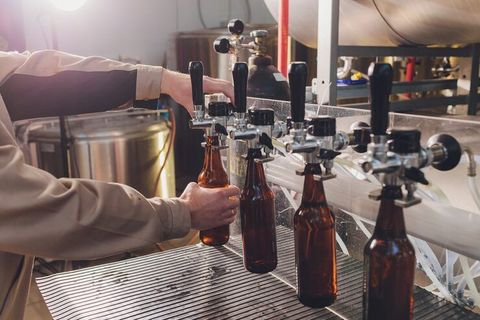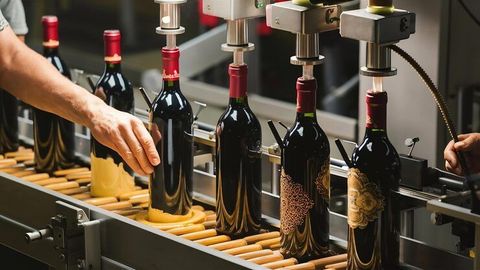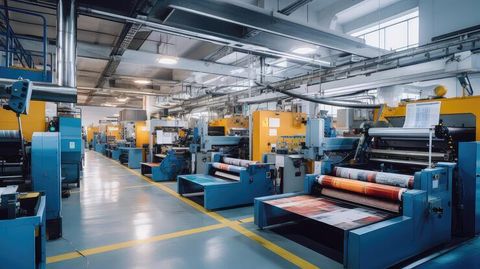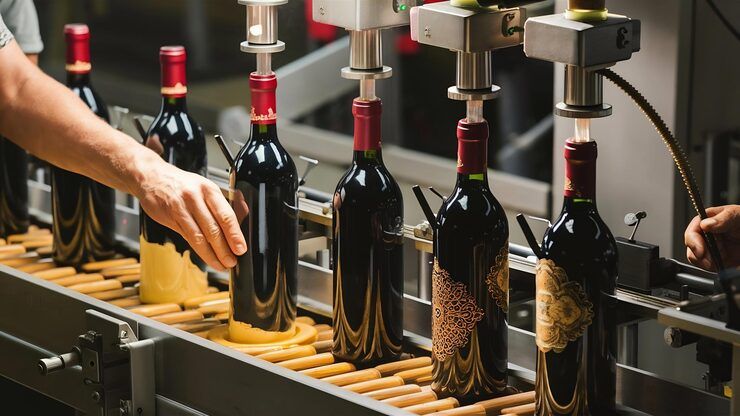
Wine bottling machines are specialized production systems designed to fill wine into bottles, control the filling process, apply closures, and prepare containers for labeling and packaging. They are used by wineries, beverage manufacturers, contract bottlers, and large-scale wine production facilities across many regions.
Modern bottling systems can perform several operations in sequence, including bottle rinsing, filling, corking or capping, capsule placement, labeling, inspection, and date or batch coding. The level of automation depends on production volume, bottle format, wine characteristics, and facility design.
Understanding the Bottling Process
Wine bottling begins after the wine has completed the required production, stabilization, filtration, and quality checks. The wine is transferred to a controlled filling system where bottles are positioned and filled to a specified level.
A typical automated line may include:
Bottle rinsing or cleaning
Bottle positioning
Nitrogen or inert-gas management
Wine filling
Cork or screw-cap insertion
Capsule application
Label application
Vision inspection
Batch or date coding
Case packing
Pallet preparation
Different wine types can require different filling approaches. Still wine, sparkling wine, fortified wine, and lower-alcohol products can have different handling requirements.
Main Types of Wine Bottling Machines
Wine bottling equipment can range from compact semi-automatic units to integrated high-throughput production lines.
| Machine Type | Main Function | Typical Application |
|---|---|---|
| Gravity Filler | Uses controlled liquid flow | Still wines |
| Vacuum Filler | Uses vacuum principles for filling | Selected wine formats |
| Isobaric Filler | Controls pressure during filling | Sparkling wine |
| Monoblock System | Combines multiple operations | Medium and large wineries |
| Rotary Filler | Handles many bottles continuously | High-volume production |
| Counter-Pressure Filler | Helps manage dissolved gases | Carbonated or sparkling products |
The correct configuration depends on wine characteristics, bottle dimensions, closure type, production speed, and quality requirements.
Why Wine Bottling Machines Matter Today
Wine packaging has become increasingly connected with automation, quality control, traceability, sustainability, and changing consumer expectations. A bottling line must protect the wine while maintaining consistent filling levels and reliable closure performance.
Improving Filling Consistency
Precise filling is important because variations between bottles can affect product presentation, inventory measurement, and regulatory declarations.
Automated filling systems can monitor bottle position, filling levels, pressure, temperature, and other process variables. This reduces variation compared with highly manual production methods.
Protecting Wine Quality
Oxygen exposure is an important consideration during wine packaging. Excess dissolved oxygen can contribute to unwanted changes in wine characteristics.
The International Organisation of Vine and Wine (OIV) recommends appropriate packaging-line hygiene and discusses measures such as deoxygenation, microbiological stabilization, and controlled packaging conditions.
Modern equipment can therefore incorporate inert-gas management, controlled filling conditions, hygienic bottle handling, and carefully designed product-transfer systems.
Supporting Production Efficiency
Automated bottling lines can connect filling, closure application, labeling, inspection, and packaging into one coordinated process.
Important performance factors include:
Bottles processed per hour
Filling accuracy
Changeover time
Product loss
Closure consistency
Inspection accuracy
Cleaning requirements
Data collection
Line availability
These factors are particularly important for wineries handling several bottle shapes, labels, closures, or wine varieties.
Recent Global Developments in Wine Bottling
The international wine sector has been adapting to climate conditions, changing consumption patterns, trade developments, packaging expectations, and technology.
Global Wine Production Trends
On November 12, 2025, the OIV released its first estimate for global wine production in 2025. The organization estimated production between 228 and 235 million hectolitres, with a midpoint of 232 million hectolitres. This represented an increase of about 3% from the historically low 2024 harvest, while remaining below the five-year average.
In May 2026, the OIV reported that the global wine sector continued adapting to climate effects, trade policies, economic pressures, and changing consumption patterns. The organization noted that global production remained affected by climate events and that international wine trade volumes and values declined during 2025.
These conditions can influence bottling operations because wineries may need flexible production systems capable of handling changes in annual volumes, packaging formats, and distribution patterns.
Automation and Digital Monitoring
Modern wine bottling lines increasingly combine programmable controls, sensors, machine vision, digital production records, and automated inspection.
Machine vision can inspect:
Bottle position
Fill level
Closure placement
Label alignment
Bottle defects
Coding accuracy
Packaging condition
Digital monitoring can also record production information for individual batches. This can help identify process variation and support quality investigations.
Packaging Flexibility
Another important development is the need for greater packaging flexibility. Traditional glass bottles remain widely used, while wineries and beverage producers are also examining lighter packaging formats and alternative containers.
A flexible bottling line can be designed around adjustable bottle handling, filling heads, closure equipment, labeling units, and automated changeover procedures.
Sustainability and Resource Management
Energy consumption, water use, packaging weight, and material recovery are increasingly important considerations.
Bottling facilities can examine:
Lightweight bottle designs
Efficient rinsing systems
Water-recovery approaches
Reduced compressed-air consumption
Energy-efficient motors
Recyclable packaging materials
Lower material waste
Digital monitoring of resource consumption
Sustainability requirements differ by market, so equipment planning should consider the regulations and packaging expectations of each destination.
Laws, Regulations and International Policies
Wine bottling is affected by food and beverage regulations, alcohol-control legislation, packaging requirements, labeling rules, environmental policies, and occupational safety requirements. Exact obligations differ between countries.
European Union
The European Union introduced updated wine-labeling requirements that began applying on December 8, 2023. For wines covered by the new framework, ingredient information and nutritional information can be presented through the physical label or, in specified circumstances, by electronic means such as a QR code. Energy information and allergen information have particular physical-label requirements.
This development has implications for bottling and labeling lines because packaging operations may need to accommodate revised label layouts, electronic information identifiers, and market-specific packaging data.
United States
In the United States, wine labeling and related alcohol regulations are primarily administered through the Alcohol and Tobacco Tax and Trade Bureau (TTB), with coordination involving the Food and Drug Administration for certain food-related matters. Federal rules address labeling, packaging, and interstate commerce for regulated alcoholic beverages.
Wineries producing or packaging wine for the U.S. market therefore need to verify applicable federal requirements as well as state-level alcohol regulations.
International Standards
The OIV maintains international standards and technical documents covering wine labeling, oenological practices, analytical methods, and related subjects. Its 2026 publications include the International Code of Oenological Practices and an International Standard for the Labelling of Wines.
These international references can help technical teams understand common terminology and accepted wine-production practices, although individual national regulations remain legally controlling.
Food Safety and Workplace Requirements
Bottling facilities also need appropriate controls for hygiene, machinery safety, electrical systems, chemical handling, pressure systems, and worker protection.
Requirements can differ significantly between jurisdictions. Facilities should therefore review the regulations applicable to their location and destination markets before commissioning or modifying equipment.
Tools and Resources for Wine Bottling
Several technical tools and reference sources can help wineries and packaging teams plan, operate, and evaluate bottling systems.
Useful Tools
Bottle-filling calculators: Help estimate throughput based on filling cycles and machine configuration.
Oxygen measurement equipment: Helps monitor dissolved oxygen before and after bottling.
Fill-level inspection systems: Detect variations in bottle fill height.
Machine-vision cameras: Inspect labels, closures, bottles, and coding.
PLC monitoring platforms: Track machine conditions and production parameters.
OIV technical documents: Provide international references for wine practices and analytical methods.
Wine analysis laboratories: Help evaluate chemical and microbiological characteristics.
Packaging design software: Helps prepare bottle labels and packaging layouts.
Production dashboards: Track throughput, downtime, rejected containers, and quality measurements.
Maintenance planning templates: Organize inspections, lubrication, cleaning, and component replacement.
Important Machine Specifications
When evaluating wine bottling equipment, technical teams commonly examine:
| Parameter | Why It Matters |
|---|---|
| Filling capacity | Determines production throughput |
| Bottle range | Defines compatible container formats |
| Filling accuracy | Supports consistent product levels |
| Closure system | Determines cork, cap, or other closure compatibility |
| Oxygen management | Helps protect wine quality |
| Cleaning design | Supports hygienic production |
| Changeover capability | Helps handle different formats |
| Inspection technology | Identifies packaging defects |
| Data connectivity | Supports production monitoring |
| Safety controls | Helps protect operators and equipment |
Frequently Asked Questions
What is a wine bottling machine?
A wine bottling machine is equipment designed to fill wine into containers and, depending on the configuration, apply closures, capsules, labels, codes, and packaging components.
Which filling method is used for wine?
The appropriate method depends on the wine type and packaging requirements. Gravity, vacuum, counter-pressure, and isobaric systems are among the technologies used for different applications.
Why is oxygen control important during bottling?
Excess oxygen exposure can contribute to undesirable changes in wine quality. Controlled filling, suitable bottle preparation, inert-gas techniques, and appropriate packaging practices can help manage oxygen exposure.
Can one bottling line handle different bottle sizes?
Some systems are designed for multiple bottle formats, but changing dimensions usually requires adjustments to handling components, filling equipment, closures, labeling, and inspection systems. The permitted format range depends on the machine design.
What regulations affect wine bottling?
Requirements vary by destination. They can include alcohol labeling rules, food-safety requirements, packaging regulations, environmental legislation, worker-safety rules, and country-specific alcohol controls. The EU and United States, for example, have distinct frameworks for wine labeling and packaging.
Conclusion
Wine bottling machines are an important part of modern wine production because they connect the final stages of wine preparation with controlled packaging and distribution.
Contemporary systems can combine filling, closure application, labeling, inspection, coding, and packaging in a coordinated production sequence. Automation can improve consistency while also generating useful production data for quality monitoring and traceability.
Global developments during 2025 and 2026 show that the wine sector continues to respond to climate conditions, changing consumption patterns, trade pressures, packaging expectations, and resource-efficiency goals.
For wineries and packaging teams, selecting appropriate equipment involves more than looking at production speed. Bottle formats, wine characteristics, oxygen management, hygiene, closure technology, inspection, changeover requirements, data collection, workplace safety, and destination-market regulations all need to be considered.
As wine production becomes increasingly connected with automation and digital monitoring, bottling technology is likely to continue evolving toward more flexible equipment, improved inspection, better resource management, and stronger production traceability.