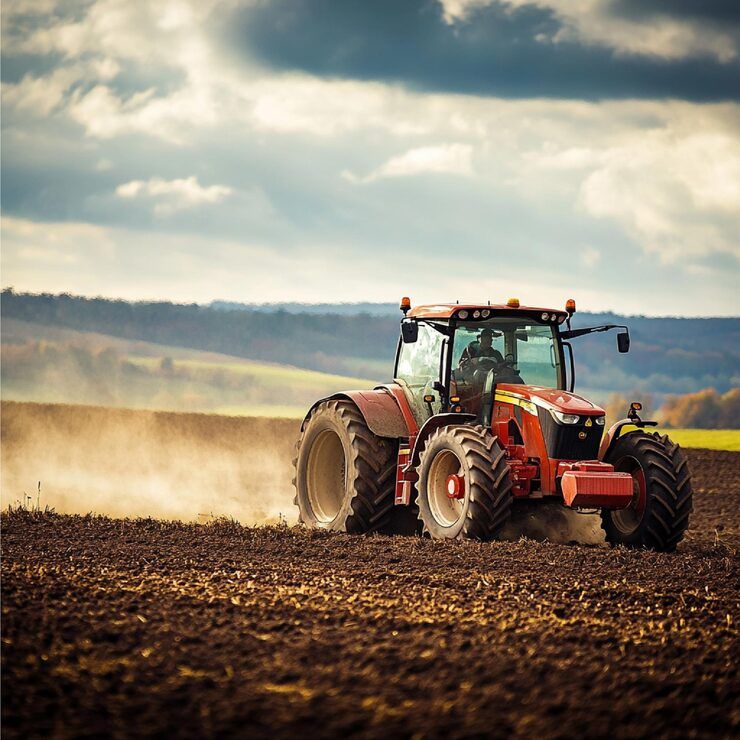
Tractors are among the most important machines in agriculture and modern land management. They have transformed farming by reducing manual labor, increasing productivity, and helping farmers complete a wide variety of tasks efficiently. From preparing fields for planting to transporting harvested crops, tractors have become an essential part of agricultural operations across the world.
Today's tractors are no longer just powerful pulling machines. They combine mechanical engineering with digital technology, fuel efficiency, precision farming tools, and operator comfort. Whether used on small family farms, commercial agricultural land, orchards, construction sites, or landscaping projects, tractors are designed to handle multiple jobs with the help of different attachments and implements.
This guide explains what tractors are, how they work, their different types, common applications, important components, maintenance practices, safety considerations, and the latest developments shaping modern farming in 2026.
What Is a Tractor and Why Is It Important?
A tractor is a heavy-duty vehicle designed primarily to provide high pulling power at low speeds. Unlike ordinary vehicles that focus on transportation, tractors are built to deliver torque and traction for agricultural equipment, trailers, plows, seeders, harvesters, and many other implements.
The importance of tractors lies in their ability to perform multiple farming activities using interchangeable attachments. A single tractor can prepare soil, plant seeds, irrigate fields, spray crops, mow grass, transport materials, and assist during harvesting. This versatility makes tractors one of the most valuable investments in agricultural machinery.
As farming expands to meet growing food demand, tractors help improve efficiency while reducing the physical effort required for large-scale cultivation. They also support precision agriculture by integrating GPS guidance, automated steering, and smart sensors that improve field operations.
How Tractors Work
A tractor converts engine power into mechanical energy that drives its wheels and powers attached equipment. The engine generates torque, which is transmitted through the transmission system to the wheels. Depending on the task, operators can select different gears or speed ranges to balance power and fuel efficiency.
One unique feature of tractors is the Power Take-Off (PTO) system. The PTO transfers engine power directly to implements such as rotary tillers, mowers, water pumps, or harvesting equipment. Hydraulic systems also play a major role by lifting, lowering, and controlling attached implements with precision.
Modern tractors combine mechanical systems with electronic controls, allowing operators to monitor engine performance, hydraulic pressure, fuel consumption, and navigation through digital displays.
Different Types of Tractors
Tractors are available in different sizes and configurations to suit various agricultural and industrial applications. Choosing the right type depends on land size, crop type, terrain, and intended tasks.
Utility Tractors
Utility tractors are the most commonly used tractors for general farming activities. They are suitable for plowing, transporting loads, planting crops, mowing fields, and operating multiple farm implements. Their balanced size and power make them useful for medium-sized farms.
Compact Tractors
Compact tractors are smaller machines designed for gardens, orchards, vineyards, landscaping, and small agricultural plots. They are easier to maneuver in narrow spaces and are commonly used for maintenance work.
Row Crop Tractors
Row crop tractors are specially designed for crops planted in rows such as corn, cotton, soybeans, and vegetables. Their adjustable wheel spacing allows them to move between crop rows without damaging plants.
Orchard Tractors
Orchard tractors have a narrow design that helps operators work efficiently between fruit trees and vineyards. Their smooth exterior reduces the chance of branches becoming caught during operation.
Four-Wheel Drive Tractors
Four-wheel drive tractors provide increased traction and pulling capacity. They are widely used for heavy tillage, large commercial farms, and difficult terrain where additional grip is required.
Specialty Tractors
Specialty tractors are designed for unique agricultural environments such as plantations, hillsides, wetlands, forestry operations, and industrial applications where standard tractors may not perform efficiently.
Main Components of a Tractor
A tractor consists of several interconnected systems that work together to deliver power and control.
The engine serves as the machine's primary power source. Diesel engines are widely used because they provide high torque and fuel efficiency for demanding agricultural work.
The transmission system controls speed and power delivery. Modern tractors may use manual, synchronized, power-shift, or continuously variable transmissions depending on operational needs.
The hydraulic system powers lifting equipment and controls implements attached to the tractor's rear or front linkage.
The PTO shaft transfers rotational power from the engine to external machinery, allowing tractors to operate numerous agricultural implements.
The chassis, tires, suspension, braking system, steering mechanism, cooling system, electrical system, and operator cabin all contribute to safe and efficient performance during daily operations.
Common Uses of Tractors in Agriculture
Tractors are multifunctional machines capable of supporting almost every stage of farming.
Before planting, tractors prepare fields through plowing, tilling, leveling, and soil cultivation. During planting season, they operate seed drills, fertilizer spreaders, and planters to improve planting accuracy.
As crops grow, tractors help with irrigation support, pesticide spraying, weed management, and mowing surrounding vegetation. During harvesting, they transport crops, pull harvesting equipment, and move materials between fields and storage facilities.
Beyond farming, tractors assist in road maintenance, snow removal in colder regions, landscaping, forestry work, earthmoving, and construction-related tasks.
Tractor Implements and Attachments
One of the biggest advantages of tractors is their compatibility with numerous implements that expand their functionality.
Plows prepare soil by turning and loosening it before planting. Harrows break soil clumps and create a smoother seedbed. Seed drills place seeds at consistent depths and spacing for improved crop establishment.
Rotary tillers mix soil and organic matter while preparing planting beds. Cultivators remove weeds and loosen soil around growing crops.
Sprayers distribute fertilizers, herbicides, and crop protection products evenly across fields. Front loaders lift soil, manure, gravel, and other heavy materials. Trailers transport harvested crops, equipment, and agricultural supplies.
Additional attachments such as mowers, balers, post-hole diggers, water tanks, and grading blades make tractors useful across many industries.
Benefits of Using Tractors
Tractors significantly improve agricultural productivity by completing tasks faster than manual labor or animal-powered equipment. They allow farmers to cultivate larger areas within shorter planting and harvesting windows.
Another important benefit is consistency. Tractors help maintain uniform planting depth, fertilizer distribution, irrigation support, and field preparation, leading to better crop management.
Modern tractors also reduce operator fatigue through ergonomic seating, climate-controlled cabins, power steering, and automated controls.
Fuel-efficient engines and precision farming technologies contribute to lower operational costs over time by minimizing fuel waste and optimizing field operations.
Choosing the Right Tractor
Selecting a tractor involves understanding the farm's size, crop type, terrain, and workload. Small farms generally require compact or utility tractors that balance maneuverability and power.
Medium and large farms often benefit from tractors with higher horsepower capable of operating multiple heavy implements simultaneously.
Terrain also matters. Hilly, muddy, or uneven land may require four-wheel drive systems for additional traction and stability.
Hydraulic lifting capacity, PTO compatibility, transmission type, fuel efficiency, maintenance availability, and operator comfort are practical factors that influence long-term usability.
Tractor Maintenance Best Practices
Regular maintenance helps tractors operate efficiently, reduces downtime, and extends equipment lifespan.
Engine oil should be inspected and replaced according to manufacturer recommendations. Air filters need regular cleaning or replacement to maintain engine performance in dusty agricultural environments.
Coolant levels help prevent engine overheating during long working hours. Hydraulic fluid should remain clean and at proper levels to ensure reliable implement operation.
Tire pressure affects traction, stability, and fuel efficiency, making regular inspection essential. Battery terminals, electrical wiring, lights, and sensors should also be checked periodically.
Greasing moving joints, inspecting belts and hoses, cleaning radiators, and tightening loose bolts are routine practices that improve tractor reliability throughout the farming season.
Tractor Safety Guidelines
Safe tractor operation protects both operators and nearby workers. Before operating a tractor, users should inspect brakes, steering, lights, mirrors, tires, and hydraulic connections.
Operators should always use seat belts in tractors equipped with rollover protection structures. Maintaining safe speeds during turns and avoiding sudden direction changes helps reduce rollover risks.
Implements should be attached securely before operation. PTO shafts require protective guards to reduce injury risks from rotating components.
When working on slopes, operators should travel carefully and avoid unstable ground whenever possible. Regular training and familiarity with controls also contribute to safer daily operation.
Recent Tractor Technology Trends in 2026
The tractor industry continues evolving through smart farming technologies and sustainable engineering.
GPS-guided steering systems help tractors follow accurate field paths while reducing overlap during planting and spraying. This improves field efficiency and reduces input waste.
Precision farming integration allows tractors to communicate with soil sensors, weather systems, drones, and farm management software to support data-driven decisions.
Telematics systems enable remote monitoring of engine health, fuel usage, maintenance schedules, and machine location through connected digital platforms.
Semi-autonomous driving assistance is becoming more common, helping tractors maintain straight lines, optimize turning patterns, and improve operational consistency under operator supervision.
Manufacturers are also developing electric and hybrid tractors for specific agricultural applications, supporting lower emissions and quieter operation where suitable infrastructure exists.
Improved hydraulic efficiency, touchscreen displays, automated implement control, and AI-assisted diagnostics are making tractors easier to operate while improving productivity.
Environmental Role of Modern Tractors
Modern tractors increasingly support sustainable farming practices. Precision application systems help reduce excessive fertilizer and pesticide use by applying inputs only where needed.
Fuel-efficient engines lower fuel consumption during field operations, while conservation tillage equipment minimizes soil disturbance and helps preserve soil structure.
Some tractors are designed to support regenerative agriculture practices through specialized implements that improve soil health and reduce erosion.
As renewable energy adoption grows, electric tractors and alternative fuel technologies continue receiving attention for environmentally conscious farming operations.
Future of Tractors in Agriculture
The future of tractors is closely connected with digital agriculture and automation. Farmers increasingly rely on connected machinery that collects field data, improves decision-making, and reduces unnecessary resource use.
Artificial intelligence is expected to improve predictive maintenance by identifying potential equipment issues before failures occur. Machine learning may also assist tractors in adjusting field operations based on crop conditions and soil variability.
Autonomous tractor technology continues advancing for repetitive field tasks, while human operators remain responsible for monitoring operations and managing complex farming decisions.
Greater integration between tractors, drones, satellite imagery, weather forecasting, and farm management software is expected to create more efficient agricultural ecosystems over the coming years.
Conclusion
Tractors remain one of the most valuable machines in modern agriculture because they combine power, versatility, and efficiency across a wide range of farming activities. From preparing fields and planting crops to harvesting and transporting materials, tractors help farmers complete essential tasks with greater consistency and productivity.
Advancements in precision farming, GPS guidance, telematics, automation, and sustainable engineering have transformed tractors into intelligent agricultural machines rather than simple mechanical vehicles. Understanding tractor types, components, maintenance practices, safety measures, and emerging technologies helps farmers, landowners, and agricultural professionals choose equipment that matches their operational needs.
As agriculture continues evolving to meet global food production challenges, tractors will remain central to efficient, sustainable, and technology-driven farming practices well beyond 2026.