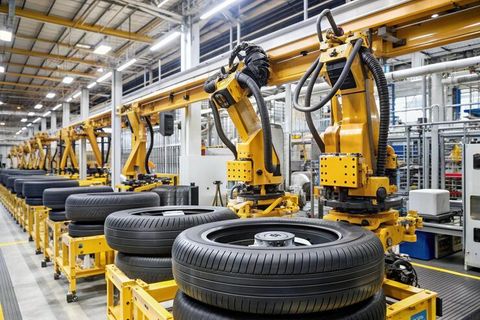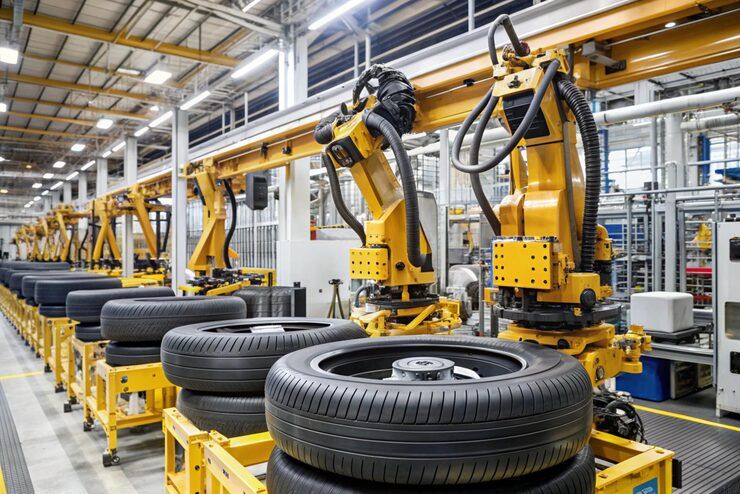
Tyre building machines are among the most important machines in the tyre manufacturing industry. They assemble different layers of a tyre into a complete "green tyre" before it moves to the curing and finishing stages. Every passenger vehicle, truck, motorcycle, agricultural vehicle, and industrial machine relies on tyres that are carefully built with precision, consistency, and safety in mind.
As vehicle production continues to grow worldwide, tyre manufacturers increasingly depend on advanced tyre building machines to improve production speed, maintain quality standards, and reduce material waste. Modern machines combine automation, digital monitoring, and precise control systems to create tyres that meet strict performance and durability requirements.
This guide explains what tyre building machines are, how they work, the different types available, where they are used, and the latest developments shaping tyre manufacturing in 2026.
What Is a Tyre Building Machine?
A tyre building machine is specialized industrial equipment used to assemble the various components of a tyre into a single uncured structure called a green tyre. Before a tyre is cured with heat and pressure, it is built layer by layer using carefully positioned materials.
The machine ensures that each layer is aligned accurately according to the tyre design. This process requires high precision because even small alignment errors can affect tyre balance, durability, and performance.
Tyre building machines work with rubber compounds, steel belts, textile cords, bead wires, sidewall materials, and tread strips. These materials are combined into a complete tyre structure before vulcanization permanently bonds them together.
The equipment plays a critical role in maintaining consistent tyre quality across thousands of production cycles.
Why Tyre Building Machines Matter in Modern Manufacturing
Tyres are safety-critical products that require consistent construction and reliable manufacturing processes. Tyre building machines help manufacturers achieve uniformity while producing tyres in large volumes.
Modern tyre production demands extremely accurate placement of materials to ensure proper weight distribution, rolling resistance, grip, and structural strength. Automated tyre building systems reduce human error and improve repeatability across production batches.
The importance of these machines has increased because manufacturers now produce a wider variety of tyre sizes and designs, including tyres for electric vehicles, high-performance cars, commercial trucks, construction equipment, and agricultural machinery.
Improved manufacturing technology also supports sustainability by minimizing rubber waste and optimizing material usage.
Understanding the Tyre Building Process
Tyre building is a sequential manufacturing process where individual tyre components are assembled into one structure.
Preparation of Tyre Components
Before tyre building begins, different rubber and reinforcement materials are prepared separately. These include the inner liner, carcass plies, bead assemblies, steel belts, tread strips, and sidewalls.
Each component is produced according to precise specifications and transported to the tyre building machine.
Building the First Stage
The first stage focuses on creating the tyre carcass. The machine wraps the inner liner around a rotating drum and adds body plies and bead wires. The carcass forms the internal structure that supports the tyre.
Proper positioning during this stage determines the tyre's overall shape and strength.
Building the Second Stage
During the second stage, the machine shapes the tyre into its final profile. Belt packages, tread rubber, and sidewalls are applied while the tyre expands into a toroidal shape.
This stage transforms the flat carcass into a complete green tyre ready for curing.
Inspection Before Curing
After assembly, automated inspection systems verify dimensions, alignment, and component placement before the tyre enters the curing press.
Quality inspection helps identify defects before vulcanization.
Main Components of a Tyre Building Machine
Tyre building machines consist of several coordinated mechanical and electronic systems that work together throughout production.
Building Drum
The building drum acts as the central rotating platform where tyre components are assembled. It expands and contracts depending on the production stage and tyre size.
Material Feeding System
Automatic feeders deliver rubber sheets, reinforcement fabrics, steel belts, and tread materials to the correct position during assembly.
Bead Placement Unit
This unit positions bead rings accurately on both sides of the tyre carcass. Proper bead placement ensures secure mounting on vehicle wheels.
Stitching Rollers
Stitching rollers press different tyre layers together to remove trapped air and improve bonding between materials before curing.
Control System
Modern machines use programmable controllers, touch-screen interfaces, sensors, and servo motors to synchronize movement and maintain production accuracy.
These systems allow operators to monitor machine performance in real time.
Types of Tyre Building Machines
Different tyre categories require different manufacturing approaches. Tyre building machines are designed according to tyre construction and production volume.
Single-Stage Tyre Building Machines
Single-stage machines assemble all tyre components within one production cycle. They are commonly used for certain specialty tyres and smaller production operations.
This design simplifies production while maintaining consistent assembly quality.
Two-Stage Tyre Building Machines
Two-stage machines separate carcass building and tread assembly into two independent operations. This method is widely used for passenger car and truck tyres because it provides greater manufacturing precision.
Many large tyre manufacturers prefer this approach for high-volume production.
Automatic Tyre Building Machines
Automatic machines perform material loading, positioning, shaping, stitching, and unloading with minimal manual intervention.
These machines improve productivity and reduce production variability.
Semi-Automatic Tyre Building Machines
Semi-automatic machines combine automated operations with manual handling during selected production steps.
They are suitable for medium-scale manufacturing facilities producing multiple tyre varieties.
Specialized Tyre Building Machines
Specialized systems are designed for motorcycle tyres, bicycle tyres, aircraft tyres, agricultural tyres, industrial tyres, and off-road vehicle tyres.
Each machine accommodates unique tyre dimensions and construction requirements.
Applications Across Different Industries
Tyre building machines support manufacturing across numerous transportation and industrial sectors.
| Industry | Tyre Manufacturing Application |
|---|---|
| Passenger Vehicles | Car tyres for daily transportation and electric vehicles. |
| Commercial Transportation | Truck and bus tyres designed for heavy loads and long-distance travel. |
| Motorcycle Industry | Two-wheeler tyres with different tread and carcass designs. |
| Agriculture | Tractor and farming equipment tyres for various field conditions. |
| Construction and Mining | Large off-road tyres for loaders, dump trucks, and earthmoving equipment. |
| Industrial Equipment | Forklift, warehouse, and material-handling vehicle tyres. |
| Aviation | Aircraft tyres requiring highly controlled manufacturing precision. |
Benefits of Modern Tyre Building Machines
Modern tyre building technology provides significant advantages for manufacturing efficiency and product quality.
Improved Manufacturing Precision
Advanced positioning systems ensure each tyre layer is placed accurately, improving uniformity across production batches.
Higher Production Efficiency
Automation enables faster cycle times and continuous production while maintaining consistent assembly quality.
Better Product Consistency
Programmable manufacturing settings help produce tyres with identical specifications and reliable performance characteristics.
Reduced Material Waste
Accurate cutting, feeding, and positioning minimize rubber and reinforcement material losses during production.
Flexible Production Capability
Manufacturers can switch between different tyre sizes and models using digital machine settings and automated tooling adjustments.
Enhanced Workplace Safety
Automation reduces manual handling of heavy tyre materials and repetitive assembly operations.
Automation and Smart Manufacturing Trends
Tyre manufacturing continues to evolve through Industry 4.0 technologies and intelligent automation.
Modern tyre building machines now integrate sensors that monitor material tension, alignment, pressure, and positioning during production. Real-time monitoring allows operators to detect abnormalities before they affect product quality.
Digital manufacturing systems collect production data that helps improve efficiency, maintenance planning, and quality control. Artificial intelligence is increasingly being used to identify manufacturing defects and optimize machine settings automatically.
Collaborative robots and automated material transport systems are also becoming more common in large tyre production facilities.
These technologies support higher productivity while maintaining consistent manufacturing standards.
Recent Developments in 2025–2026
The tyre manufacturing industry has experienced several important technological developments over the past year.
Manufacturers have introduced machines capable of producing tyres specifically designed for electric vehicles. EV tyres require different construction characteristics, including lower rolling resistance, improved load capacity, and reduced noise generation.
Energy-efficient servo-driven tyre building machines have become more widely adopted, helping factories reduce electricity consumption during production.
Vision inspection systems using high-resolution cameras now perform automated quality verification before tyres enter curing presses.
Digital twin technology is also gaining attention, allowing manufacturers to simulate production settings and machine performance before making physical production changes.
Sustainability initiatives continue encouraging equipment designs that reduce material waste and support recycled rubber processing within manufacturing facilities.
Factors That Influence Tyre Building Machine Performance
Several operational factors affect production quality and manufacturing efficiency.
Machine calibration ensures accurate positioning of all tyre components during assembly. Regular calibration helps maintain dimensional accuracy over long production periods.
Material quality also plays an important role because rubber compounds and reinforcement fabrics must meet manufacturing specifications before entering the building process.
Operator training remains valuable even in automated production environments, as technicians oversee machine settings, quality monitoring, and production adjustments.
Environmental conditions, including temperature and humidity, can influence rubber handling and component positioning during manufacturing.
Preventive maintenance helps maintain stable production performance and minimizes unexpected downtime.
Maintenance and Care for Tyre Building Machines
Routine maintenance is essential for reliable operation and long equipment life.
Manufacturers regularly inspect rotating drums, stitching rollers, servo motors, pneumatic systems, sensors, and feeding mechanisms. Lubrication schedules help reduce wear on moving components, while cleaning procedures remove rubber residue that may affect production accuracy.
Control software should also be updated according to manufacturer recommendations to improve machine functionality and diagnostic capabilities.
Predictive maintenance systems increasingly monitor vibration, temperature, and motor performance to identify potential issues before failures occur.
Well-maintained machines generally produce more consistent tyres and reduce interruptions during manufacturing.
How Manufacturers Choose the Right Tyre Building Machine
Selecting a tyre building machine depends on production requirements rather than a single universal design.
Manufacturers evaluate tyre type, production volume, automation level, machine flexibility, quality control features, factory layout, energy efficiency, and compatibility with existing production lines.
Facilities producing multiple tyre models often prioritize machines with faster changeover capabilities and programmable production recipes.
Large-scale production plants typically invest in highly automated systems that integrate with material handling, inspection, and curing equipment.
The Future of Tyre Building Machines
The future of tyre building machines is closely connected with smart factories, sustainable manufacturing, and advanced automation. As vehicle technology evolves, tyre manufacturing equipment must adapt to new tyre designs, lightweight materials, and environmentally responsible production methods.
Artificial intelligence will likely play a larger role in quality prediction, machine optimization, and preventive maintenance. Robotics will continue reducing manual intervention, while connected manufacturing platforms will improve production visibility across entire factories.
Sustainable tyre production is also expected to encourage machines capable of handling recycled materials and bio-based rubber compounds without compromising manufacturing precision.
These developments aim to improve efficiency, product quality, and environmental performance across the global tyre industry.
Frequently Asked Questions
What does a tyre building machine do?
A tyre building machine assembles the different layers of a tyre into a green tyre before it is cured through vulcanization.
What is a green tyre?
A green tyre is a fully assembled but uncured tyre that has not yet been permanently bonded using heat and pressure.
What is the difference between single-stage and two-stage tyre building machines?
Single-stage machines assemble tyres in one operation, while two-stage machines separate carcass construction and final tyre shaping into two production stages.
Are tyre building machines fully automated?
Many modern machines are fully automated, while others are semi-automatic depending on production requirements and factory operations.
Which industries use tyre building machines?
Passenger vehicle, commercial truck, motorcycle, agricultural, mining, construction, industrial equipment, and aviation tyre manufacturers all use tyre building machines.
Conclusion
Tyre building machines are the foundation of modern tyre manufacturing, transforming individual rubber and reinforcement components into precisely assembled green tyres ready for curing. Their accuracy directly influences tyre safety, durability, balance, and overall performance across a wide range of vehicles and industrial applications.
Advances in automation, digital monitoring, vision inspection, and energy-efficient manufacturing have made tyre building machines more productive and reliable than ever before. As the automotive industry evolves with electric vehicles, sustainability goals, and smart factory technologies, these machines continue adapting to meet new manufacturing challenges.
Understanding how tyre building machines work provides valuable insight into one of the most important processes in industrial manufacturing, where precision engineering and automated production come together to create tyres used around the world every day.