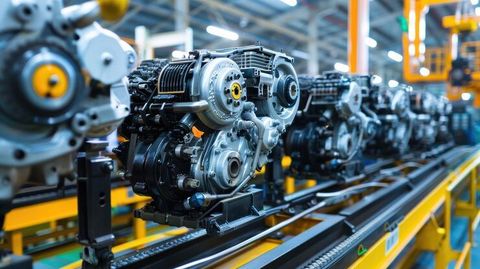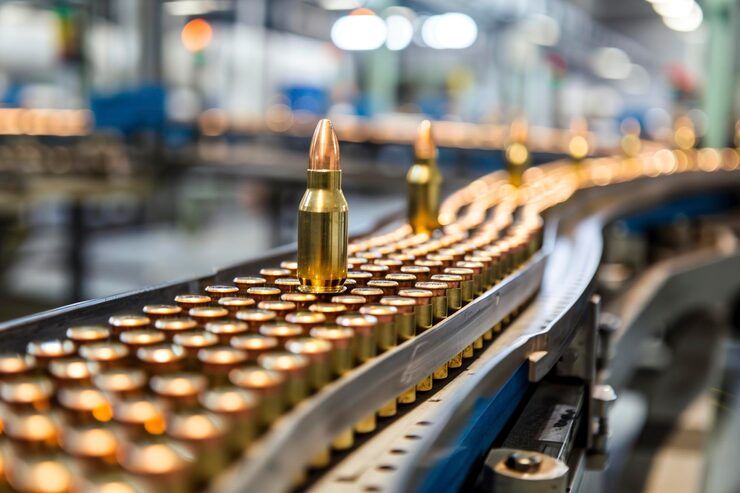
Bullet assembly machines are specialized industrial systems used in the regulated ammunition manufacturing industry. They combine mechanical automation, precision engineering, inspection technology, and quality management to support consistent production under controlled industrial conditions. These systems are part of a broader manufacturing environment that includes material handling, equipment monitoring, workplace safety, and regulatory compliance.
As industrial automation develops, manufacturers increasingly consider digital monitoring, machine vision, predictive maintenance, and production data management when evaluating ammunition manufacturing equipment. Understanding these technologies helps readers explore the relationship between industrial machinery, manufacturing standards, and responsible oversight.
Understanding Bullet Assembly Machines
Bullet assembly machinery refers to equipment used in industrial environments to handle and assemble ammunition components. Depending on its design and authorized application, a system may include automated material handling, mechanical positioning, inspection stations, monitoring instruments, and protective enclosures.
The broader category includes dedicated machines and integrated production lines. Some systems perform a limited industrial task, while others operate as part of a coordinated manufacturing facility with separate quality assurance and safety functions.
The term bullet assembly is sometimes used broadly, although a bullet is technically the projectile, while a complete cartridge also includes other components. Understanding this distinction helps readers interpret technical documents and industrial equipment classifications accurately.
Main Types of Industrial Equipment
Different equipment categories support different manufacturing and inspection responsibilities.
Automated handling systems: Move approved materials between designated work areas.
Precision inspection equipment: Checks component dimensions and identifies visible defects.
Machine vision systems: Use cameras and image-processing software to identify irregularities.
Industrial control systems: Monitor equipment status and coordinate authorized production activities.
Packaging and traceability systems: Support identification, inventory records, and controlled movement of finished products.
Environmental monitoring equipment: Measures relevant workplace conditions, such as ventilation performance and airborne contaminants.
These categories are not interchangeable. Equipment selection depends on the facility's approved activities, applicable safety requirements, production environment, and quality management procedures.
Why Industrial Automation Matters
Manufacturing automation can improve repeatability and help organizations maintain consistent documentation. Automated inspection can also reduce dependence on visual checks alone, although its effectiveness depends on proper calibration, validation, and maintenance.
However, automation does not eliminate manufacturing risks. Mechanical hazards, hazardous materials, equipment failures, and inadequate operator training still require appropriate controls.
Why Bullet Assembly Technology Matters Today
Industrial ammunition manufacturing involves several overlapping concerns: product consistency, workplace protection, equipment reliability, environmental management, and regulatory oversight.
Manufacturing Consistency and Quality Assurance
Consistent manufacturing depends on documented procedures, reliable measurement equipment, and systematic inspection. Automated monitoring can help identify deviations and preserve production records for authorized quality personnel.
Quality assurance typically involves more than a single inspection. It may include equipment verification, record reviews, defect classification, corrective action, and periodic audits.
Workplace Safety
Industrial machinery can expose workers to moving parts, noise, dust, chemical hazards, and unexpected equipment movement. Proper machine guarding, ventilation, personal protective equipment, and emergency procedures help reduce these risks.
Safety responsibilities should be assigned clearly, and employees should receive training appropriate to their duties. Regular inspections can reveal damaged guards, ineffective extraction systems, or other problems before they result in an incident.
Equipment Reliability and Maintenance
Unexpected machinery downtime can interrupt operations and create additional safety concerns. Preventive maintenance, condition monitoring, and documented inspection schedules help organizations identify deterioration and maintain equipment in a controlled condition.
Predictive maintenance tools may use vibration readings, temperature measurements, electrical signals, or operating histories to identify possible faults. Their predictions must be verified by qualified personnel rather than treated as guarantees.
Industrial Technologies and Emerging Trends
Several wider manufacturing trends are relevant to facilities that use specialized industrial machinery.
Industrial Internet of Things (IIoT): Connected sensors provide information about equipment condition and operating performance.
Machine vision: Image analysis supports automated inspection and documentation.
Digital maintenance records: Centralized records help technicians review inspection histories and recurring faults.
Predictive analytics: Data analysis can help identify maintenance patterns and potential equipment problems.
Cybersecurity controls: Network segmentation, access restrictions, and software updates help protect industrial control environments.
These technologies are not equally suitable for every facility. Their implementation depends on risk assessments, technical compatibility, personnel expertise, and applicable regulations.
Recent Developments in Industrial Manufacturing
During 2025 and 2026, industrial automation discussions have continued to emphasize artificial intelligence, connected manufacturing, cybersecurity, and more reliable equipment monitoring. These developments affect many regulated industries, including aerospace, automotive manufacturing, pharmaceuticals, and defense-related production.
The following trends are relevant to the wider industrial machinery environment.
Technology trend | Manufacturing application | Main consideration |
|---|---|---|
AI-assisted inspection | Identifying visual irregularities | Requires validated performance |
Connected sensors | Monitoring equipment condition | Requires secure data handling |
Digital records | Maintaining inspection histories | Requires reliable record integrity |
Predictive maintenance | Detecting potential equipment faults | Predictions need verification |
Industrial cybersecurity | Protecting connected machinery | Requires ongoing risk management |
These are broad industry trends, not confirmation that every ammunition manufacturing facility has adopted these technologies.
Artificial Intelligence and Machine Vision
AI-assisted inspection systems can analyze images and identify patterns that may be difficult to detect consistently through manual observation. Their usefulness depends on the quality of training data, the range of expected defects, and ongoing validation.
Human oversight remains important, especially where an incorrect inspection result could create safety or compliance consequences.
Cybersecurity in Industrial Facilities
Connected manufacturing equipment introduces risks involving unauthorized access, outdated software, and disruptions to industrial networks. Organizations increasingly consider cybersecurity alongside physical equipment protection.
Access controls, secure backups, documented change management, and incident response procedures can help reduce exposure.
Sustainability and Environmental Monitoring
Industrial facilities are also examining energy efficiency, waste management, ventilation performance, and the responsible handling of regulated materials. Environmental improvements must be compatible with occupational safety and the specific hazards of the manufacturing process.
Laws, Regulations, and Government Oversight
The legal framework for ammunition manufacturing varies by country. Depending on the jurisdiction, requirements may cover manufacturing authorization, firearms and ammunition controls, explosives safety, occupational health, environmental protection, storage, transportation, and recordkeeping.
No single international rule applies identically to every facility.
United States
In the United States, ammunition manufacturing and related activities may be subject to federal firearms laws and regulations administered by the Bureau of Alcohol, Tobacco, Firearms and Explosives (ATF). The applicable requirements depend on the products and activities involved.
Additional requirements may arise under Occupational Safety and Health Administration (OSHA) standards, environmental regulations, fire codes, and state or local law. Facilities should verify which provisions apply to their specific operations.
India
In India, relevant legal frameworks may include the Arms Act, 1959, the Arms Rules, 2016, and applicable provisions of the Explosives Act, 1884, and Explosives Rules, 2008, depending on the activity and materials involved.
Licensing responsibilities and regulatory oversight depend on the nature of the operation and the applicable legal provisions. Industrial facilities should confirm requirements with the appropriate authorities and qualified legal or compliance professionals.
European Union
European facilities may need to consider national firearms and ammunition laws alongside relevant EU rules on worker protection, machinery safety, environmental management, and chemicals.
The EU Machinery Regulation (EU) 2023/1230 establishes a framework for machinery safety and applies from 20 January 2027. During the transition, the applicable requirements depend on the date and circumstances of placing machinery on the market or putting it into service.
International Safety and Quality Standards
Organizations may also refer to internationally recognized management standards, where appropriate.
ISO 9001: Quality management systems.
ISO 45001: Occupational health and safety management systems.
ISO 14001: Environmental management systems.
IEC 60204-1: Electrical equipment of machines.
ISO 12100: Machinery safety risk assessment and risk reduction.
Standards are not automatically legal requirements in every jurisdiction. Their applicability depends on legislation, contractual obligations, certification arrangements, and the specific equipment.
Tools and Resources for Industrial Research
Readers researching industrial machinery can use several categories of resources to understand technical, safety, and compliance requirements.
Regulatory Information
ATF publications and official regulatory guidance for applicable United States requirements.
India's official legislation and government regulatory publications.
European Commission materials concerning machinery safety and workplace protection.
National occupational safety authorities for machinery guarding and hazard prevention.
Official sources are preferable when checking licensing requirements or interpreting legal obligations.
Engineering and Maintenance Tools
Computer-aided design (CAD): Supports equipment drawings and mechanical design documentation.
Computerized maintenance management systems (CMMS): Organizes maintenance schedules, work orders, and equipment histories.
Machine condition monitoring: Tracks vibration, temperature, and other equipment health indicators.
Calibration management software: Maintains measurement equipment records and calibration schedules.
Risk assessment templates: Document hazards, existing safeguards, and required corrective actions.
Quality management software: Helps organize inspection records, nonconformities, and audit findings.
The suitability of these tools depends on the organization's technical needs, information security requirements, and regulatory responsibilities.
Frequently Asked Questions
What is a bullet assembly machine?
It is industrial equipment associated with handling or assembling ammunition components in a controlled manufacturing environment. Specific functions vary by machine design and authorized application.
How does automation affect ammunition manufacturing?
Automation can improve repeatability, support inspection, maintain production records, and reduce some forms of manual handling. Its effectiveness depends on equipment validation, maintenance, trained personnel, and suitable safety controls.
Which safety standards are relevant to industrial machinery?
Standards such as ISO 12100, ISO 45001, and IEC 60204-1 address machinery risk assessment, occupational health and safety management, and electrical equipment. Applicable legal requirements vary by country and facility.
Is a license required to manufacture ammunition?
In many jurisdictions, ammunition manufacturing is regulated and requires specific authorization. The exact requirements depend on the country, the activities performed, the materials involved, and the relevant legal framework.
What should organizations consider when evaluating industrial equipment?
Important considerations include documented safety assessments, applicable legal requirements, equipment reliability, inspection capabilities, maintenance support, cybersecurity, operator training, and environmental controls.
Conclusion
Bullet assembly machines form part of a specialized industrial environment where mechanical engineering, automation, quality assurance, and regulatory compliance intersect. Developments in machine vision, connected sensors, predictive maintenance, and industrial cybersecurity are shaping the wider machinery sector, but their benefits depend on appropriate implementation and verification.
Understanding the distinction between individual equipment functions, manufacturing systems, and complete ammunition products helps clarify technical discussions. Ultimately, responsible industrial operations depend on applicable legal authorization, effective risk management, trained personnel, reliable documentation, and continuous attention to workplace and environmental safety.