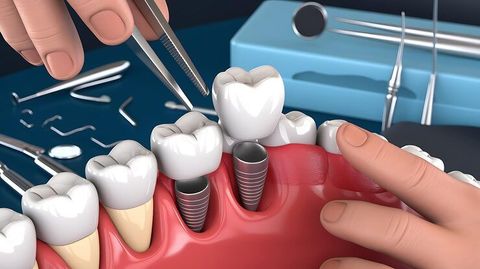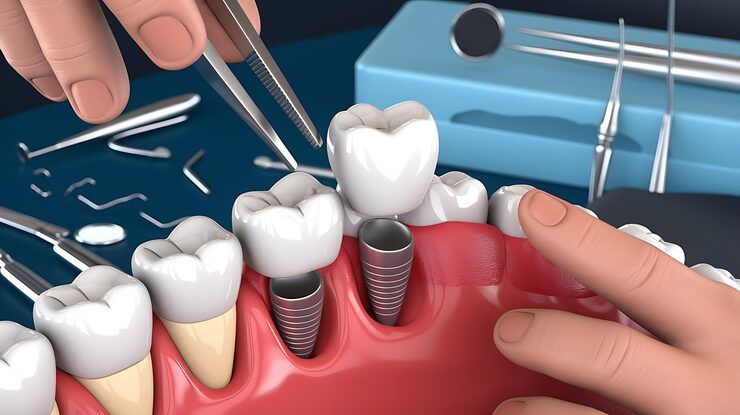
Dental implants are medical devices designed to replace missing tooth roots and support artificial teeth. They are commonly used when a person has lost a tooth because of injury, tooth decay, gum disease, or other dental conditions. A typical implant consists of a small fixture placed in the jawbone, an connecting component called an abutment, and a visible restoration such as a crown, bridge, or denture.
how pressure is distributed during chewing. Depending on the location of the gap, it may also affect pronunciation or make certain foods more difficult to manage.
An appropriately planned implant restoration can help restore chewing function and provide a stable replacement for the missing tooth.
Supporting Jawbone Health
The jawbone normally receives mechanical stimulation through natural tooth roots. Following tooth loss, the surrounding bone may gradually decrease in volume.
Dental implants transfer forces to the supporting bone and can help maintain bone in the area around a successfully integrated implant. However, they do not prevent every form of bone loss, and bone changes can still occur because of infection, gum disease, or other factors.
Comparing Tooth Replacement Options
| Treatment Option | Main Characteristics | Important Considerations |
|---|---|---|
| Dental implant crown | Fixed replacement supported by an implant | Requires surgery and adequate supporting conditions |
| Dental bridge | Artificial tooth supported by neighboring teeth or implants | Conventional designs may require preparation of adjacent teeth |
| Removable partial denture | Removable replacement for several missing teeth | Requires regular cleaning and periodic adjustment |
| Complete denture | Removable replacement for all teeth in an arch | Stability and retention vary between individuals |
The most appropriate option depends on oral health, jawbone condition, medical history, treatment preferences, and clinical assessment.
Who May Be Suitable for Implant Treatment?
Dental implants may be considered for adults with one or more missing teeth. Suitability depends on several factors, including:
Adequate jawbone volume or the possibility of bone augmentation
Healthy or appropriately managed gum tissue
Good oral hygiene
Controlled medical conditions
Smoking status and other healing-related risks
Ability to attend follow-up appointments
A dental professional must assess individual circumstances before recommending treatment.
Recent Developments in Dental Implant Technology
Dental implant research continues to focus on improving surgical planning, material performance, restoration design, and the management of complications.
Digital Implant Planning
Cone-beam computed tomography, commonly called CBCT, provides three-dimensional information about jawbone anatomy and nearby structures. When clinically appropriate, it can help clinicians plan implant position and evaluate important anatomical considerations.
Digital intraoral scanning can also capture information about the teeth and gums. Combined with computer-aided design and manufacturing, these technologies can help create accurately fitted crowns and other restorations.
Digital planning does not eliminate surgical risks. The quality of the assessment, clinical judgment, and execution remain important.
Computer-Guided Implant Placement
Computer-guided implant surgery uses digital planning and a surgical guide to help transfer the planned implant position to the patient. The method may improve placement accuracy in suitable cases, although results depend on the planning process, equipment, and clinical circumstances.
Not every patient requires guided surgery. Conventional techniques remain appropriate for many treatments.
Implant Materials and Surface Design
Research continues into titanium surface treatments and ceramic implant materials. The objectives include supporting bone integration, improving material performance, and managing biological responses around implants.
Evidence varies by material and implant system. A newer surface or design should not automatically be assumed to provide better long-term results than an established alternative.
Developments During 2025–2026
Recent dental research and professional discussions have continued to examine digital workflows, implant maintenance, peri-implant disease, and the long-term performance of implant-supported restorations. These remain active areas of clinical investigation during 2025 and 2026.
Because research findings emerge at different times and may not immediately change standard practice, patients should discuss treatment decisions with a qualified dental professional who can interpret current evidence for their circumstances.
Dental Implant Regulations and Safety Policies
Dental implants are regulated medical devices. The applicable requirements depend on the country where the device is manufactured, supplied, and implanted.
Medical Device Standards
International standards help manufacturers evaluate the safety, quality, and performance of implantable medical devices.
The ISO 13485 standard addresses quality management systems for medical devices. ISO 10993 covers biological evaluation of medical devices, including assessments relevant to materials that contact the body.
These standards support device development and evaluation but do not independently guarantee a successful outcome for every patient.
Regulations in the United States
In the United States, the Food and Drug Administration regulates dental implant devices under its medical-device framework. Requirements depend on the device classification and applicable regulatory pathway.
The FDA provides information about dental implants, potential complications, and questions patients may discuss with their dental professionals.
Regulations in India
In India, medical devices are regulated under the Medical Devices Rules, 2017, and the broader framework of the Drugs and Cosmetics Act, together with applicable amendments and notifications.
The Central Drugs Standard Control Organisation oversees relevant medical-device regulatory activities. Requirements can differ according to device classification, manufacturing, importation, and intended use.
Patients should confirm that the selected device and treatment setting comply with applicable requirements.
Clinical Safety and Informed Consent
Dental implant placement involves surgery, so patients should understand potential benefits, limitations, and complications before proceeding.
Possible risks include:
Infection around the implant
Bleeding or swelling
Injury to nearby nerves or anatomical structures
Failure of the implant to integrate with bone
Gum inflammation and peri-implant disease
Mechanical damage to the crown or connecting components
A qualified dental professional should explain the expected treatment stages, alternatives, recovery considerations, and follow-up requirements.
Tools and Resources for Dental Implant Planning
Reliable educational resources can help patients understand treatment options and prepare informed questions.
Dental Imaging and Assessment
Clinicians may use dental X-rays, CBCT imaging when indicated, oral examinations, and digital scans to evaluate implant placement. These tools provide different types of information and are selected according to clinical need.
Oral Health Records
Keeping a record of medical conditions, medications, allergies, previous dental procedures, and oral hygiene routines can help support a comprehensive assessment.
Patients can also record questions about treatment stages, healing, maintenance, and possible alternatives.
Professional and Educational Resources
Useful sources of general information include:
The American Dental Association's patient education materials
The US Food and Drug Administration's dental implant information
The Central Drugs Standard Control Organisation's medical-device guidance
The International Organization for Standardization's medical-device standards information
National dental associations and recognized academic dental institutions
Questions to Discuss Before Treatment
Before making a decision, patients may wish to ask:
What tooth replacement options are suitable for my situation?
Is additional bone treatment required?
What are the main risks in my case?
How long may the overall treatment process take?
What maintenance will be required?
What alternatives are available if an implant is unsuitable?
Frequently Asked Questions
How long do dental implants last?
Dental implants can remain functional for many years, but longevity varies according to oral hygiene, gum health, smoking, medical conditions, implant design, and maintenance. Crowns and other prosthetic components may require repair or replacement even when the implant fixture remains stable.
Is dental implant surgery painful?
The procedure is generally performed using local anesthesia, with other approaches considered when appropriate. Some soreness, swelling, or discomfort can occur afterward. The degree of discomfort varies, and the treating clinician can explain suitable recovery measures.
How long does dental implant treatment take?
Treatment may take several months because the implant often needs time to integrate with the jawbone before the final restoration is attached. The timeline depends on healing, bone quality, additional procedures, and the treatment plan.
Are dental implants suitable for everyone?
No. Some people may require treatment for gum disease, bone augmentation, or management of medical risk factors before implant placement. A clinical assessment helps determine whether an implant or another tooth replacement option is appropriate.
How should dental implants be maintained?
Implants require daily cleaning, including around the gumline, along with regular dental examinations and professional maintenance. Early assessment of bleeding, swelling, persistent discomfort, or a loose restoration can help identify problems before they become more serious.
Conclusion
Dental implants are an established approach to replacing missing teeth and restoring oral function. Their effectiveness depends on careful patient assessment, appropriate device selection, sound surgical technique, successful healing, and consistent long-term maintenance.
Advances in digital imaging, computer-guided planning, restorative design, and implant materials continue to influence modern implant dentistry. However, treatment remains individualized, and newer technology does not remove the need for clinical judgment or informed consent.
Understanding the available replacement options, relevant safety regulations, possible complications, and ongoing care requirements can help people make better-informed decisions about their oral health. A qualified dental professional can assess individual needs and explain which approach is appropriate based on the available clinical evidence.