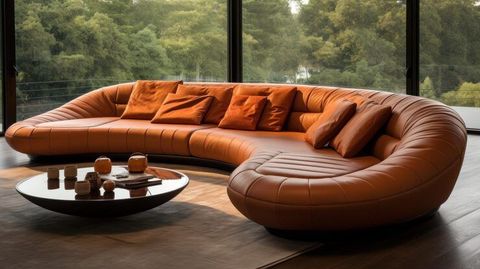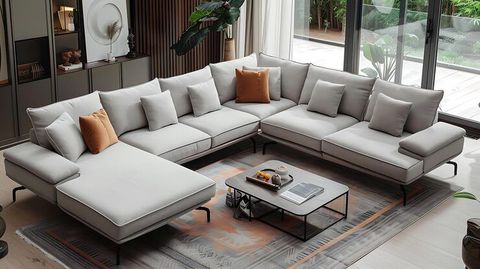
Fabric and leather blend couches combine two upholstery materials within a single seating design. These couches may feature leather seats with fabric back cushions, leather armrests with woven-fabric panels, or contrasting materials across the seat, back, and frame.
The concept brings together the different visual and functional characteristics of leather and fabric. Leather can provide a smooth surface and structured appearance, while woven textiles introduce variation in color, texture, and softness.
Mixed-material upholstery is used in contemporary, traditional, minimalist, and transitional interiors. The final appearance depends on the type of leather, textile composition, stitching, cushion construction, frame design, and color combination.
Understanding Fabric and Leather Upholstery
Leather and fabric differ in their structure, surface characteristics, and maintenance requirements.
Leather upholstery may be made from natural animal hide or synthetic materials designed to resemble leather. Natural leather varies according to its grade, finishing, thickness, and treatment. Synthetic alternatives may include polyurethane-coated materials and other manufactured surfaces.
Fabric upholstery can include cotton, linen, polyester, nylon, microfiber, wool blends, and other woven or knitted textiles. Each material has different characteristics relating to abrasion resistance, moisture absorption, cleaning, and color retention.
When these materials are combined, manufacturers can place each material where its appearance, texture, or practical properties suit the design.
Common Fabric and Leather Couch Designs
Several arrangements are used in mixed-upholstery furniture.
Leather seats with fabric backs: Combine a smooth seating surface with textured back cushions.
Fabric seats with leather arms: Use leather on frequently contacted armrests and textile upholstery across the main seating area.
Contrasting panel designs: Alternate leather and fabric sections to create visual patterns.
Two-tone contemporary couches: Combine different upholstery colors for a defined modern appearance.
Leather frames with fabric cushions: Use leather across the outer structure and fabric for removable or fixed cushions.
Modular mixed-material sofas: Apply different upholstery finishes across individual seating modules.
The best configuration depends on intended use, cleaning preferences, room conditions, and the durability requirements of the household.
Materials and Construction
A couch's performance depends on more than its visible upholstery. The frame, suspension system, foam, stitching, adhesives, and cushion construction also influence its comfort and lifespan.
| Component | Common Materials | Main Consideration |
|---|---|---|
| Leather upholstery | Natural leather or synthetic alternatives | Finish, flexibility, and maintenance |
| Fabric upholstery | Polyester, cotton, linen, microfiber, or blends | Abrasion resistance and cleaning |
| Frame | Hardwood, engineered wood, or metal | Structural stability |
| Cushion filling | Polyurethane foam, fiber, or mixed fillings | Support and shape retention |
| Suspension | Springs, webbing, or related systems | Weight distribution and comfort |
| Stitching | Polyester, nylon, or other upholstery threads | Seam strength and construction quality |
A well-designed couch should have upholstery materials that work together structurally and visually. Differences in flexibility, thickness, and expansion can influence how the materials behave at seams and corners.
Why Fabric and Leather Blend Couches Matter
Mixed-material couches provide an approach to interior design that balances contrasting textures and functional requirements.
Interior Design Flexibility
Leather and fabric can create visual separation between the main seating area and surrounding furniture. For example, dark leather combined with a light woven textile can produce contrast without requiring multiple pieces of furniture.
These combinations can work in different interior styles:
Minimalist living rooms
Contemporary apartments
Traditional family rooms
Industrial-inspired interiors
Transitional spaces
Home offices and reception areas
The final effect depends on proportions, lighting, surrounding colors, and the texture of nearby materials.
Comfort and Everyday Use
Fabric and leather have different surface characteristics. Leather often feels smooth and may become warmer or cooler depending on room temperature. Fabric can provide a more textured surface and may feel less slippery, depending on its weave.
However, comfort is not determined by upholstery alone. Cushion density, seat depth, back angle, suspension, and overall proportions are equally important.
Maintenance and Durability
A mixed-material couch requires care appropriate to each upholstery type. Leather and fabric may respond differently to water, cleaning agents, sunlight, and friction.
For example, a cleaning product suitable for a particular leather finish may damage a nearby textile panel. Manufacturer instructions should therefore guide cleaning procedures.
Recent Developments and Furniture Trends
During 2025 and 2026, furniture design discussions have continued to emphasize tactile materials, adaptable living spaces, durable upholstery, and more transparent information about material composition.
Mixed Textures and Layered Materials
Contemporary interior design increasingly uses contrasting textures to add visual depth. Combinations of smooth upholstery, woven textiles, wood, and metal allow furniture to complement a wider range of interior finishes.
In mixed-upholstery couches, this approach can create distinction through material placement rather than relying exclusively on bright colors or elaborate shapes.
Performance Fabrics
Performance textiles are designed to address particular requirements such as abrasion resistance, stain management, or easier maintenance. Their properties vary by fiber, construction, coating, and testing method.
When evaluating these fabrics, consumers should examine the manufacturer's technical specifications instead of assuming that all performance textiles provide the same level of protection.
Material Transparency and Environmental Considerations
Furniture manufacturers and consumers have also shown continued interest in recycled fibers, traceable materials, product durability, and repairability.
These characteristics are relevant to mixed-material couches because different upholstery components may require separate cleaning, repair, or replacement. A product's overall environmental impact depends on material sourcing, manufacturing, transportation, expected lifespan, and end-of-life management.
A recycled-content claim or sustainability label should be assessed using its stated scope and supporting documentation rather than a general environmental description.
Laws, Policies, and Furniture Safety
Furniture requirements vary by country. Regulations may cover chemical substances, textile labeling, product safety, fire performance, consumer information, and environmental claims.
Upholstery and Chemical Safety
In the United States, furniture manufacturers and importers may need to consider requirements administered by the Consumer Product Safety Commission, including applicable upholstered-furniture flammability rules.
California also has specific upholstered-furniture requirements, including Technical Bulletin 117-2013, which addresses smolder resistance for covered materials. Applicability depends on the product and the relevant regulatory provisions.
Chemical requirements can also affect upholstery treatments, coatings, adhesives, and foam components. Businesses should verify the rules applicable to the product category and destination market.
Textile and Leather Labeling
In the United States, textile products covered by federal labeling legislation may be subject to fiber-content and other disclosure requirements. Certain leather and imitation-leather claims can also be governed by applicable consumer-protection rules.
In the European Union, chemical restrictions under REACH may apply to substances used in furniture materials. General product-safety obligations may also be relevant depending on the product and its intended use.
Environmental Marketing Claims
Descriptions such as sustainable, eco-friendly, recycled, or environmentally responsible should be supported by accurate evidence.
For example, a couch should not be described as entirely recycled if only one upholstery panel contains recycled fibers. Clear material descriptions help consumers understand what a product actually contains.
Tools and Resources for Choosing a Couch
Several practical resources can help evaluate fabric and leather blend couches before making a decision.
Room Measurement Tools
Digital room-planning applications can help measure the intended furniture area and compare different couch dimensions.
Important measurements include:
Overall width and depth
Seat height and depth
Armrest height
Doorway and hallway clearance
Distance from surrounding furniture
Space needed for reclining or modular sections
Upholstery Specification Sheets
Manufacturer documentation can identify leather type, textile fiber composition, abrasion-test results, cleaning instructions, cushion filling, frame materials, and warranty terms.
These details are useful for comparing furniture based on construction rather than appearance alone.
Material Care Resources
Leather and textile manufacturers often publish care guides explaining suitable cleaning methods and substances to avoid.
Before applying any cleaner, check its compatibility with both materials and test it in an inconspicuous area when the manufacturer permits.
Furniture Evaluation Checklist
| Factor | What to Check |
|---|---|
| Upholstery | Leather type and textile composition |
| Comfort | Cushion support and seat dimensions |
| Construction | Frame stability and seam quality |
| Maintenance | Material-specific cleaning instructions |
| Durability | Fabric abrasion data and leather finish |
| Safety | Applicable product standards and labeling |
| Sustainability | Verified material and environmental claims |
Frequently Asked Questions
What is a fabric and leather blend couch?
It is a couch that combines leather or leather-like upholstery with fabric in different sections. The materials may be used on seats, backs, arms, cushions, or decorative panels.
Are mixed-upholstery couches durable?
Durability depends on material quality, construction, usage, and maintenance. Leather finish, fabric abrasion resistance, seam strength, cushion support, and frame stability all influence long-term performance.
How should a fabric and leather couch be cleaned?
Follow the manufacturer's instructions for each material. Use only compatible cleaning products, avoid unapproved chemicals, and address spills promptly using the recommended method.
Can fabric and leather couches suit small living rooms?
Yes. Compact dimensions, raised legs, simple silhouettes, and coordinated colors can help a mixed-material couch fit into a smaller room. Accurate measurements are important before selecting a design.
What should consumers check before choosing mixed upholstery?
Review the leather type, fabric composition, comfort, dimensions, construction, maintenance requirements, applicable safety information, and the evidence behind any environmental claims.
Conclusion
Fabric and leather blend couches combine contrasting upholstery materials to create flexible furniture designs for different living spaces. Their appearance and performance depend on the choice of leather, textile composition, cushion construction, frame quality, and how the materials are arranged.
Recent furniture trends highlight tactile finishes, performance textiles, material transparency, and longer product life. At the same time, upholstery safety requirements, labeling rules, and environmental-claim standards remain important considerations in different markets.
A careful evaluation of dimensions, comfort, construction, cleaning instructions, and material specifications can help consumers understand how a mixed-upholstery couch will fit their space and everyday needs.