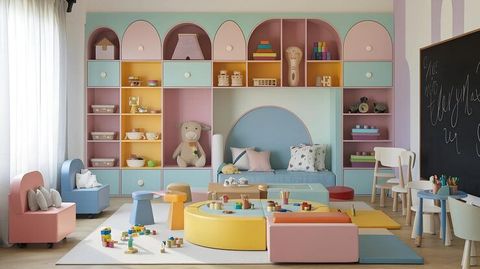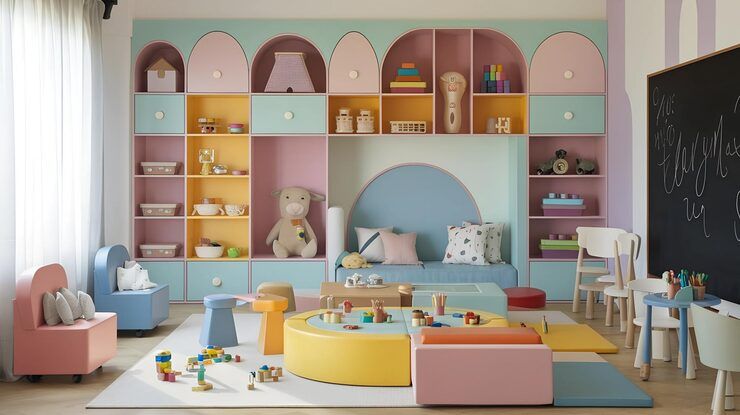
Kids playroom furniture sets are coordinated collections of furniture designed to support children's play, learning, creativity, and organization. These sets may include child-sized tables and chairs, toy storage cabinets, bookshelves, activity desks, floor seating, and creative play stations. Their purpose is to create a dedicated environment where children can explore activities while keeping toys and learning materials organized.
A well-planned playroom combines practical furniture with an inviting layout. The right arrangement depends on children's ages, available floor space, household routines, and the types of activities they enjoy. Some rooms focus on imaginative play, while others combine reading, drawing, puzzles, building blocks, and early learning activities.
Common Types of Playroom Furniture
Different furniture pieces support different developmental activities.
Kids' tables and chairs: Provide a suitable surface for drawing, crafts, puzzles, and tabletop games.
Toy storage cabinets: Help organize toys, building blocks, dolls, and other play materials.
Children's bookshelves: Keep books visible and accessible at an appropriate height.
Activity desks: Create dedicated areas for writing, educational games, and creative projects.
Playroom seating: Includes floor cushions, small sofas, and child-sized chairs for relaxation.
Pretend-play furniture: Includes miniature kitchens, market stalls, and role-play stations.
Modular storage units: Allow families to adjust storage arrangements as children's needs change.
Materials commonly used include solid wood, engineered wood, plastic, metal, foam, and fabric. Each material has different characteristics relating to durability, cleaning, weight, maintenance, and potential safety concerns.
Why Playroom Furniture Matters Today
Children's play environments influence how they interact with toys, books, other children, and their surroundings. Suitable furniture can help create spaces for independent exploration, shared activities, creative expression, and everyday learning.
A dedicated playroom is not essential for healthy development. However, thoughtfully arranged furniture can make a bedroom corner, family room, or small activity area more functional.
Supporting Learning and Development
Different furniture arrangements can encourage a variety of activities.
A child-sized table can support drawing, painting, puzzles, and construction toys.
Low bookshelves can make reading materials easier for children to identify and reach.
Open storage bins can help children recognize where toys belong.
Comfortable seating can create a quiet place for reading or resting.
Flexible activity areas can accommodate individual play and group activities.
Furniture does not independently guarantee developmental outcomes. Children's experiences also depend on supervision, opportunities for play, suitable materials, and interaction with caregivers.
Space Planning for Different Age Groups
Furniture requirements change as children grow. Toddlers benefit from accessible storage and stable, appropriately sized furniture. Preschool children may need space for imaginative play, crafts, and early literacy activities. School-age children may require activity desks, book storage, construction areas, and more flexible seating.
Families planning a playroom should consider:
Available floor space and clear walking routes.
Furniture dimensions relative to children's height.
Storage capacity for toys, books, and craft materials.
Ease of cleaning and maintenance.
The need for adult supervision and visibility.
Flexibility as children develop new interests.
A smaller room can remain functional with fewer furniture pieces, vertical storage, and clearly defined activity zones.
Recent Trends in Kids Playroom Furniture Design
During 2025 and 2026, children's furniture design continued to emphasize adaptable layouts, practical storage, durability, and safety-conscious materials. Families are also considering how play areas can support different activities without requiring a large dedicated room.
Popular Design Trends
Multifunctional furniture: Tables with storage compartments and benches with integrated drawers help combine several functions in limited spaces.
Modular furniture: Separate storage cubes and movable units allow layouts to change as children's interests develop.
Nature-inspired interiors: Wood finishes, muted colors, and nature-inspired themes create visually calm environments.
Creative activity zones: Dedicated areas for reading, art, construction toys, and imaginative play help organize different activities.
Flexible furniture arrangements: Lightweight pieces can make it easier for caregivers to adjust a room for individual play or group activities.
Materials and Sustainability
Interest in durable materials and longer-lasting furniture has encouraged attention to product lifespan, repairability, and material transparency. Solid wood, engineered wood, recycled plastics, and washable fabrics each have different environmental and maintenance considerations.
Families should examine the complete product rather than relying on broad descriptions such as environmentally friendly or sustainable. Material composition, coatings, adhesives, durability, and end-of-life disposal all influence environmental impact.
Laws and Safety Policies for Children's Furniture
Children's furniture must be selected with attention to physical safety, structural stability, age suitability, and the rules applicable in the country where it is manufactured or used. Requirements differ between furniture, toys, and childcare products, even when these items are placed in the same playroom.
Safety Considerations in India
The Bureau of Indian Standards (BIS) develops Indian Standards covering various product categories. India's furniture and toy regulations may apply differently depending on the product's intended use and classification.
Important considerations include:
Furniture standards: Relevant Indian Standards address specified categories of household and children's furniture.
Toy safety requirements: The Toys (Quality Control) Order and applicable BIS standards cover qualifying toys. These requirements should not automatically be assumed to apply to ordinary furniture.
Chemical safety: Paints, coatings, adhesives, and materials should be assessed for hazards appropriate to their intended use.
Structural stability: Furniture should resist foreseeable tipping, collapsing, and breakage during normal use.
Consumer protection: Applicable product safety, labelling, and consumer protection requirements should be considered when evaluating children's products.
In 2025, India revised IS 9873 (Part 1), addressing mechanical and physical safety aspects of toys. In 2026, BIS held a stakeholder awareness programme on the revised standard, discussing hazards such as sharp edges, small parts, and structural durability. These developments concern toy safety and should be distinguished from requirements for furniture itself.
Families should verify relevant standards and certification requirements for the specific product category rather than assuming that every children's furniture item requires the same certification.
Essential Playroom Safety Practices
Anchor tall bookcases and storage cabinets securely to suitable wall structures.
Avoid furniture with exposed sharp edges, unstable legs, or accessible pinch points.
Keep heavy objects on lower shelves.
Check weight limits and assembly instructions.
Choose finishes appropriate for children's indoor environments.
Keep furniture away from windows, heaters, and obstructed exits.
Inspect fasteners and moving parts periodically.
Adult supervision remains important, particularly for toddlers and children who may climb on furniture.
Tools and Resources for Playroom Planning
Planning tools can help families organize furniture dimensions, storage requirements, and room layouts before arranging a playroom.
Helpful Planning Resources
Room measurement tools: Record room dimensions, doorways, windows, and available wall space.
Interior layout applications: Create basic floor plans and experiment with furniture placement.
Furniture dimension worksheets: Compare the width, depth, and height of tables, chairs, and storage units.
Toy organization checklists: Group toys by activity, age suitability, and frequency of use.
Maintenance schedules: Record inspections, cleaning, and repairs.
Material safety documentation: Review product instructions, relevant certifications, and manufacturer specifications.
Comparing Furniture Options
The following table can help families evaluate different furniture types according to their needs.
Furniture type | Primary purpose | Key consideration |
|---|---|---|
Children's activity table | Drawing and crafts | Suitable height and stable construction |
Toy storage cabinet | Organizing toys | Tip-over prevention |
Low bookshelf | Reading and book storage | Accessible shelves and secure placement |
Modular storage cubes | Flexible organization | Secure stacking and compatible components |
Playroom seating | Reading and relaxation | Stability and cleanable materials |
Art station | Creative activities | Washable surfaces and organized supplies |
A practical planning checklist should include room measurements, children's ages, intended activities, storage needs, furniture dimensions, and safety requirements. These details help create a layout that can adapt as the family changes.
Frequently Asked Questions
What should a kids playroom furniture set include?
A basic arrangement may include a child-sized table and chairs, accessible toy storage, bookshelves, and comfortable seating. Additional pieces can support arts and crafts, imaginative play, or educational activities. The selection should reflect the available space and children's ages.
Which materials are suitable for children's playroom furniture?
Wood, engineered wood, plastic, and metal can all be appropriate when products are well constructed and designed for their intended use. Families should consider structural stability, surface finishes, ease of cleaning, and relevant safety documentation. No material is automatically safe in every application.
How can a small playroom be organized efficiently?
Use vertical storage, clearly labelled containers, multifunctional furniture, and a limited number of activity zones. Keep walking paths clear and place frequently used materials within children's reach. Avoid overcrowding the room with furniture that restricts movement.
How can furniture safety be checked?
Inspect furniture for sharp edges, loose fasteners, unstable structures, exposed hardware, and accessible pinch points. Secure tall storage units to walls and follow assembly and weight-limit instructions. Check product documentation for applicable safety standards and certification.
When should playroom furniture be updated?
Furniture should be reassessed when children outgrow its dimensions, their activities change, storage becomes inadequate, or damage affects stability. Regular inspections can identify loose components and worn surfaces before they become more serious problems.
Conclusion
Kids playroom furniture sets help organize spaces for creativity, reading, learning, and imaginative play. A thoughtful combination of activity tables, accessible storage, appropriate seating, and flexible furniture can make both large and small rooms more functional.
The most important considerations are age suitability, structural stability, practical storage, durable materials, and compliance with applicable safety requirements. Recent design trends also emphasize adaptable layouts and longer-lasting furniture.
By planning around children's needs rather than appearance alone, families can create a play environment that supports everyday activities while remaining organized, comfortable, and safe.