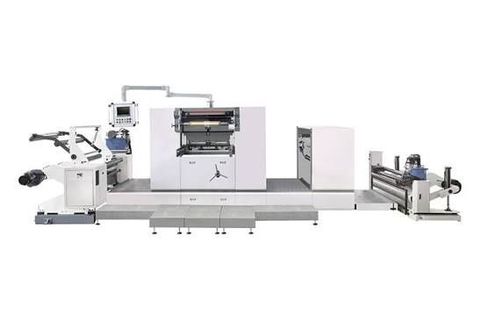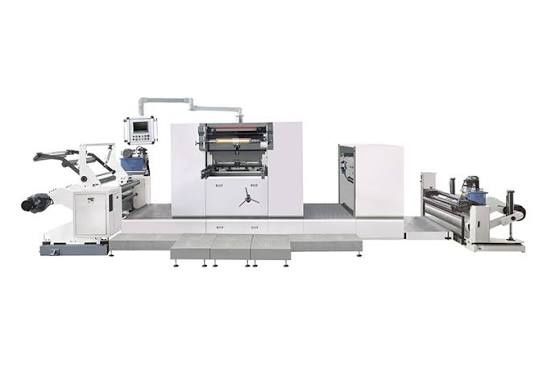
Hot foil stamping machines are specialized printing and finishing equipment used to apply a thin decorative or functional foil layer onto materials such as paper, cardboard, labels, plastics, leather, and selected coated surfaces. The process combines controlled heat, pressure, and a stamping die to transfer foil to a specific area of a substrate.
Hot foil stamping technology is widely associated with packaging, commercial printing, book production, labels, stationery, and product identification. Understanding the equipment, operating stages, foil types, safety requirements, and production factors helps readers understand how this finishing process works.
Context – Equipment, Technology and Purpose
Hot foil stamping is a finishing process in which a heated die presses foil against a substrate. Heat activates the release layer of the foil while pressure allows the selected design to adhere to the material. After the die is lifted, the unwanted foil remains on its carrier while the transferred section stays on the substrate.
A typical hot foil stamping machine includes several main components:
| Component | Main function |
|---|---|
| Heated stamping die | Transfers the selected design |
| Foil supply system | Feeds foil through the stamping area |
| Pressure mechanism | Applies controlled force |
| Heating system | Maintains the required die temperature |
| Substrate feeder | Positions sheets or products |
| Control panel | Adjusts operating parameters |
| Registration system | Helps align the design |
| Waste foil collection | Handles used carrier material |
The technology can be used for lettering, patterns, borders, logos, serial information, decorative elements, and security-related markings. Depending on the equipment configuration, stamping may be performed on individual sheets, continuous webs, labels, or shaped products.
Common foil categories include metallic, pigment, holographic, transparent, and specialty foils. The appropriate selection depends on the substrate, design requirements, stamping temperature, pressure, and production conditions.
The basic production sequence generally includes:
- Preparing the substrate and foil
- Installing and aligning the stamping die
- Setting temperature and pressure
- Adjusting foil movement and registration
- Running initial samples
- Checking adhesion and appearance
- Continuing controlled production
- Inspecting finished output
Importance – Applications and Production Considerations
Hot foil stamping machines matter because they provide a controlled method for adding visual and functional elements to printed materials. Foil stamping can create strong contrast, reflective effects, tactile impressions, or clearly identifiable markings.
The technology affects several industries, including:
- Packaging and carton production
- Commercial printing
- Book and publishing production
- Label manufacturing
- Stationery production
- Cosmetic and personal-care packaging
- Specialty document production
- Leather and synthetic-material finishing
Production quality depends on several interacting variables. Excessive temperature can affect the substrate or foil, while insufficient heat may result in incomplete transfer. Pressure also needs to be appropriate for the material and die. Foil speed, substrate surface, die condition, and machine alignment can influence the final result.
For this reason, operators generally use sample runs before continuous production. Inspection may include checking registration, edge definition, adhesion, surface appearance, and consistency across the production batch.
The choice between manual, semi-automatic, and automated equipment depends on the substrate format, production volume, required registration accuracy, available floor space, and process integration.
Recent Updates – Trends and Developments
Recent developments in hot foil stamping technology are focused on automation, process control, digital integration, and improved material handling.
Modern equipment increasingly incorporates electronic controls that allow operators to monitor parameters such as temperature, pressure, machine speed, and foil movement. Automated registration systems can also help maintain alignment between the stamping design and the substrate.
Digital finishing technologies have expanded the range of variable and short-run applications. Digital foil processes can reduce dependence on traditional physical dies in certain applications, although conventional hot foil stamping remains important for many established production workflows.
Another development is greater integration between printing and finishing equipment. Automated feeding, inspection, registration, and production monitoring can reduce manual intervention and help maintain consistent processing conditions.
Energy management is also becoming relevant. More controlled heating systems can reduce unnecessary heat loss while maintaining the temperature required for foil transfer.
Material development continues as foil manufacturers work with different substrates and surface finishes. Specialty foils can provide effects such as metallic appearances, holographic patterns, color changes, or transparent finishes.
Laws or Policies – Safety and Regulatory Requirements
Requirements for hot foil stamping machines vary according to the country, machine design, workplace, and intended application. Operators and organizations should consult the regulations applicable to their location rather than relying on a single international requirement.
In the United States, OSHA's general machine-guarding requirements include protection from hazards at points of operation, moving components, and other machine areas. OSHA states that machines presenting injury hazards must have appropriate guarding, and its rules also address hazardous-energy control and related workplace protections.
For printing operations, OSHA identifies machine guarding requirements under 29 CFR 1910 Subpart O and discusses lockout/tagout requirements for maintenance activities. The exact requirements depend on the equipment and operation being performed.
In the European Union, Regulation (EU) 2023/1230 establishes a machinery framework and is scheduled to apply from 20 January 2027. The regulation replaces the earlier Machinery Directive framework for its scope and contains requirements concerning machinery safety and conformity.
Other jurisdictions may have separate requirements covering electrical safety, workplace protection, machinery conformity, emergency stops, guarding, documentation, and maintenance procedures. Businesses should check current national and regional rules before operating or placing machinery into production.
Tools and Resources – Useful Information Sources
Several resources can help readers understand hot foil stamping equipment and its production processes.
Useful resources include:
- OSHA machine-guarding guidance for workplace safety information.
- OSHA's printing-industry standards and guidance for printing environments.
- EUR-Lex for the official text of European Union machinery legislation.
- Equipment manuals for machine-specific operating parameters and maintenance instructions.
- Foil technical data sheets for substrate compatibility and processing guidance.
- Production checklists for temperature, pressure, alignment, foil movement, and quality inspection.
- Maintenance logs for recording cleaning, lubrication, die condition, and machine checks.
A simple production checklist can include substrate identification, foil type, die condition, temperature setting, pressure setting, registration, sample inspection, and safety-device verification.
FAQs – Hot Foil Stamping Machines
What is a hot foil stamping machine?
It is equipment that transfers foil onto a substrate by using controlled heat and pressure. A heated die defines the area where the foil is transferred.
What materials can be stamped?
Paper, cardboard, labels, selected plastics, leather, synthetic materials, and other compatible surfaces can be processed, depending on the machine, foil, die, and substrate specifications.
What affects foil stamping quality?
Temperature, pressure, dwell time, foil characteristics, substrate surface, die condition, registration, and machine speed can all influence the finished result.
What is the difference between hot foil and digital foil processes?
Traditional hot foil stamping normally uses a heated physical die. Digital foil processes can use electronically controlled imaging methods and may support variable designs without producing a conventional stamping die for every design.
What safety considerations are important?
Operators should understand machine guarding, emergency controls, safe material handling, electrical precautions, and hazardous-energy procedures. Maintenance activities should follow the applicable workplace safety requirements and machine instructions.
Conclusion – Key Information and Production Understanding
Hot foil stamping machines combine heat, pressure, foil, dies, and controlled material movement to create decorative or functional markings on a wide range of substrates. Their applications extend across packaging, printing, labels, publishing, and specialty finishing.
Production results depend on suitable equipment settings, compatible materials, accurate registration, proper die preparation, and systematic quality checks. Understanding these factors provides a practical foundation for learning about hot foil stamping technology.
As equipment becomes more automated, electronic controls, registration systems, inspection features, and digital integration are becoming increasingly important. At the same time, machine guarding and applicable regulatory requirements remain essential parts of responsible production.
For anyone studying hot foil stamping, equipment documentation, safety regulations, foil specifications, and process checklists provide useful references for understanding how the technology operates in different production environments.