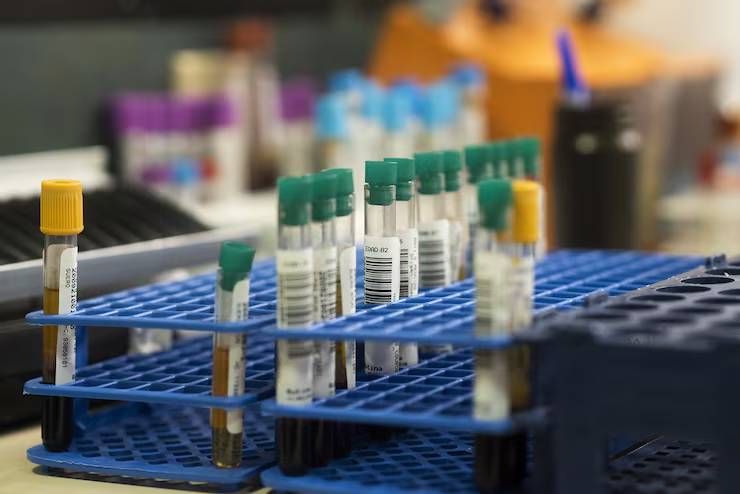
IL-6 ELISA kits are laboratory assay systems designed to measure interleukin-6 (IL-6) concentrations in biological samples. IL-6 is a cytokine involved in immune signaling and inflammatory responses, making its measurement relevant to biomedical research, immunology, cell biology, and biomarker studies.
An ELISA kit typically combines antibodies, standards, detection reagents, buffers, microplate components, and instructions into a standardized workflow. Depending on the kit design, IL-6 can be measured using colorimetric, chemiluminescent, fluorescent, or other immunoassay detection approaches.
Why IL-6 ELISA Kits Matter
Accurate cytokine measurement is important in research involving immune responses, inflammation, cellular signaling, and disease mechanisms. ELISA technology provides a structured approach for quantifying target proteins in biological samples.
Researchers may use IL-6 assays with samples such as serum, plasma, cell-culture supernatants, and other validated biological matrices. The appropriate sample type depends on the assay manufacturer's validation data and experimental design.
Because IL-6 concentrations can vary substantially between samples and experimental conditions, assay sensitivity, dynamic range, specificity, and reproducibility are important considerations.
IL-6 ELISA Assay Technologies
Several ELISA configurations can be used to measure IL-6.
Sandwich ELISA
A sandwich ELISA generally uses a capture antibody and a detection antibody that recognize the target analyte. IL-6 becomes captured between the antibody components, enabling quantitative measurement through a detectable signal.
This format is commonly associated with cytokine quantification because it can provide high analytical specificity.
Direct ELISA
In a direct ELISA format, the target is detected using an enzyme-linked antibody. The workflow can be relatively straightforward, although the appropriate configuration depends on the target and assay requirements.
Indirect ELISA
Indirect ELISA uses a primary antibody and a labeled secondary antibody. This configuration can provide signal amplification but requires careful optimization of antibody interactions.
IL-6 Detection Methods
The detection technology determines how the antibody-target interaction is converted into a measurable signal.
| Detection Method | General Principle |
|---|---|
| Colorimetric | Produces measurable color |
| Fluorescent | Uses fluorescent signal detection |
| Chemiluminescent | Generates measurable light |
| Electrochemiluminescent | Uses electrically induced light emission |
| Multiplex | Measures multiple analytes simultaneously |
Colorimetric ELISA commonly uses an enzyme-substrate reaction that produces a measurable color. Microplate readers can then quantify the signal.
Chemiluminescent and fluorescent formats can provide highly sensitive detection when appropriately configured.
IL-6 ELISA Kit Sensitivity
Sensitivity is an important factor when selecting an IL-6 ELISA kit. Key performance characteristics include the limit of detection, quantification range, assay range, precision, specificity, and recovery.
A highly sensitive assay can be useful when expected IL-6 concentrations are low. However, sensitivity should be evaluated alongside the assay's validated range and sample matrix compatibility.
Other performance characteristics include:
Intra-assay precision
Inter-assay precision
Specificity
Recovery
Linearity
Dynamic range
Sample compatibility
Calibration performance
Researchers should evaluate these characteristics using the manufacturer's technical documentation and validation information.
IL-6 ELISA Kit Manufacturing Process
Manufacturing an ELISA kit involves multiple controlled stages.
1. Antibody Development and Selection
Antibodies with appropriate affinity and specificity toward IL-6 are selected or developed for the assay configuration.
2. Reagent Preparation
Capture antibodies, detection antibodies, standards, buffers, enzyme conjugates, substrates, and other reagents are prepared under controlled conditions.
3. Microplate Preparation
For sandwich ELISA systems, capture antibodies may be immobilized onto microplate wells. Blocking procedures help reduce nonspecific interactions.
4. Kit Assembly
Components are packaged according to the assay protocol, with appropriate labeling, storage requirements, and batch identification.
5. Quality Control
Manufacturers can evaluate assay performance using reference materials and controlled testing procedures. Parameters may include sensitivity, specificity, precision, linearity, and lot-to-lot consistency.
6. Packaging and Storage
Final components are packaged under conditions designed to maintain reagent stability throughout the specified storage period.
IL-6 ELISA Testing Workflow
A typical sandwich ELISA workflow involves several stages:
Samples and standards are prepared.
Samples are added to antibody-coated wells.
IL-6 binds to the capture antibody.
Detection antibody is introduced.
Enzyme-linked detection chemistry generates a signal.
Substrate produces a measurable response.
A microplate reader measures the signal.
IL-6 concentration is calculated using an appropriate calibration curve.
Actual procedures vary between assay formats, so researchers should follow the validated protocol supplied with the specific kit.
Research Applications
IL-6 ELISA kits are used in a wide range of research areas.
Immunology
Researchers can investigate cytokine signaling and immune-cell responses.
Inflammation Research
IL-6 measurements can support studies examining inflammatory pathways and cellular responses.
Cell Biology
Researchers can measure IL-6 released by cultured cells under different experimental conditions.
Biomarker Research
Quantitative IL-6 measurements can contribute to biomarker investigations and research studies involving biological response patterns.
Drug and Treatment Research
Researchers can monitor cytokine-related changes in experimental models when IL-6 is part of the study design.
Factors for Selecting an IL-6 ELISA Kit
Before selecting an assay, researchers should examine:
Species compatibility
Sample type
Detection range
Sensitivity
Specificity
Assay format
Sample volume requirements
Detection technology
Precision data
Storage conditions
For example, a human IL-6 ELISA kit should be validated for the intended human sample type and experimental application. Species-specific requirements are important because antibody recognition and assay performance can differ between species.
IL-6 ELISA Kit Cost Factors
The overall cost of an IL-6 assay can depend on the number of tests per kit, detection technology, antibody configuration, sensitivity, included reagents, standards, controls, and storage requirements.
Multiplex systems and highly specialized detection platforms may have different laboratory requirements compared with conventional colorimetric ELISA formats.
Researchers should consider both the number of samples and the required performance characteristics when evaluating assay options.
Frequently Asked Questions
What are IL-6 ELISA kits?
IL-6 ELISA kits are laboratory assay systems designed to detect and quantify interleukin-6 in validated biological samples.
What is a sandwich ELISA?
A sandwich ELISA uses capture and detection antibodies to bind the target analyte between two antibody components, enabling quantitative detection.
What determines IL-6 ELISA sensitivity?
Sensitivity depends on antibody characteristics, assay chemistry, detection technology, calibration, sample matrix, and the validated analytical performance of the kit.
What samples can be tested?
Depending on the specific kit, validated samples may include serum, plasma, cell-culture supernatants, or other biological matrices.
How is IL-6 concentration measured?
The assay generates a measurable signal that is compared with standards to estimate the IL-6 concentration within the validated assay range.
Conclusion
IL-6 ELISA kits provide standardized approaches for measuring interleukin-6 in biomedical and laboratory research. Sandwich ELISA formats, colorimetric detection, fluorescence, chemiluminescence, and multiplex technologies provide different approaches to cytokine measurement.
When selecting an assay, researchers should consider species, sample matrix, sensitivity, specificity, dynamic range, precision, detection method, and validated performance characteristics. Appropriate assay selection and adherence to the manufacturer's protocol are essential for obtaining meaningful and reproducible research measurements.