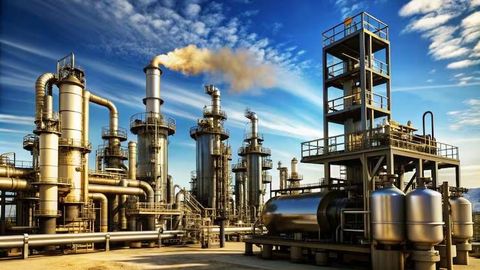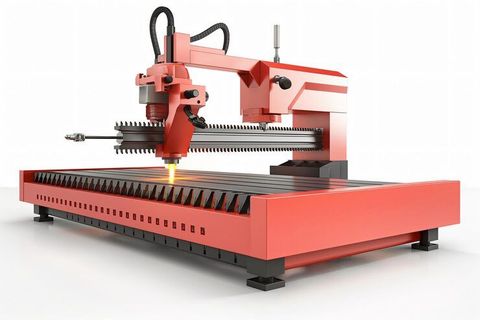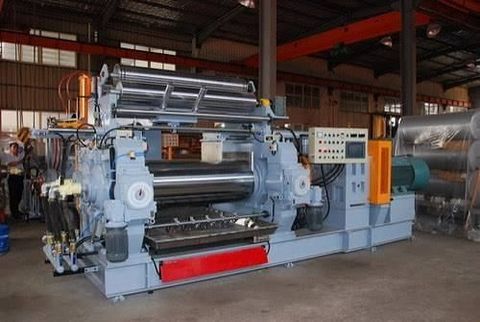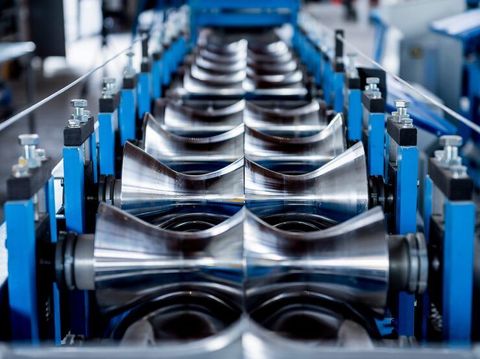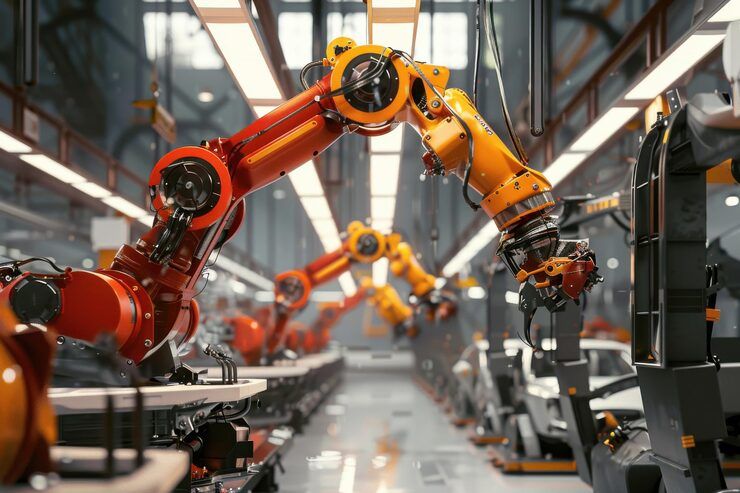
Industrial robots are programmable machines designed to perform physical tasks in manufacturing and other industrial environments. They can move materials, handle parts, weld, assemble components, load machines, paint surfaces, and perform repetitive production activities. Modern industrial robotics combines mechanical systems, sensors, controllers, software, and automation technologies.
Industrial robots are increasingly connected with digital production systems, machine vision, data collection, and automated process controls. Understanding their types, applications, safety considerations, recent developments, and regulatory environment can help readers learn how robotics fits into modern production processes.
Context
An industrial robot is a programmable mechanical system capable of carrying out a sequence of movements with a degree of repeatability. Its working area is commonly called the work envelope. Different robot designs are suited to different movements, payloads, speeds, and production requirements.
Common industrial robot categories include articulated robots, SCARA robots, Cartesian robots, delta robots, and collaborative robots. Each design has different characteristics and is selected according to the task, workspace, payload, precision, and production process.
Industrial robots can be integrated with equipment such as conveyors, machine tools, welding systems, vision cameras, grippers, sensors, and programmable controllers. The complete arrangement is often called a robotic system or robotic cell.
| Robot type | Common characteristics | Typical applications |
|---|---|---|
| Articulated | Multiple rotary joints | Welding, assembly, material handling |
| SCARA | Fast horizontal movement | Assembly, pick-and-place |
| Cartesian | Linear-axis movement | Handling, machining, positioning |
| Delta | High-speed movement | Packaging, sorting, picking |
| Collaborative | Designed for specified human-robot interactions | Assembly, inspection, handling |
The purpose of industrial automation is not limited to increasing machine activity. It can also provide repeatable motion, consistent process execution, automated material movement, and data collection.
Importance
Industrial robots matter because many production processes involve repetitive movements, high temperatures, hazardous materials, heavy components, or precise positioning. Robots can be programmed to perform defined tasks repeatedly while people supervise, maintain, program, or manage the broader production process.
Their use can affect several groups:
- Production engineers who design automated workflows
- Operators who interact with robotic cells
- Maintenance personnel who inspect equipment
- Safety professionals who assess workplace risks
- Manufacturers that integrate robotics into production lines
- Workers who may interact with automated equipment
Safety is particularly important because robot-related hazards can occur during programming, maintenance, testing, setup, and adjustment, not only during normal automatic operation. OSHA notes that workers may enter a robot's working envelope during non-routine activities, creating potential exposure to unintended movement.
Recent Updates
Modern robotics is developing alongside artificial intelligence, machine vision, connected manufacturing, and industrial data systems. Sensors can provide information about position, force, temperature, movement, and other operating conditions.
Machine vision is also increasingly relevant to automated production. Cameras and image-processing systems can help robots identify parts, inspect products, determine positions, and respond to variations in a production environment.
Collaborative robotics is another important area. These systems are designed for specific forms of human-robot interaction, but collaborative operation does not automatically remove the need for risk assessment and safeguarding. ISO 10218 and related robotics safety guidance address risk reduction and safe integration.
The current ISO 10218-1:2025 edition establishes safety requirements for industrial robots and addresses inherently safe design, risk reduction measures, and information for use. ISO 10218-2 addresses the integration of robots into complete robotic systems.
Another development is the connection between robotics and industrial cybersecurity. Connected robots can become part of larger industrial control environments, making network protection, access management, system monitoring, and cybersecurity assessment increasingly relevant. NIST has published research examining cybersecurity performance in robotic industrial-control environments.
Laws or Policies
Industrial robot requirements vary by country, industry, application, and workplace. Businesses should therefore identify the regulations and standards applicable to their specific location and robotic system.
In the United States, OSHA states that there are currently no specific OSHA standards exclusively for the robotics industry. Instead, several general workplace safety requirements can apply to robotic environments, including machine guarding and control of hazardous energy.
For example, OSHA's 29 CFR 1910.212 contains general machine-guarding requirements intended to protect workers from hazards such as rotating parts, point-of-operation hazards, and other dangerous machine areas.
Relevant U.S. safety references include:
- OSHA machine-guarding requirements
- OSHA hazardous-energy control requirements
- ANSI/RIA robotics safety standards
- ISO robotics safety standards
- Applicable electrical and workplace regulations
The European Union has also established the Machinery Regulation (EU) 2023/1230. According to EUR-Lex, the regulation applies from 20 January 2027, with certain provisions applying earlier. It establishes requirements concerning machinery and related products placed on the EU market.
Because standards and regulations can change, organizations should consult the latest official regulatory documents before designing, modifying, or operating an industrial robotic system.
Tools and Resources
Several resources can help readers understand industrial robotics and production automation.
OSHA provides robotics safety information covering hazards, standards, machine guarding, and workplace considerations. Its technical material also identifies relevant ANSI, RIA, and ISO references.
ISO provides information about international robotics standards, including ISO 10218-1:2025.
NIST provides technical research related to robotics, industrial control systems, and cybersecurity.
Useful learning resources include:
- Robot manufacturer technical manuals
- Robot programming documentation
- Risk-assessment worksheets
- Machine-guarding checklists
- Industrial automation training materials
- Robotics safety standards
- Production process diagrams
- Industrial cybersecurity guidance
A basic learning process can begin with understanding robot types, followed by applications, programming concepts, safety systems, sensors, integration, and maintenance principles.
FAQs
What are industrial robots used for?
Industrial robots are used for tasks such as welding, assembly, material handling, machine loading, painting, packaging, inspection, and repetitive movement.
What are the main types of industrial robots?
Common types include articulated, SCARA, Cartesian, delta, and collaborative robots. Their suitability depends on factors such as movement, payload, workspace, speed, and application requirements.
Are industrial robots safe?
Robotic systems can be designed with safety measures, but risks remain if equipment is improperly integrated, operated, maintained, or safeguarded. Risk assessment and appropriate protective measures are important.
What is ISO 10218?
ISO 10218 is a major international robotics safety standard. ISO 10218-1:2025 addresses industrial robots, while ISO 10218-2 addresses robot systems and system integration.
Can industrial robots work with people?
Some robotic systems are designed for specified forms of human-robot interaction. However, the application still requires appropriate risk assessment, system design, and safety measures.
Conclusion
Industrial robots are an important part of modern production processes, combining mechanical movement, programming, sensors, controllers, and automation. Their applications range from material handling and assembly to welding, inspection, packaging, and machine loading.
Understanding robot types, applications, safety principles, standards, and recent technology developments provides a useful foundation for learning about industrial automation. As robotics becomes more connected with vision systems, data platforms, and industrial control networks, technical knowledge and appropriate safety practices remain important.
Robotics should be evaluated according to the specific production task, operating environment, human interaction, and applicable regulations. Official standards and regulatory resources should be checked regularly because requirements and technical guidance can change over time.