Paper plate machines are industrial devices designed to manufacture disposable plates from paperboard and other suitable paper-based materials. They are used in packaging facilities, food packaging operations, catering supply chains, and paper product manufacturing. As food packaging requirements evolve, these machines play a role in shaping production efficiency, product consistency, and material use.
The technology ranges from manually operated presses to semi-automatic and fully automatic production systems. Understanding paper plate manufacturing equipment involves examining its mechanical components, raw materials, production capacity, operating requirements, and environmental considerations.
Understanding Paper Plate Manufacturing Technology
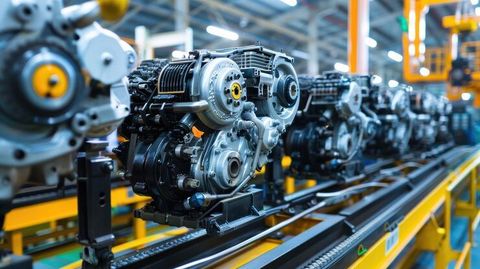
Paper plate machines use forming tools, pressure mechanisms, and dies to convert flat paper blanks into shaped plates. Depending on the equipment design, the process may involve heating, pressing, trimming, and stacking.
Common machine categories include:
Manual paper plate machines: Require substantial operator involvement in loading materials and handling finished plates.
Semi-automatic paper plate machines: Combine mechanical forming with manual loading, unloading, or stacking.
Fully automatic paper plate machines: Integrate feeding, forming, and collection functions to reduce repetitive manual handling.
Hydraulic paper plate machines: Use hydraulic pressure to perform forming operations.
Pneumatic paper plate machines: Use compressed air to operate selected mechanical functions.
Multi-die machines: Support multiple forming stations or tooling arrangements, depending on their design.
The appropriate configuration depends on plate dimensions, material thickness, required output, available floor space, and the level of automation needed.
How Paper Plate Machines Work
Although individual designs differ, most paper plate manufacturing systems follow a similar sequence.
Material preparation: Paperboard or pre-cut paper blanks are prepared according to the plate design.
Feeding: The material is positioned manually or delivered through an automatic feeding mechanism.
Forming: A die presses the material into the required plate shape.
Edge shaping: The forming tools create the rim and intended contours.
Inspection: Operators or automated systems check the shape, dimensions, and surface quality.
Collection and stacking: Finished plates are arranged for counting, packaging, or further handling.
Some machines combine several stages into one continuous process. Others require separate equipment for blank preparation, trimming, counting, or packaging.
The quality of the finished product depends on the material's forming characteristics, the condition of the dies, pressure settings, temperature where applicable, and consistent machine operation.
Why Paper Plate Machines Matter Today
Paper plate manufacturing equipment supports the production of disposable food packaging used in restaurants, cafeterias, events, takeaway operations, and institutional kitchens. These products can simplify food serving and handling, particularly where reusable tableware is impractical.
The technology also affects manufacturers, packaging distributors, equipment operators, and businesses that depend on consistent packaging supplies.
Several factors make this machinery relevant to modern manufacturing.
Production efficiency: Automated feeding and forming can reduce repetitive manual tasks.
Product consistency: Properly maintained dies help maintain uniform plate dimensions and rim shapes.
Material management: Accurate blank positioning can reduce defective products and unnecessary paper waste.
Production planning: Output monitoring helps manufacturers coordinate material requirements and packaging schedules.
Workplace safety: Suitable guards and emergency stops can reduce exposure to moving mechanical components.
Paper plate machines are also connected to broader developments in sustainable packaging. However, paper-based packaging is not automatically environmentally preferable in every situation. Coatings, adhesives, material sourcing, contamination, and local recycling infrastructure influence its environmental performance.
Industrial Applications and Production Capacity
Paper plate machines are used in different manufacturing environments, from small workshops to larger packaging facilities. Their practical output depends on machine configuration and operating conditions.
Manufacturers often compare equipment using rated production speed, actual hourly output, energy consumption, material compatibility, and maintenance requirements.
Evaluation factor | Why it matters |
|---|---|
Production speed | Indicates the machine's rated output under specified conditions |
Plate diameter | Determines the range of products the machine can form |
Material thickness | Influences forming pressure and finished plate rigidity |
Automation level | Determines operator involvement in feeding and stacking |
Power requirements | Helps establish electrical infrastructure needs |
Die configuration | Affects plate shape, dimensions, and changeover requirements |
Reject rate | Indicates the proportion of defective products |
Maintenance intervals | Helps plan downtime and replacement components |
Rated production capacity should not be treated as guaranteed daily output. Actual results depend on setup time, operator experience, raw material quality, interruptions, and inspection requirements.
Recent Developments in Paper Plate Manufacturing
Developments during 2025 and 2026 have reinforced the importance of packaging safety, material selection, production efficiency, and environmental performance.
Automation and Production Monitoring
Manufacturers increasingly consider automated material feeding, finished-plate stacking, electronic controls, and production monitoring when evaluating industrial equipment. These features can help track operating performance and reduce handling requirements.
Sensors and programmable controls may also support fault detection, temperature regulation, and more consistent forming cycles. The availability of these functions varies by machine model, and their effectiveness depends on proper installation and maintenance.
Sustainable Packaging Materials
Interest in fibre-based packaging continues to influence material research and manufacturing decisions. Paperboard grades, recycled fibre content, water-based coatings, and alternative barrier treatments are among the areas receiving attention.
Food-contact suitability remains essential. A material that appears environmentally preferable may still be unsuitable for direct food contact or for serving hot, oily, or wet foods.
Regulatory Developments in 2025 and 2026
On 16 April 2025, India's Food Safety and Standards Authority of India (FSSAI) highlighted sustainable food packaging and discussed developments involving recycled polyethylene terephthalate materials. This reflects broader regulatory attention to packaging safety and sustainability.
In the European Union, the Packaging and Packaging Waste Regulation began applying on 12 August 2026, introducing a common framework for packaging and packaging waste, including requirements relevant to food-contact packaging. Manufacturers supplying that market need to assess the specific obligations applicable to their products.
These developments do not mean that every paper plate machine requires a new configuration. Their implications depend on the materials being processed, the intended market, and the products manufactured.
Laws, Policies, and Compliance Considerations
Rules affecting paper plate manufacturing differ between countries and regions. Manufacturers must distinguish between regulations governing machinery safety, food-contact materials, environmental claims, and waste management.
Food-Contact Material Requirements in India
FSSAI's Food Safety and Standards (Packaging) Regulations, 2018, as amended, establish requirements for packaging intended to come into contact with food.
The regulations specify that paper and paperboard used for food-contact applications should have uniform formation, thickness, and substance, and should be free from visible defects and contaminants. Food-grade paper is required for plates intended for direct contact with food.
Manufacturers should therefore evaluate:
Paperboard composition and supplier documentation.
Coatings, inks, adhesives, and other substances that may contact food.
Suitability for the intended food type and temperature.
Relevant testing and conformity documentation.
Applicable requirements for packaging intended for domestic or international markets.
A machine's technical performance alone does not establish that the finished plate complies with food-contact regulations.
Environmental and Machinery Safety Rules
Other applicable requirements may include local factory regulations, electrical safety standards, worker protection requirements, waste-management rules, and environmental permissions.
In India, the applicable requirements depend on the facility, its location, the materials used, and the nature of its operations. Manufacturers should verify relevant obligations with the appropriate authorities before beginning production.
Machine operators should receive training on moving parts, electrical isolation, heated tooling, emergency stops, and safe maintenance procedures.
Tools and Resources for Paper Plate Manufacturers
Several practical tools can support equipment selection, production planning, quality control, and regulatory compliance.
Production capacity calculator: Estimates output using operating hours, machine speed, and expected downtime.
Raw material consumption worksheet: Tracks paperboard usage, blank dimensions, and material losses.
Energy consumption calculator: Estimates electricity use from machine power ratings and operating hours.
Preventive maintenance checklist: Records lubrication, die inspection, fastener checks, and component replacement.
Quality inspection sheet: Tracks plate diameter, depth, rim shape, defects, and stacking consistency.
FSSAI packaging regulations: Helps Indian manufacturers review relevant food-contact requirements.
ISO management standards: Provides frameworks that may support quality management and environmental management when appropriate to the facility.
Equipment documentation: Technical manuals, electrical diagrams, spare-parts lists, and operator instructions support safe operation.
These resources are most useful when production records are maintained consistently and measurements are based on actual operating data rather than assumed performance.
Frequently Asked Questions
What is a paper plate machine?
A paper plate machine is equipment that forms paperboard or prepared paper blanks into plates using dies and mechanical, hydraulic, pneumatic, or automated systems.
What is the difference between manual and automatic paper plate machines?
Manual machines require greater operator involvement in material handling and production steps. Automatic machines can integrate feeding, forming, and stacking, depending on their configuration.
Which raw materials are used in paper plate manufacturing?
Common materials include paperboard, food-grade paper, and suitable coated paper stocks. The correct material depends on the plate's intended use, required rigidity, moisture resistance, and applicable food-contact rules.
How is paper plate machine production capacity calculated?
A basic estimate multiplies the number of plates produced per minute by operating minutes. For practical planning, the result should be adjusted for downtime, material changes, rejected plates, and maintenance.
Are paper plates always environmentally friendly?
No. Their environmental impact depends on fibre sourcing, coatings, manufacturing energy, transportation, disposal methods, and available recycling or composting infrastructure. Environmental claims should be supported by relevant evidence.
Conclusion
Paper plate machines combine material forming, mechanical engineering, and production control to manufacture disposable food packaging. Equipment selection depends on required output, plate dimensions, raw material characteristics, automation, operating conditions, and maintenance needs.
Developments in production monitoring and sustainable packaging are influencing how manufacturers evaluate their equipment and materials. At the same time, food-contact safety, machinery protection, and environmental regulations remain important considerations.
A clear understanding of production capacity, material requirements, quality checks, and regulatory obligations helps manufacturers make informed technical decisions and maintain consistent production standards.