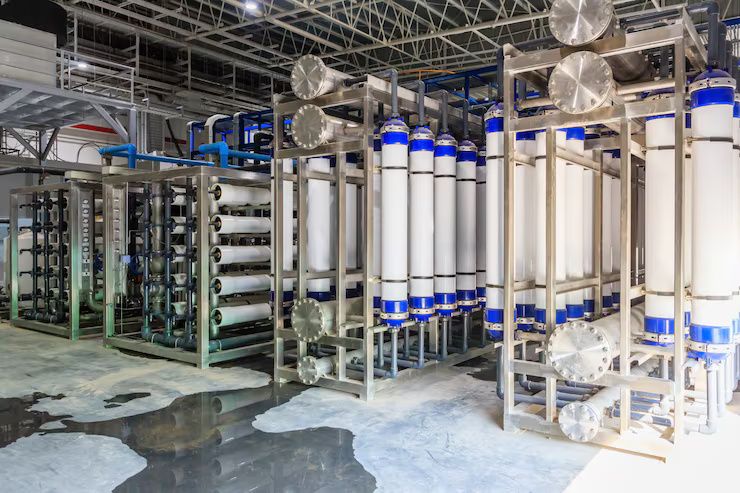
Reverse osmosis machines are widely used to improve water quality by reducing many dissolved substances, salts, and impurities through a specialized filtration process.
They are commonly found in homes, commercial facilities, laboratories, and industrial environments where cleaner water is important for different applications.
Understanding reverse osmosis machines details, components, and working process helps users learn how these systems function, why multiple filtration stages are used, and what factors influence overall performance. This guide provides educational information suitable for anyone interested in water purification technology.
Context – What It Is, Background, and Purpose
Reverse osmosis (RO) is a water purification method that uses pressure to force water through a semi-permeable membrane. This membrane allows water molecules to pass while reducing many dissolved salts, minerals, contaminants, and other unwanted substances.
The technology was originally developed for desalination and scientific applications. Over time, improvements in membrane technology have made reverse osmosis machines suitable for residential, commercial, healthcare, food processing, and industrial water treatment systems.
The main purpose of a reverse osmosis machine is to produce cleaner water for applications where improved water quality is important. Since water quality varies from one region to another, RO systems are often combined with several pre-filtration and post-filtration stages.
Main Components of a Reverse Osmosis Machine
| Component | Purpose |
|---|---|
| Sediment Filter | Removes dust, sand, rust, and larger particles |
| Carbon Filter | Reduces chlorine, odors, and certain organic compounds |
| RO Membrane | Separates many dissolved impurities from water |
| Storage Tank | Stores purified water until needed |
| Post Carbon Filter | Improves taste and odor before dispensing |
| Booster Pump (if installed) | Maintains suitable water pressure |
| Flow Restrictor | Controls wastewater flow |
| Automatic Shut-Off Valve | Stops water flow when the storage tank is full |
Basic Working Process
- Water enters the sediment filter.
- Carbon filtration reduces chlorine and similar substances.
- Water passes through the RO membrane under pressure.
- Purified water moves to the storage tank.
- Remaining concentrated water is discharged through the drain line.
- Final polishing occurs through the post carbon filter before use.
Importance – Why It Matters and Who It Affects
Reverse osmosis machines play an important role in improving water quality across many sectors. Their importance depends on the quality of the incoming water and the intended application.
Households often use RO systems where water contains elevated levels of dissolved salts or other impurities. Educational institutions, laboratories, food manufacturing facilities, healthcare environments, and industrial plants may also use reverse osmosis as part of larger water treatment processes.
Some benefits include:
- Improved reduction of dissolved salts.
- Better taste and odor after filtration.
- Support for appliances that require cleaner water.
- Consistent water quality for many industrial applications.
- Reduced dependence on untreated water sources for specific uses.
It is important to note that water treatment requirements differ by location. Selecting an appropriate purification method depends on local water quality and intended use.
Recent Updates – Trends and Developments from 2024–2026
Reverse osmosis technology continues to evolve with improvements in membrane materials, monitoring systems, and operational efficiency. Between 2024 and 2026, several developments have attracted attention across the water treatment industry.
Manufacturers have introduced membranes designed to improve filtration efficiency while reducing energy consumption in larger systems. Advances in membrane chemistry have also focused on extending operational life under suitable maintenance conditions.
Another noticeable trend is the integration of smart monitoring features. Some reverse osmosis machines now include digital indicators that monitor filter life, water quality indicators, maintenance reminders, and operational status.
Water conservation has also become an important area of development. Newer system designs aim to improve recovery rates by reducing the amount of reject water generated during purification.
Industrial facilities increasingly integrate reverse osmosis machines with technologies such as:
- Ultrafiltration
- Ultraviolet (UV) disinfection
- Deionization systems
- Automated monitoring software
- Internet-connected maintenance dashboards
These developments support improved operational efficiency while helping facilities monitor water treatment performance more effectively.
Laws or Policies – Relevant Rules, Regulations, or Government Policies
Reverse osmosis machines and drinking water systems are influenced by national and international water quality standards. The exact regulations vary depending on the country and intended application.
Many countries establish drinking water quality standards that define acceptable limits for physical, chemical, and microbiological parameters. Water treatment equipment is often evaluated according to recognized testing and certification standards.
Examples of organizations involved in water quality guidance include:
- World Health Organization (WHO)
- Bureau of Indian Standards (BIS)
- United States Environmental Protection Agency (EPA)
- NSF International
- International Organization for Standardization (ISO)
For industrial applications, facilities may also follow environmental regulations related to wastewater management, membrane disposal, and water reuse depending on local government requirements.
Users should always consult applicable regional regulations before installing or operating water treatment equipment in regulated environments.
Tools and Resources – Useful Websites, Calculators, Templates, or Platforms
Several educational resources help users understand reverse osmosis systems and water quality.
Useful resources include:
- World Health Organization water quality publications
- Bureau of Indian Standards drinking water specifications
- U.S. Environmental Protection Agency water information
- NSF drinking water treatment information
- Water quality calculators for Total Dissolved Solids (TDS)
- Water hardness calculators
- Maintenance schedules for filter replacement
- Water quality testing laboratories
- Manufacturer technical manuals
- Educational water treatment guides
These resources help users understand filtration principles, maintenance intervals, and general water quality concepts without replacing professional water analysis where required.
FAQs
How does a reverse osmosis machine work?
A reverse osmosis machine pushes water through a semi-permeable membrane using pressure. The membrane helps reduce many dissolved impurities while allowing purified water to pass through.
Does an RO membrane remove all contaminants?
No. Different contaminants require different treatment methods. Reverse osmosis is highly effective for many dissolved substances, but overall water treatment depends on the complete filtration system and water quality.
How often should filters be replaced?
Replacement intervals vary depending on water quality, usage, and manufacturer recommendations. Regular inspection helps maintain system performance.
Why does a reverse osmosis machine produce wastewater?
The reject water carries away concentrated dissolved impurities that do not pass through the membrane. This is a normal part of the reverse osmosis process.
Where are reverse osmosis machines commonly used?
They are used in homes, educational institutions, healthcare facilities, laboratories, food processing plants, pharmaceutical manufacturing, and many industrial water treatment applications.
Conclusion
Reverse osmosis machines remain one of the most widely used water purification technologies for reducing many dissolved impurities through membrane filtration. Understanding their components and working process helps users appreciate how multiple filtration stages work together to improve water quality.
Advancements in membrane technology, digital monitoring, and water efficiency continue to improve the capabilities of modern reverse osmosis systems. Following appropriate maintenance practices and relevant water quality standards supports reliable long-term operation.
As water treatment technology continues to evolve, reverse osmosis machines are expected to remain an important part of residential, commercial, and industrial water purification systems around the world.