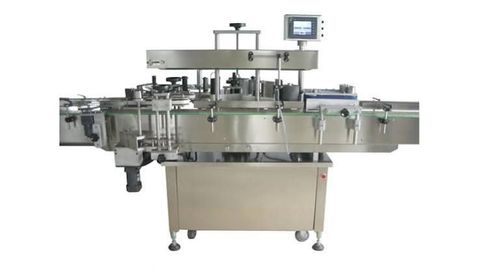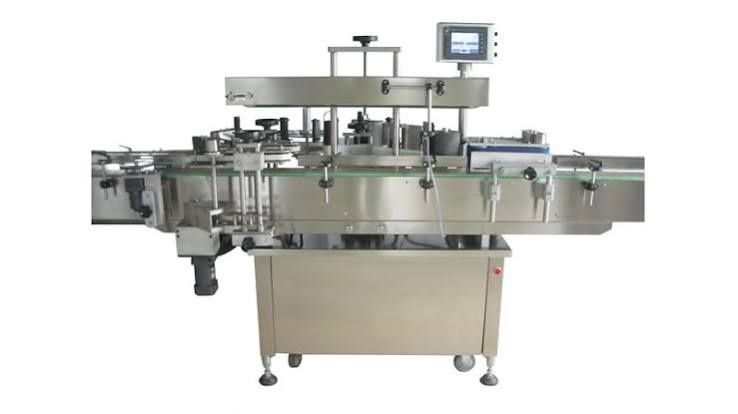
A Round Bottle Label Machine is equipment designed to apply labels around cylindrical containers such as bottles, jars, tubes, and other round packages.
It is commonly used where labels need to be positioned consistently around a curved surface.
Understanding how a Round Bottle Label Machine works can help manufacturers, packaging teams, students, and general readers understand modern labeling processes. The machine may use sensors, rollers, conveyors, and control systems to position labels accurately.
Context – What Is a Round Bottle Label Machine?
A Round Bottle Label Machine is a packaging machine that applies self-adhesive labels to cylindrical containers. Depending on the machine design, the label may be applied to the front, rear, or full circumference of a bottle.
The basic purpose is to maintain consistent label placement while containers move through a packaging line. Manual labeling can involve variations in position, angle, or spacing, while automated equipment uses controlled movement and sensing systems to improve repeatability.
A typical labeling process includes several stages:
- Bottles enter the machine through a conveyor.
- A sensor detects the bottle position.
- The control system coordinates bottle movement and label release.
- A dispensing mechanism separates the label from its backing material.
- A roller, belt, or application mechanism presses the label onto the bottle.
- The labeled container continues toward the next packaging stage.
Round Bottle Label Machines can be designed for different container dimensions, label materials, and production environments. Some systems are intended for smaller operations, while integrated systems can be connected with filling, capping, coding, and inspection equipment.
| Component | Main function |
|---|---|
| Conveyor | Moves bottles through the machine |
| Sensor | Detects bottle position |
| Label dispenser | Feeds and separates labels |
| Roller or belt | Presses the label onto the container |
| Control system | Coordinates machine operations |
| Adjustment mechanism | Accommodates different bottle dimensions |
Importance – Why Does It Matter?
Accurate labeling is important because product information must remain visible, readable, and correctly positioned. A label can contain information such as product identity, quantity, ingredients, usage instructions, warnings, batch information, or manufacturer details, depending on the product category and applicable regulations.
Round containers can create particular labeling challenges. A label must follow the curved surface without excessive wrinkles, gaps, overlaps, or incorrect positioning. Bottle diameter, surface material, label dimensions, adhesive characteristics, and machine settings can all influence application results.
A Round Bottle Label Machine may be relevant to organizations working with:
- Food and beverage containers
- Cosmetic and personal-care bottles
- Pharmaceutical packaging
- Household chemical containers
- Lubricant and industrial-product bottles
- Laboratory containers
The importance of labeling also extends beyond appearance. For regulated products, incorrect or incomplete labeling can create compliance issues. The equipment therefore forms one part of a broader packaging and quality-control process.
Recent Updates – Trends and Developments
Recent developments in bottle labeling have focused on automation, improved sensing, digital controls, inspection, and integration with other packaging equipment.
Modern systems may use electronic sensors to identify container position and detect missing or incorrectly positioned labels. Some packaging lines also use vision-based inspection to examine label placement, printed information, or other packaging characteristics.
Another development is greater flexibility. Packaging operations may handle several bottle sizes or label formats, requiring adjustable guides, rollers, and control parameters.
Digital interfaces can also make machine setup and monitoring easier by displaying operating information and allowing selected parameters to be adjusted.
Common developments include:
- Automatic bottle detection
- Servo-controlled label application
- Vision-based inspection
- Digital machine controls
- Automatic product changeover features
- Integration with coding and marking equipment
- Data collection for production monitoring
These developments can reduce manual intervention, but they also increase the importance of proper setup, maintenance, operator training, and quality checks.
Laws or Policies – What Rules Apply?
A Round Bottle Label Machine itself is generally a piece of packaging equipment, while the regulatory requirements usually concern the product, package, labeling information, and manufacturing process.
Requirements vary by country and product category. In the United States, for example, the U.S. Food and Drug Administration provides specific labeling requirements for products such as cosmetics, drugs, foods, and medical devices. Cosmetic labels must contain required information and must not be false or misleading.
For food products in the European Union, mandatory information can include the product name, ingredients, allergens, net quantity, date marking, storage conditions, and instructions for use.
In India, packaged commodities may fall under the Legal Metrology (Packaged Commodities) Rules. Government information identifies declarations such as manufacturer or importer details, country of origin, generic name, net quantity, manufacturing information, maximum retail price, and consumer-care details for applicable pre-packaged commodities. Specific exemptions and requirements depend on the product and package.
For this reason, the machine settings should support the approved label format rather than determine what information legally belongs on the label.
Organizations should check the rules applicable to their specific product, market, container, and labeling claims before production.
Tools and Resources – Useful Information Sources
Several resources can help people understand Round Bottle Label Machine operation and labeling requirements.
Useful resources include:
- U.S. FDA labeling guidance for regulated products
- U.S. Code of Federal Regulations for applicable labeling rules
- European Commission food-labeling information
- India's Department of Consumer Affairs and Legal Metrology resources
- Manufacturer manuals for machine setup and maintenance
- Packaging specifications and label artwork guidelines
- Internal inspection checklists for label positioning
The FDA provides dedicated cosmetic labeling resources, including regulatory explanations and a step-by-step labeling guide.
A basic inspection checklist can record bottle diameter, label dimensions, label position, adhesive condition, sensor settings, application pressure, and inspection results. Such records can help identify recurring packaging problems.
FAQs – Round Bottle Label Machine
What is a Round Bottle Label Machine?
It is packaging equipment designed to apply labels to cylindrical containers. It can use conveyors, sensors, dispensing mechanisms, and rollers or belts to position labels around bottles.
How does a Round Bottle Label Machine work?
The bottle moves through the machine while sensors identify its position. The label dispenser releases the label at the appropriate point, and an application mechanism presses it against the bottle surface.
Where are Round Bottle Label Machines used?
They can be used in food and beverage, cosmetics, pharmaceuticals, household products, laboratory packaging, and various industrial packaging applications.
Can one machine handle different bottle sizes?
Some machines have adjustable components that accommodate different container dimensions. The practical range depends on the machine design, bottle geometry, label specifications, and adjustment system.
What affects label application accuracy?
Bottle diameter, surface condition, label dimensions, adhesive properties, conveyor speed, sensor position, application pressure, and machine calibration can all affect the final label position.
Conclusion – Key Points to Remember
A Round Bottle Label Machine automates the application of labels to cylindrical containers by coordinating bottle movement, label dispensing, sensing, and application. Its main purpose is to achieve consistent label placement while supporting different packaging requirements.
Understanding the machine's components and operating sequence can help packaging teams identify factors that influence labeling accuracy. The appropriate setup depends on the bottle, label, product category, and production process.
Regulatory requirements should also be considered separately from machine operation. Food, cosmetic, pharmaceutical, and other regulated products can have different labeling rules depending on the country and market.
For accurate implementation, organizations should combine machine documentation with applicable regulatory guidance, approved label artwork, inspection procedures, and routine equipment checks.