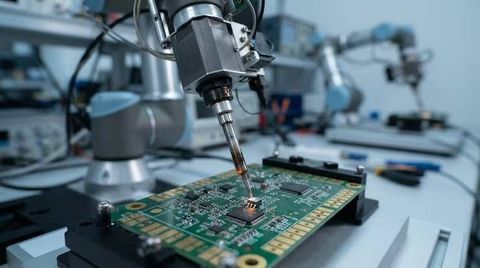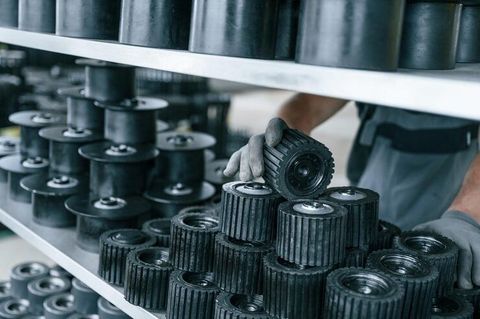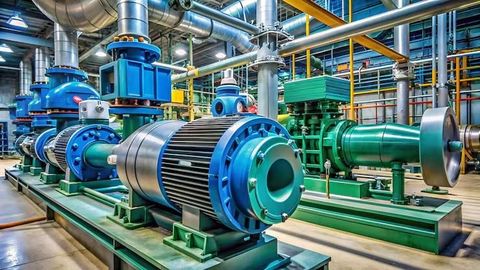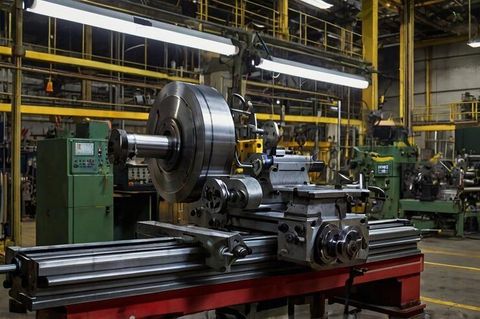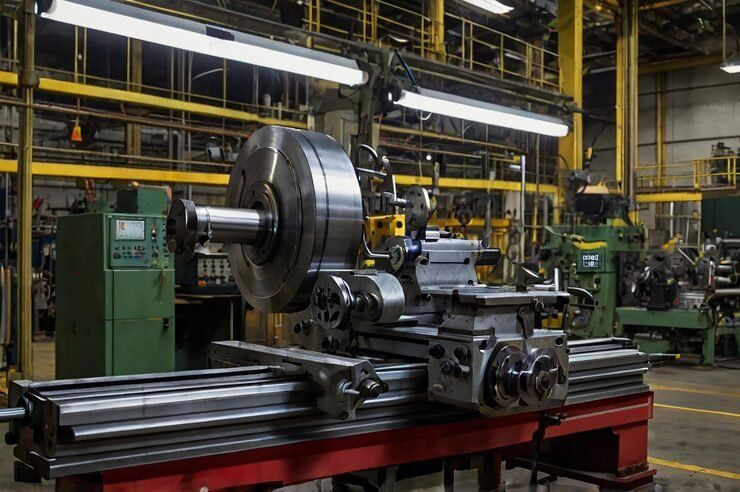
Sheet metal and fabrication machinery refers to equipment used to cut, bend, punch, shape, join, and finish metal sheets or plates to produce components and finished products. These machines are used in industries such as automotive manufacturing, construction, aerospace, electrical equipment, industrial machinery, and metal furniture production.
Sheet metal fabrication transforms flat metal stock into useful shapes through a combination of mechanical operations, thermal processes, and joining techniques. Common materials include carbon steel, stainless steel, aluminum, copper, and galvanized steel. The selected material and its thickness influence the type of machinery, tooling, and processing method required.
Modern metal fabrication combines conventional equipment with computer-controlled systems. Computer numerical control (CNC) technology allows machines to follow programmed instructions for cutting, punching, bending, and other operations. Automated material handling and digital design tools can also connect different stages of production.
Main categories of fabrication machinery
Sheet metal fabrication involves several categories of equipment, each designed for a particular manufacturing task.
Cutting machines: Separate metal sheets into required shapes using mechanical blades, lasers, plasma, or water jets.
Press brakes: Bend sheet metal into angles, channels, enclosures, and other profiles.
Punching machines: Create holes, slots, and shaped openings using punches and dies.
Rolling machines: Curve flat sheets or plates into cylindrical and rounded forms.
Shearing machines: Cut sheet metal along straight lines using opposing blades.
Welding equipment: Join metal components using processes such as MIG, TIG, resistance, or laser welding.
Grinding and finishing machines: Remove burrs, smooth edges, and prepare surfaces for further processing or coating.
The equipment used in a fabrication facility depends on its production requirements, material specifications, component geometry, and desired level of automation.
How the fabrication process works
A typical sheet metal fabrication workflow begins with a technical drawing or digital design. The design specifies dimensions, material thickness, tolerances, hole locations, bend angles, and other manufacturing details.
The material is then cut to shape, formed into the required geometry, and joined where multiple pieces are involved. Depending on the application, the component may undergo deburring, grinding, surface treatment, coating, or inspection before it is assembled into a final product.
Not every component requires every operation. A simple electrical panel may need cutting, punching, bending, and coating, while a large industrial enclosure may also require welding, assembly, and dimensional inspection.
Importance of Sheet Metal Fabrication Machinery
Sheet metal machinery plays an important role in producing durable, accurately shaped components for modern industry. Metal sheets are relatively easy to transport and store, but transforming them into usable parts requires controlled cutting, forming, and joining processes.
Machinery helps manufacturers maintain dimensional consistency across repeated production runs. This is especially important for components that must fit together during assembly, such as machine housings, vehicle panels, structural brackets, electrical cabinets, and ventilation ducts.
Practical applications across industries
Automotive manufacturing: Cutting, stamping, bending, and welding equipment produces body panels, brackets, chassis components, and protective housings.
Construction: Fabrication machinery shapes roofing panels, structural metal components, door frames, support brackets, and ventilation systems.
Electrical equipment: Punching, bending, and cutting machines produce switchgear enclosures, control cabinets, distribution boxes, and equipment housings.
Aerospace manufacturing: Precision cutting and forming equipment processes specified sheet metals for selected aircraft structures and internal components. Material traceability and strict quality controls are particularly important in this sector.
Industrial machinery: Fabricators produce guards, machine covers, mounting plates, frames, and protective panels.
Heating, ventilation, and air conditioning: Sheet metal machinery forms air ducts, ventilation housings, and associated fittings.
Common production challenges
Fabrication facilities must manage several technical challenges to maintain consistent output.
Material deformation: Excessive force or unsuitable forming conditions can cause unwanted stretching, cracking, or distortion.
Dimensional variation: Incorrect tooling, machine settings, or material properties can affect component dimensions.
Material waste: Poorly arranged cutting patterns may leave unnecessary scrap.
Tool wear: Punches, dies, blades, and forming tools gradually deteriorate with use.
Surface defects: Scratches, burrs, heat marks, and coating damage can affect component quality.
Production coordination: Delays at cutting, bending, welding, or finishing stages can disrupt the overall workflow.
Appropriate machine selection, preventive maintenance, operator training, and inspection procedures help manage these challenges. However, outcomes depend on the equipment, material, process conditions, and manufacturing controls.
Types of Sheet Metal and Fabrication Machines
Sheet metal fabrication facilities use different machines depending on the required cutting accuracy, material thickness, production volume, and component design. Some machines perform a single operation, while integrated CNC systems can carry out multiple tasks within a coordinated production process.
Cutting and material separation equipment
Cutting machinery separates sheet metal or plate into specific shapes before forming or assembly.
Laser cutting machines: Use a focused laser beam to cut metal with controlled geometry. Fiber laser systems are widely used for processing suitable grades of steel, stainless steel, and aluminum.
Plasma cutting machines: Use an electrically conductive plasma arc to cut conductive metals. They are commonly applied to thicker plates and industrial structural components.
Waterjet cutting machines: Use a high-pressure water stream, often mixed with abrasive material, to cut a range of materials without the same heat-affected zone associated with thermal cutting.
Mechanical shearing machines: Use blades to cut sheets along straight lines. They are commonly used for preparing blanks and trimming metal stock.
CNC punching machines: Use programmed punches and dies to create holes, slots, and repeated shapes in sheet metal.
Each cutting technology has different operating requirements. Laser cutting may be suitable for detailed profiles, while shearing is useful for straight cuts and plasma cutting is frequently applied to thicker conductive materials.
Bending and forming machinery
Forming equipment changes the shape of metal without necessarily removing material.
Press brakes use a punch and die to bend sheet metal to specified angles. CNC press brakes control factors such as the bending sequence, back gauge position, and ram movement. Accurate bending depends on material thickness, strength, springback, tooling geometry, and machine setup.
Plate rolling machines use rollers to form curved sections, cylinders, and cones. They are common in the production of tanks, pressure equipment components, ducts, and industrial vessels.
Hydraulic and mechanical presses apply force through dies to form or shape components. Stamping presses are used for repeated operations in automotive parts, appliance housings, brackets, and other components produced in larger quantities.
Welding and joining equipment
Welding machinery joins separate metal components through heat, pressure, or a combination of both.
MIG welding: Uses a continuously fed wire electrode and shielding gas for joining suitable metals.
TIG welding: Uses a non-consumable tungsten electrode and is often selected where controlled weld quality is important.
Resistance welding: Generates heat through electrical resistance and pressure, commonly for joining sheet metal components.
Laser welding: Uses a concentrated laser beam to create localized welds in suitable applications.
Robotic welding systems: Use programmable robotic arms to repeat welding paths and coordinate movement in production environments.
Other joining methods include riveting, bolting, clinching, and adhesive bonding. The selected method depends on material compatibility, structural requirements, component accessibility, and the intended operating environment.
Finishing and inspection machines
After cutting, bending, and joining, fabricated components may require finishing to improve edge quality, appearance, corrosion resistance, or dimensional accuracy.
Deburring machines remove sharp edges and unwanted material left by cutting and punching. Grinding equipment smooths selected surfaces and weld areas. Shot blasting and other surface-preparation systems remove scale or prepare components for subsequent coatings.
Inspection equipment includes dimensional measuring instruments, coordinate measuring machines, thickness gauges, and weld inspection systems. These tools help verify whether components meet specified tolerances and quality requirements.
Manufacturing Processes and Digital Technologies
Sheet metal fabrication combines engineering design, material preparation, machine operation, quality inspection, and production planning. Modern facilities often use digital tools to coordinate these activities and reduce errors between design and manufacturing.
From digital design to finished components
A typical manufacturing sequence includes the following stages:
Design and engineering: A CAD drawing or three-dimensional model defines the component's geometry, dimensions, material, and tolerances.
Material preparation: Sheets or plates are selected, identified, inspected, and positioned for processing.
Cutting and punching: The material is separated into the required profiles and openings.
Forming: Press brakes, rollers, or presses create bends and other shapes.
Joining: Welding or mechanical fastening connects multiple components where necessary.
Surface finishing: Edges and surfaces are prepared for the intended application.
Quality inspection: Dimensions, welds, surface conditions, and other specified characteristics are checked.
Assembly and documentation: Components are assembled where required, and production records are maintained.
The sequence can vary according to component design. For example, some parts are punched before bending, while others require additional machining or finishing after forming.
Role of CNC and CAD/CAM systems
Computer-aided design (CAD) software is used to create component drawings and models. Computer-aided manufacturing (CAM) software converts design information into machine instructions for supported equipment.
CNC systems use these instructions to control movements, tool positions, cutting paths, and other operating parameters. This can improve repeatability, particularly when producing many similar parts. However, the accuracy of the finished component still depends on machine condition, tooling, material properties, programming, and operator checks.
Nesting software arranges component shapes on a sheet to plan cutting operations and manage material usage. It can account for part orientation, cutting clearance, and manufacturing constraints. The resulting material efficiency depends on the component mix and the practical limits of the process.
Automation and smart fabrication
Automated fabrication systems can combine cutting machines, robotic handling, bending equipment, storage systems, and production software. Sensors and monitoring tools may track machine status, production counts, alarms, and maintenance requirements.
These technologies can help coordinate production stages and identify delays. However, integration requires compatible equipment, suitable data connections, worker training, and appropriate safeguards. Automation does not remove the need for maintenance, process validation, or human oversight.
Recent Developments in Sheet Metal and Fabrication Machinery
Developments across the metal fabrication industry from 2024 through 2026 have focused on automation, fiber laser cutting, connected production systems, and more flexible manufacturing processes. Adoption varies according to the size of the facility, the materials processed, and the complexity of its products.
Fiber laser cutting and advanced forming
Fiber laser cutting technology continues to be used in applications requiring detailed profiles, controlled cutting paths, and efficient processing of suitable metal sheets. Machine configurations differ in laser power, cutting capacity, automation, and the materials they can process. Higher power alone does not determine cutting quality; material type, thickness, assist gas, focus settings, and machine condition also matter.
Press brakes are also evolving through improved CNC controls, angle measurement systems, automated tool setup, and programmable back gauges. These features help operators manage complex bending sequences and compensate for certain variations in material behavior.
Robotic automation and connected equipment
Robotic material handling and automated bending cells can move components between production stages. In suitable facilities, these systems help maintain repeatable workflows and reduce manual handling of heavy or awkward parts.
Industrial software can connect production schedules with machine status, material inventory, and inspection records. This approach supports production visibility, although its effectiveness depends on accurate data and reliable integration between different systems.
Energy use and material efficiency
Manufacturers are examining ways to reduce scrap, improve cutting patterns, monitor machine energy consumption, and extend tool life. Nesting software and automated production planning can help organize sheet usage, while preventive maintenance can reduce interruptions associated with equipment deterioration.
Environmental performance depends on several factors, including electricity sources, material selection, scrap recovery, compressed-air demand, and the energy used by cutting and finishing equipment. Digital monitoring can provide useful information, but actual improvements depend on operational changes.
Laws, Safety Standards, and Regulatory Requirements
Sheet metal machinery is subject to requirements concerning machine guarding, electrical safety, workplace hazards, emissions, and worker protection. Specific obligations depend on the machine, workplace, industrial activity, and country where the equipment is installed or used.
Manufacturing safety in India
In India, fabrication facilities need to consider applicable occupational safety legislation, factory requirements, electrical safety provisions, and environmental rules. The Occupational Safety, Health and Working Conditions Code, 2020, forms part of the country's occupational safety framework; its application depends on the relevant commencement provisions and implementing rules in force.
Facilities should assess risks associated with laser radiation, moving machine parts, hydraulic systems, welding fumes, hot metal, noise, and manual handling. Appropriate controls may include physical guards, interlocks, local exhaust ventilation, protective equipment, operator training, and documented maintenance procedures.
Environmental requirements can apply to welding emissions, metal finishing, chemical handling, paint operations, and industrial waste. The precise obligations depend on the processes performed and the applicable national, state, and local rules.
International machinery and quality standards
Several standards and technical frameworks are relevant to fabrication machinery and production processes.
ISO 12100: Provides principles for machinery risk assessment and risk reduction.
ISO 13849: Addresses safety-related parts of machinery control systems.
ISO 3834: Specifies quality requirements for fusion welding of metallic materials.
ISO 9001: Covers quality management systems and associated production controls.
IEC 60204-1: Addresses electrical equipment of machines.
These standards have different scopes and legal status. A standard may be required by a regulation, contract, or industry specification, or it may be adopted voluntarily. Manufacturers and facility operators must determine which requirements apply to their specific equipment and operating environment.
Tools and Resources for Fabrication Planning
Selecting fabrication machinery requires information about the intended parts, production volume, materials, tolerances, and available floor space. Engineering tools and measurement equipment help manufacturers assess these factors before production begins.
Common software and technical tools
CAD software supports the design of sheet metal components, including bends, holes, flanges, and enclosures. CAM systems convert approved designs into machine instructions, while nesting applications arrange parts on sheets to plan cutting operations.
Simulation tools can help evaluate forming sequences, estimate material deformation, and identify potential interference between tools and components. Their results depend on the accuracy of material data, machine models, and process assumptions.
Dimensional inspection tools are equally important. Calipers, micrometers, angle gauges, thickness gauges, and coordinate measuring machines can verify different aspects of a fabricated component. The choice depends on the required tolerance and inspection method.
Factors to evaluate when selecting machinery
Factor | Importance |
|---|---|
Material type | Determines suitable cutting, forming, and joining methods |
Sheet thickness | Influences machine capacity and tooling requirements |
Component dimensions | Determines working area and handling arrangements |
Production volume | Affects the suitability of automation and tooling changes |
Tolerance requirements | Influences machine precision and inspection needs |
Floor space | Affects installation, material flow, and maintenance access |
Safety provisions | Helps determine suitable guarding and operating controls |
Maintenance needs | Affects equipment availability and long-term operation |
Fabrication equipment should be selected according to actual production requirements rather than a single specification. Machine capability, tooling compatibility, operator skills, and quality inspection procedures all contribute to the final result.
Frequently Asked Questions
What machines are used in sheet metal fabrication?
Common machines include laser cutters, plasma cutters, shearing machines, CNC punch presses, press brakes, plate rollers, welding systems, and deburring equipment. The required combination depends on the component design and manufacturing process.
What is the difference between a CNC laser cutter and a plasma cutter?
A CNC laser cutter uses a focused laser beam to cut material, while a plasma cutter uses an electrically conductive plasma arc. Laser systems are often used for detailed profiles in suitable sheet materials, whereas plasma systems are widely used for cutting conductive metals, including thicker plates.
How does a CNC press brake work?
A CNC press brake uses a programmed control system to coordinate the movement of a punch, die, and back gauge. It bends sheet metal to specified angles and dimensions, with the final accuracy influenced by tooling, material properties, machine condition, and setup.
Which industries use sheet metal fabrication machinery?
Automotive, aerospace, construction, electrical equipment, HVAC, industrial machinery, and appliance manufacturing all use sheet metal fabrication machinery. Applications include panels, brackets, enclosures, ducts, structural components, and machine housings.
What factors affect sheet metal fabrication quality?
Material properties, cutting accuracy, tooling condition, bending calculations, welding procedures, surface preparation, and dimensional inspection all affect fabrication quality. Proper machine maintenance and trained operators also help maintain consistency.
Conclusion
Sheet metal and fabrication machinery transforms flat metal stock into components used across manufacturing, construction, transportation, and industrial equipment production. Cutting, punching, bending, rolling, welding, and finishing machines perform different roles within the manufacturing workflow. CNC controls, robotics, and connected software support more coordinated production, while inspection procedures help verify component quality. Machinery selection and safe operation depend on material characteristics, production requirements, technical standards, and workplace conditions.