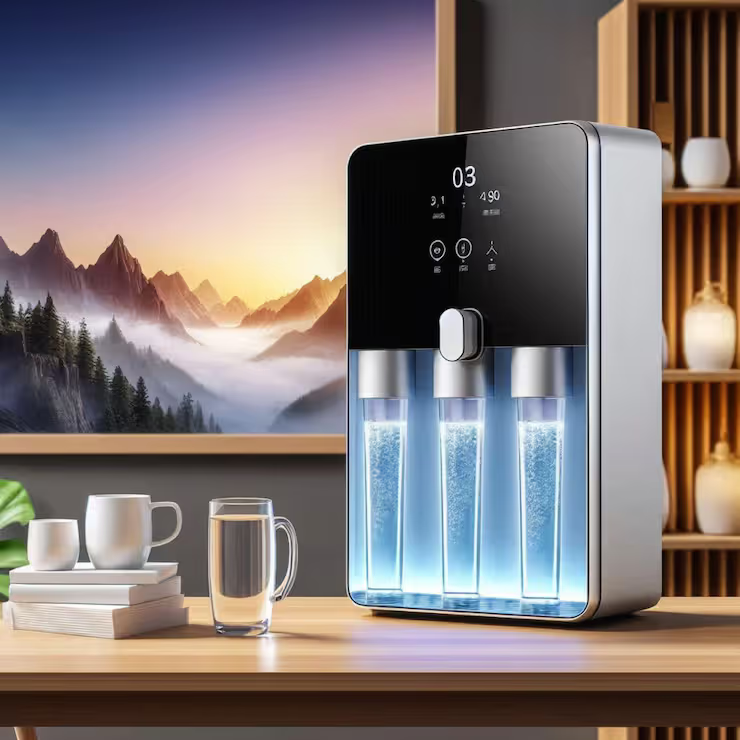
A UV purifier is a water treatment system that uses ultraviolet light to reduce microorganisms in water. Unlike many filtration methods that physically remove particles, ultraviolet purification primarily works by exposing microorganisms to UV-C light at a controlled wavelength. The energy from the light can damage the genetic material of microorganisms, preventing them from reproducing effectively.
UV purification is commonly used for drinking water treatment in homes, offices, healthcare environments, laboratories, and other settings where microbiological quality is important. It can be used as a standalone disinfection step when the incoming water is already relatively clear, or as part of a broader treatment system.
A UV purifier does not generally remove dissolved salts, hardness, heavy metals, chemicals, or visible sediment. Understanding this distinction is important because water quality problems differ from one location to another.
How Does a UV Purifier Work?
A typical UV water purification system contains a UV lamp enclosed inside a protective chamber. Water flows through the chamber while the lamp produces ultraviolet radiation.
The treatment process generally follows several stages. First, water may pass through a sediment filter that reduces suspended particles. This is important because cloudy water can interfere with the ability of UV light to reach microorganisms. The pretreated water then enters the UV chamber, where microorganisms are exposed to UV-C radiation.
When microorganisms receive sufficient UV exposure, the radiation can disrupt their genetic material. This reduces their ability to reproduce and cause biological contamination.
The treated water then moves toward the point of use. The effectiveness of the system depends on factors such as UV intensity, exposure time, water flow rate, lamp condition, water clarity, and the type and concentration of microorganisms present.
What Can UV Purification Treat?
UV technology is primarily designed for microbiological disinfection. Depending on system design and operating conditions, it can help control various microorganisms, including bacteria, viruses, and certain other microorganisms.
However, UV treatment should not be interpreted as a complete solution for every water-quality problem. For example, UV light does not physically remove sand, rust, dissolved minerals, salts, pesticides, or many chemical contaminants.
This is why water testing can be useful before selecting a purification system. If the primary concern is microbial contamination, UV may be an appropriate treatment technology. If the water also contains high sediment levels, excessive hardness, dissolved solids, or chemical contaminants, additional treatment stages may be necessary.
Benefits of UV Water Purification
One of the main advantages of UV purification is that it disinfects water without relying on chemical disinfectants. The process does not intentionally add a chemical treatment agent to the water.
UV treatment can also operate quickly as water passes through the treatment chamber. Properly designed systems can provide continuous disinfection as long as the lamp is operating correctly and the water flow remains within the system's specified limits.
Another advantage is that UV treatment does not normally alter the taste, odor, or mineral composition of water in the same way that some other treatment processes can. This makes it useful when the goal is specifically microbiological control rather than removal of dissolved substances.
UV systems can also be combined with other purification technologies. For example, sediment filtration can improve water clarity before UV exposure, while other treatment technologies can address dissolved contaminants that UV cannot remove.
Important Limitations of UV Purifiers
UV purification is highly dependent on water clarity and system performance. If water contains significant turbidity, suspended particles, or color, microorganisms may be shielded from UV radiation. For this reason, pretreatment can be an important part of a UV purification setup.
Flow rate is another critical consideration. A UV system is designed around a specific amount of water passing through the chamber during a given period. If water flows too quickly, microorganisms may not receive the intended UV exposure.
The UV lamp also has a limited operating life. Even when a lamp continues to produce visible light, its effective UV output can decline over time. Regular replacement according to the manufacturer's maintenance schedule is therefore important.
UV treatment also does not provide broad contaminant removal. A household facing both microbial and chemical water-quality concerns may need a multi-stage approach rather than relying exclusively on UV.
UV Purifier vs. Other Water Treatment Methods
Different purification technologies address different types of contamination.
Sediment filtration is mainly used to reduce suspended particles such as dirt, sand, and rust. Activated carbon filtration can help reduce certain organic compounds, chlorine, and substances that affect taste and odor. Reverse osmosis uses a membrane to reduce many dissolved substances, including salts and certain minerals.
UV purification has a different role: microbiological disinfection.
These technologies can therefore complement one another rather than being direct substitutes. A treatment system should be selected according to the actual characteristics of the incoming water rather than based only on the number of purification stages.
How to Choose a UV Purifier
The first step is to understand the source and quality of the water. Municipal water, groundwater, rainwater, and surface water can have very different characteristics.
Pay attention to the system's rated flow capacity. The required capacity should match the amount of water being treated and the peak flow through the system. A system that is too small for the application may not provide the intended treatment performance.
Water clarity is another important factor. If the source contains sediment or turbidity, consider whether appropriate prefiltration is included.
The UV lamp and chamber design also matter. Look for a system with clear operating information, lamp-status indicators where appropriate, and maintenance guidance. The system should make it reasonably easy to monitor lamp operation and perform required maintenance.
For more complex water sources, laboratory water testing can provide useful information before selecting treatment equipment. Testing can identify whether microbial contamination is actually present and whether other contaminants need attention.
UV Purifier Maintenance
Regular maintenance is essential for consistent UV performance. The lamp should be replaced according to the manufacturer's recommended operating period rather than waiting for visible failure.
The quartz sleeve surrounding the UV lamp may also require periodic inspection and cleaning. Mineral deposits or fouling on the sleeve can reduce UV transmission and therefore affect treatment performance.
Pre-filters should be maintained as recommended because clogged or deteriorated filters can affect water flow and treatment conditions.
A useful maintenance routine includes checking the lamp-status indicator, monitoring water flow, inspecting the chamber and sleeve when required, replacing filters appropriately, and keeping records of lamp replacement and servicing.
If the purifier includes an alarm or sensor indicating lamp failure or reduced performance, these warnings should not be ignored.
Is a UV Purifier Right for Every Home?
Not necessarily. UV purification is most useful when microbiological disinfection is an important requirement and the water can be made sufficiently clear for effective UV transmission.
For water with substantial dissolved salts, hardness, heavy metals, chemical contaminants, or high sediment levels, additional treatment may be necessary. In some situations, UV may form only one part of a complete purification system.
The most reliable approach is to identify the source of the water, understand its quality through appropriate testing, and then select treatment technologies that address the specific contaminants.
Final Thoughts
A UV purifier is a focused water-treatment technology designed primarily for microbiological disinfection. It uses ultraviolet radiation rather than conventional chemical disinfectants and can be an effective component of a properly designed water purification system.
Its performance depends on several factors, including water clarity, flow rate, UV intensity, lamp condition, and regular maintenance. Most importantly, UV purification should not be confused with technologies that remove dissolved or physical contaminants.
Understanding the strengths and limitations of UV treatment makes it easier to choose an appropriate purification approach. When combined with suitable filtration or other treatment methods where necessary, UV technology can play an important role in maintaining microbiological water quality.